Things to Do in Amsterdam: My Favorite Experiences From 5 Nights in the City
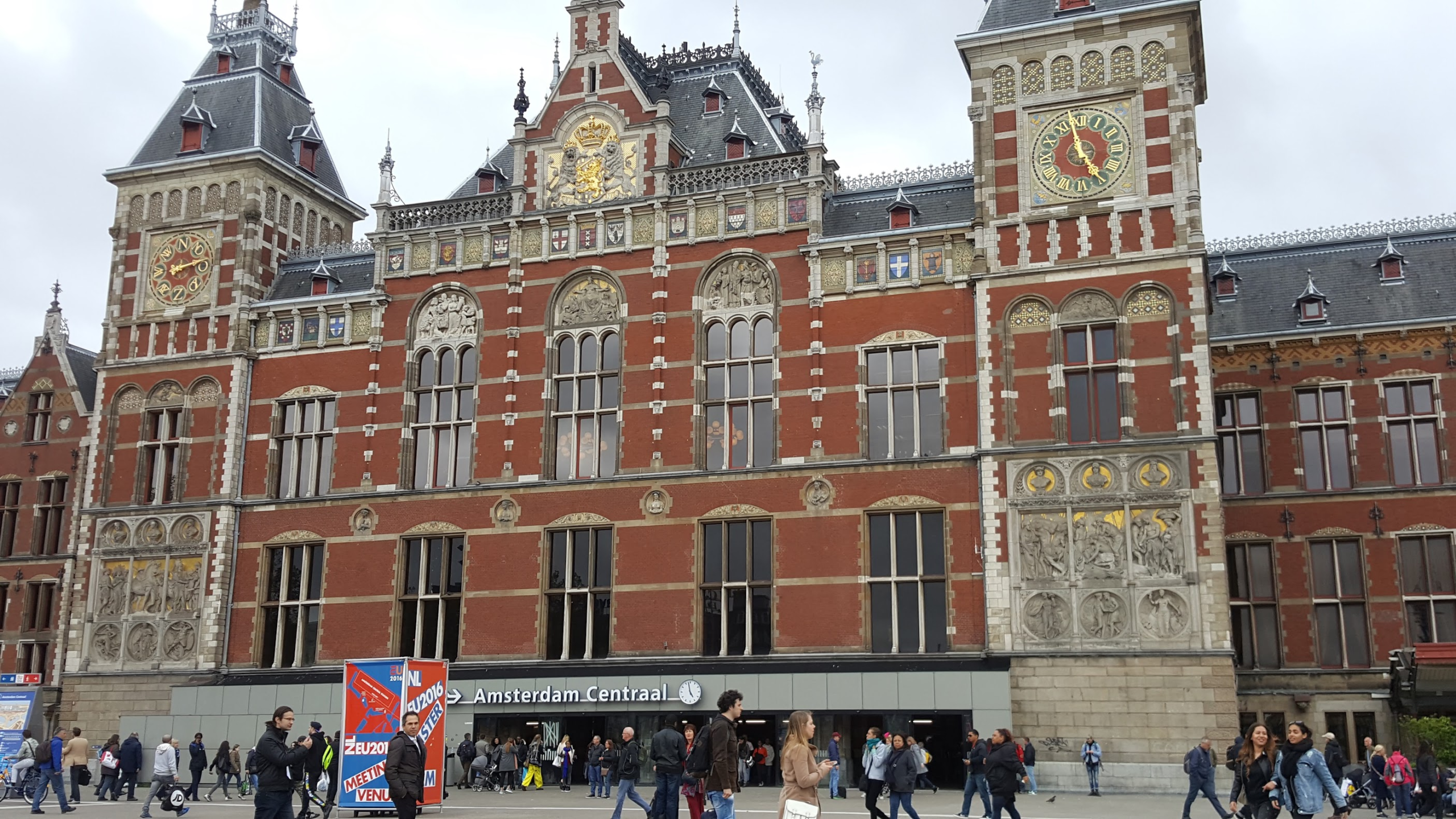
My first trip to Amsterdam wasn’t originally supposed to be a proper visit at all. I was already in Europe for work, and I extended the trip by a few days specifically to add Amsterdam on rather than heading straight home. Once I made that call, I ended up staying five nights total, enough time to actually see the place rather than just pass through it like a layover would let you.
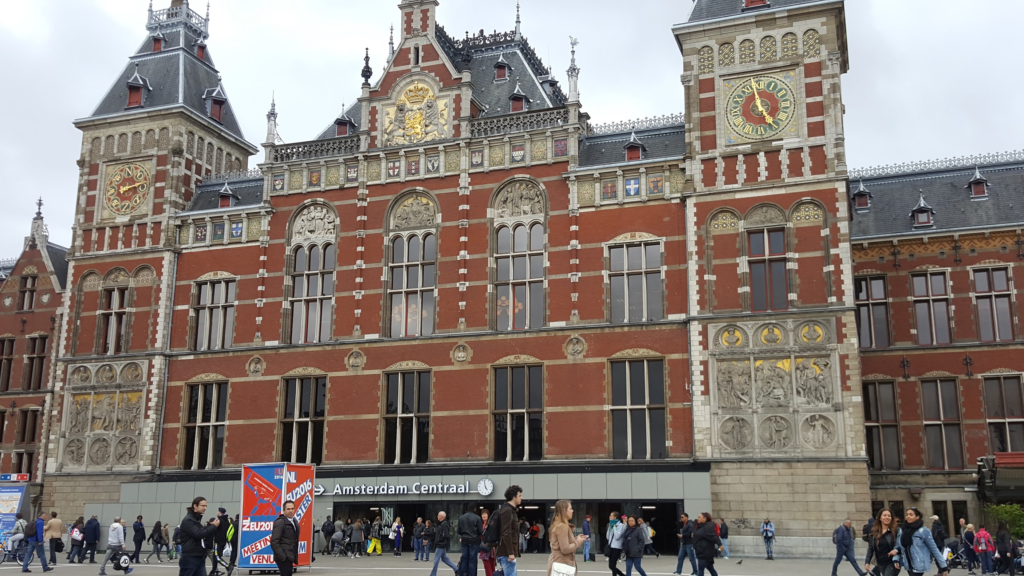
I explored a mix of ways: a guided walking tour to get my bearings, a bike tour to cover more ground, plenty of independent wandering around the canals and neighborhoods, and a handful of day trips made easy by how well connected everything is to Amsterdam Centraal. That combination is really what this whole list comes down to. Amsterdam turned out to be a genuinely good city to extend a work trip into, since you can see a huge amount of it without ever needing a car.
1. Take a Walking Tour of Amsterdam
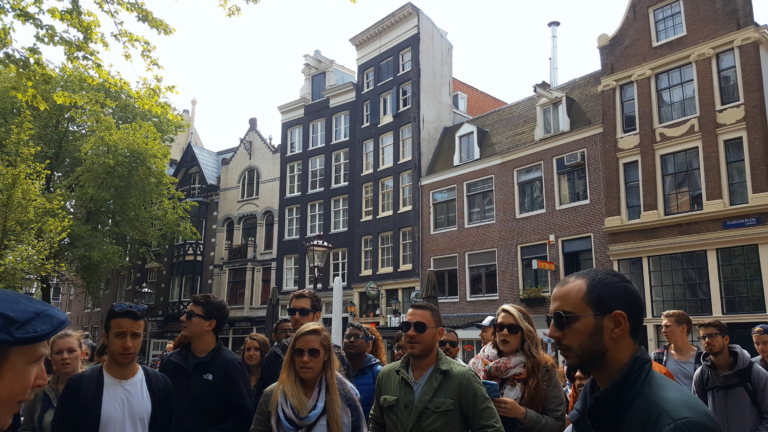
I took a SANDEMANs walking tour on one of my first mornings, and it turned out to be one of the better decisions of the whole trip. A walking tour early on does something independent wandering can’t: it tells you what you’re actually looking at. Amsterdam is full of buildings and street corners that look unremarkable until someone explains what happened there, and a guide fills in exactly that gap. Our guide was also a local resident, and it showed; he wove in stories from his own daily life alongside the history, which gave the tour a sense of what living in Amsterdam is actually like, not just what happened there centuries ago.
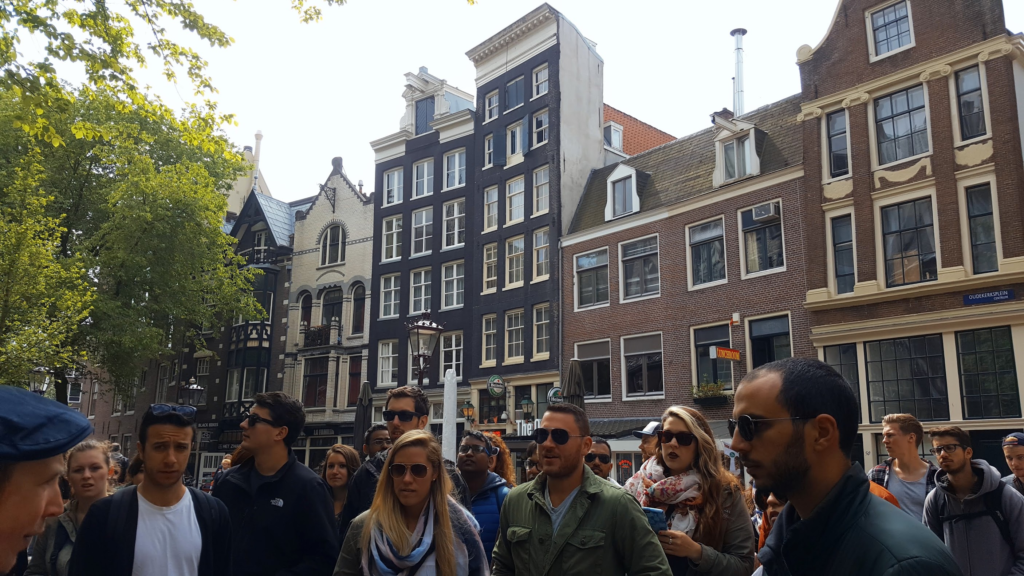
My tour moved through Amsterdam’s historic center and the canal areas, and touched on a lot of what still forms the backbone of the city’s main walking routes today: Dam Square, the Royal Palace, the old harbor area near Centraal, Chinatown, Nieuwmarkt, the historic canal houses, a couple of hidden churches tucked between buildings, the Jewish Quarter, part of the Red Light District itself, and a running commentary on Amsterdam’s relationship with its bikes, which becomes obvious within about ten minutes of walking anywhere in the city.
My tip: do the walking tour near the start of your trip, not partway through. It gives you a mental map of the city and flags places worth coming back to on your own later, which is exactly what happened to me with a few of these stops.
2. Spend Some Time Around Dam Square
Dam Square was one of the first proper landmarks the walking tour brought us to, and it’s worth lingering at rather than just passing through. It’s also literally where the city gets its name, Amsterdam grew out of a dam built across the Amstel River here in the 13th century, and the square has been the functional center of the city ever since. The Royal Palace sits right on it, originally built in the 1600s as Amsterdam’s city hall under architect Jacob van Campen and only converted into an actual royal residence in 1808. Beside it is the Nieuwe Kerk, a 15th-century Gothic church still used for royal inaugurations, and the National Monument, a stark white memorial built after the Second World War, add to a square that feels like the actual center of the city because, historically, it is.
It’s also genuinely convenient: Dam Square is about a 10-minute walk from Amsterdam Centraal, which makes it an easy meeting point if you’re coordinating with anyone during the day, and just as easy to leave from when you need to catch a train onward, wherever you’re headed next.
I wouldn’t plan to spend half a day here specifically. It works better as a starting point, somewhere to get your bearings before heading out into the surrounding streets on foot.
3. Explore Amsterdam’s Canals on Foot
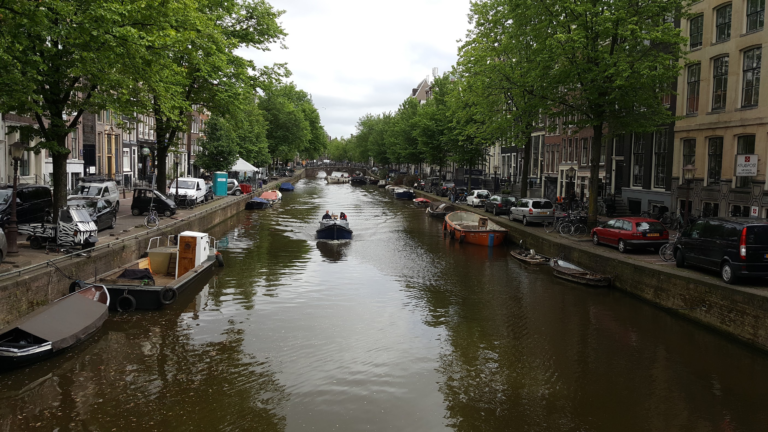
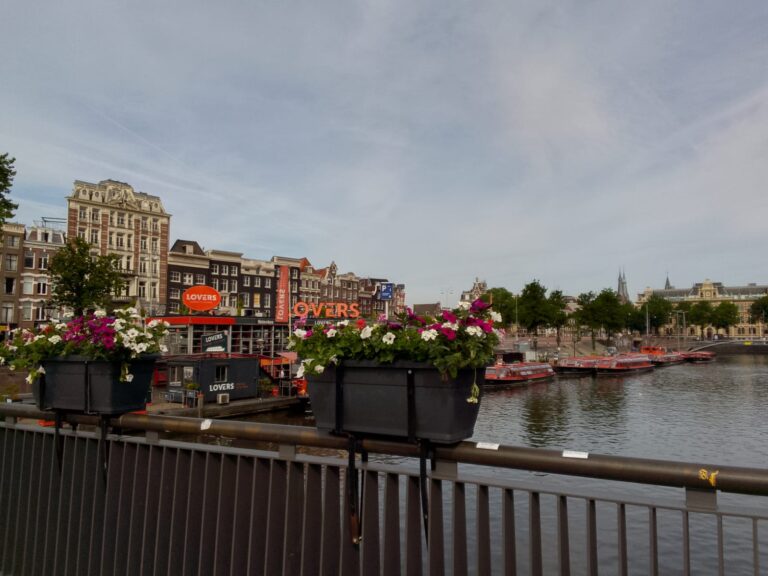
A huge amount of my sightseeing in Amsterdam wasn’t really “sightseeing” in the ticketed sense, it was just walking alongside and crossing the canals. The canal houses, the narrow streets squeezed between them, the bridges, and the boats constantly moving through the water all add up to something worth experiencing slowly rather than photographing quickly and moving on. The whole 17th-century canal ring, the Grachtengordel, has actually been a UNESCO World Heritage Site since 2010, which sounds like a formality until you’re standing in it and realize how little the layout has changed since the Golden Age it was built during.
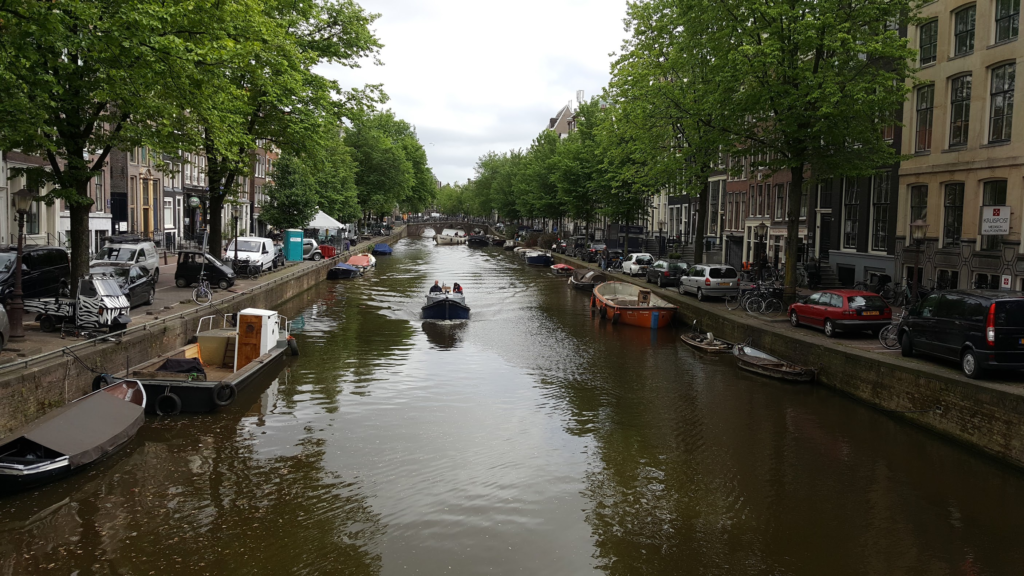
Walking the canals gives you a genuinely different read on the city than checking off attractions one by one. It’s less efficient, and that’s kind of the point.
Look Out for Amsterdam’s Movable Bridges
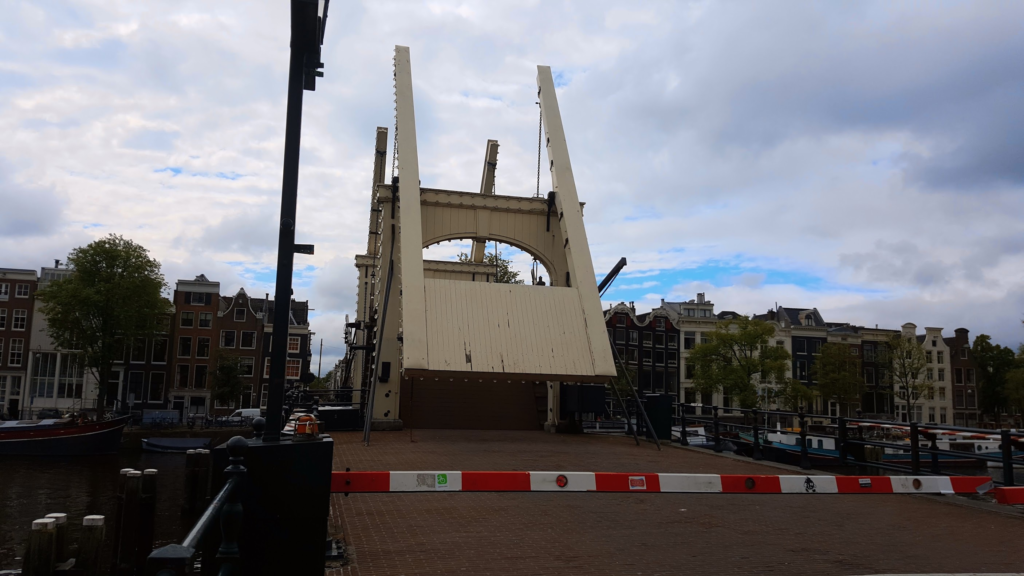
One of my favorite unplanned moments was watching one of Amsterdam’s movable bridges open to let a larger boat through, the whole structure splitting and lifting while traffic waited on either side. Amsterdam has more than a thousand bridges in total, but only a handful are still working wooden drawbridges like the one I watched, the most famous being the Magere Brug, or “Skinny Bridge,” over the Amstel River, a design dating back to 1691 and rebuilt several times since, most recently in the 1930s. I’ve got a photo of the bridge mid-open that’s genuinely one of my favorite shots from the whole trip, it’s the kind of detail you wouldn’t think to look for, but once you see it happen once, you start noticing the bridges everywhere.
4. Explore Amsterdam by Bike
My second organized activity was a bike tour, and it made a good pair with the walking tour rather than repeating it. Where the walking tour concentrated on central Amsterdam in real detail, the bike tour let me cover a much wider area in the same amount of time, and it gave me a better sense of how the different neighborhoods actually connect to each other, something that’s harder to piece together on foot alone.
Cycling in Amsterdam also isn’t really a tourist activity so much as it’s how the city actually functions day to day, so doing it yourself gives you a bit of insight into ordinary Amsterdam life, not just the sights.
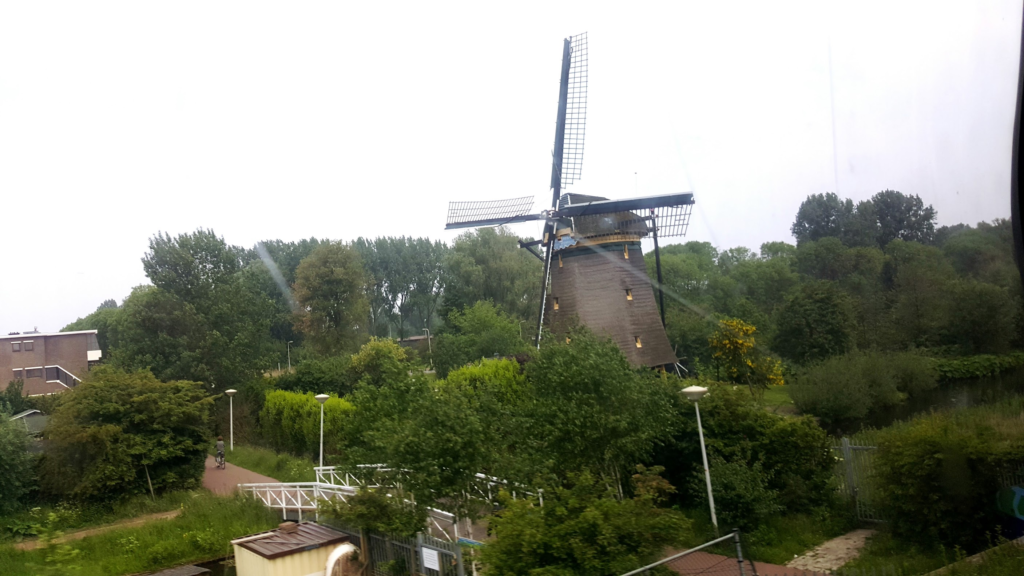
My bike tour was a countryside route, cheese, clogs, and a windmill, and it started right near Central Station before heading out of the city entirely. We cycled out through open farmland and small medieval villages, a completely different side of the Netherlands than anything in the city center. The tour stopped at a family-run cheese and clog farm, and passed a historic windmill along the way before looping back to the starting point. It’s a genuinely good pairing with the walking tour, since it shows you a version of the Netherlands that has nothing to do with canals or museums at all.
My tip: do the walking tour first, then the bike tour. The walking tour gives you context for what you’re seeing; the bike tour then lets you go further with that context already in place.
5. Walk Through Amsterdam’s Red Light District
My guided group walked through part of the Red Light District during the day, and I’m glad it worked out that way. Our guide pointed out different signs and details visible from the street and explained what they actually meant, we didn’t go into any establishments, the interesting part for me was the history and context the guide provided, not the district itself. He also mentioned that the atmosphere shifts completely once evening sets in, which is exactly why our tour ran during the day.
One important thing to flag for anyone reading this now: since April 2020, Amsterdam has banned guided tours of five or more people from passing directly along the sex workers’ windows in the district, a rule brought in specifically to reduce overcrowding and stop tour groups treating the windows as a photo opportunity. Photographing sex workers or their windows is also strictly prohibited, tour or no tour, and it’s taken seriously. So when I say our tour could walk through that part of the district, I mean it genuinely could, at the time, before that rule existed. Don’t expect to recreate that exact route today, guided groups now operate under different restrictions than the ones my tour did, though the area is still very much open to individual visitors walking through on their own.
6. Explore Chinatown and Nieuwmarkt
These came up as part of the same walking tour, but they’re worth calling out individually.
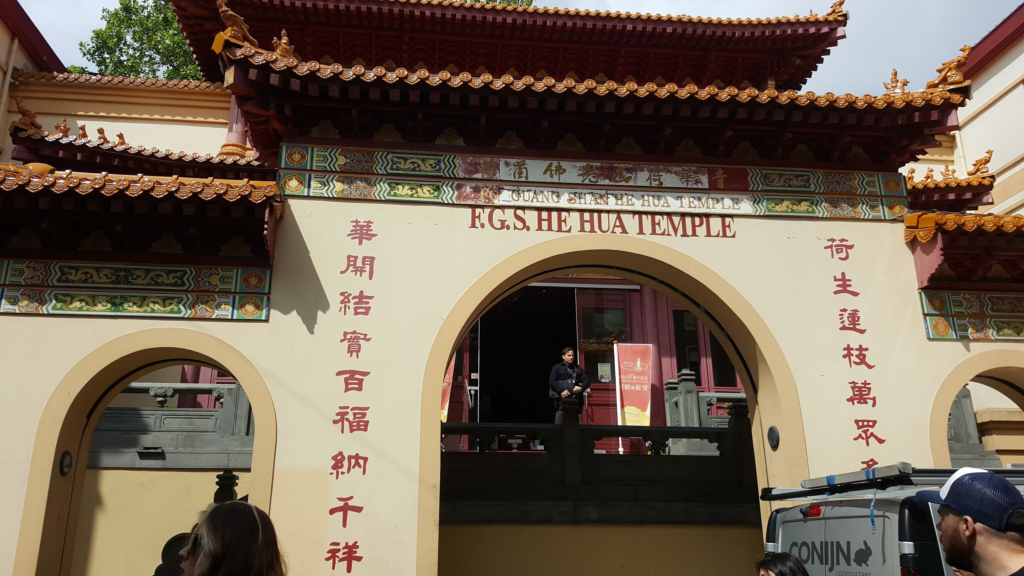
Chinatown is a small, culturally distinct pocket of central Amsterdam, centered on Zeedijk street, and it goes back further than most visitors would guess. It started forming in the early 20th century, when Chinese sailors, many recruited from Guangdong province, settled here after working merchant shipping routes for Dutch and British shipowners. It’s easy to walk through as part of a longer route rather than a dedicated stop, and a nice contrast to the canal-house architecture everywhere else nearby.
Nieuwmarkt is the square and surrounding historic streets just beyond it, and it connects naturally back into the rest of the central walking route. The square is dominated by De Waag, a genuinely striking medieval building that started life around 1488 as a city gate in Amsterdam’s defensive walls before being converted into a public weighing house once the walls came down, it’s one of the oldest surviving structures in the city and now works as a restaurant. Both Chinatown and Nieuwmarkt are still core stops on Amsterdam’s main walking-tour circuit today, which tells you they’ve held up as genuinely worth including.
7. See Amsterdam Noord and Explore the Area Around It
I should correct something here: my accommodation wasn’t actually near Amsterdam Centraal, it was next to Amsterdam Noord, just across the water on the other side of the IJ. That turned out to be a genuinely good call rather than a compromise. Noord sits away from the main tourist crush, so accommodation there tends to be cheaper and the area itself is noticeably less crowded than staying right in the historic center. It’s also one of the biggest stations in Amsterdam after Centraal itself, which meant all the major trains still passed through it, so I wasn’t giving up easy access to get the lower price and quieter surroundings. Genuinely felt like a win on both counts.

Honestly, one of the biggest reasons I managed to fit as much as I did into five nights was just how well connected I was from Noord. It’s worth factoring into where you choose to stay, not just an afterthought once you’ve already booked a hotel closer to the center.
8. Take a Day Trip From Amsterdam
I took roughly three day trips during my stay, and Amsterdam works genuinely well as a base for this. Being well connected from Amsterdam Noord made it easy to head out somewhere for the day without much planning, sometimes fairly spontaneously, and come back to the same hotel each night rather than packing and unpacking every day.
9. Try Dutch Food in Amsterdam
Food ended up being a bigger part of the trip than I expected, and as a Muslim traveler, I was conscious the whole time about what I could and couldn’t eat, so everything here is halal-focused.
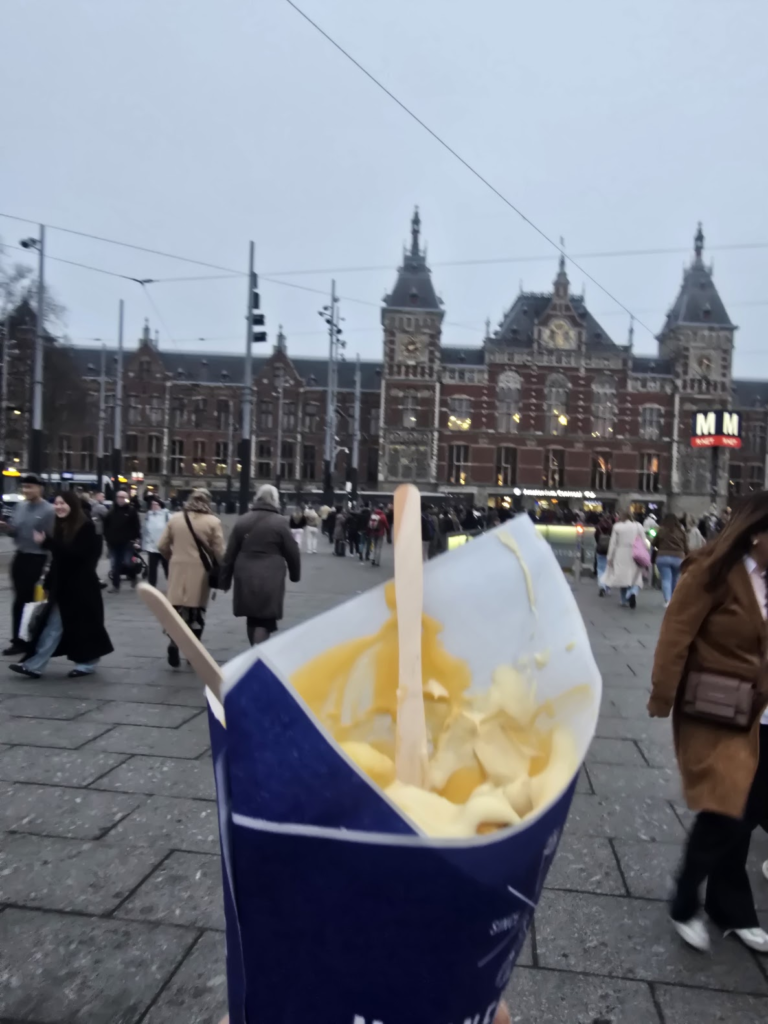
I think I ate fries almost every day I was in Amsterdam. Friet shops are genuinely everywhere, thicker than typical fast-food fries, served in paper cones, and built around a real sauce culture rather than just ketchup, mayonnaise is the default, but peanut sauce and curry sauce show up constantly too. I worked through a different sauce most days and have the photos to prove it.
For the rest of what’s worth trying, stroopwafels, poffertjes, pannenkoeken, and where to actually find halal Turkish and Moroccan food beyond döner, I’ve put together a full guide, foods to try in Amsterdam, that goes into each one properly, including what to check before you order if halal matters to you.
10. Simply Walk Around Amsterdam
Some of my best moments in the city didn’t come from anything on a list at all. Leave some time without a strict itinerary, wander along the canals, cross a few bridges without a destination in mind, duck down side streets, and just watch the bikes and boats go by. Stop when something catches your eye, an interesting café, a quiet stretch of canal, a viewpoint you didn’t know was there.
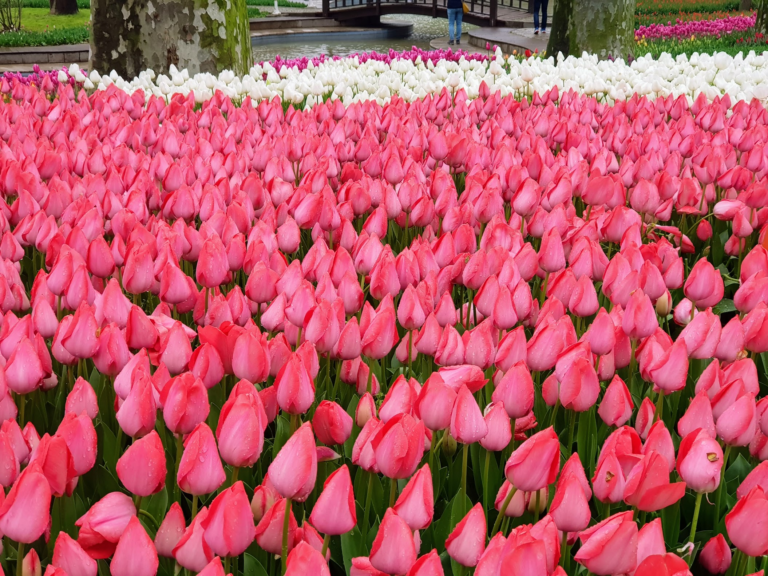
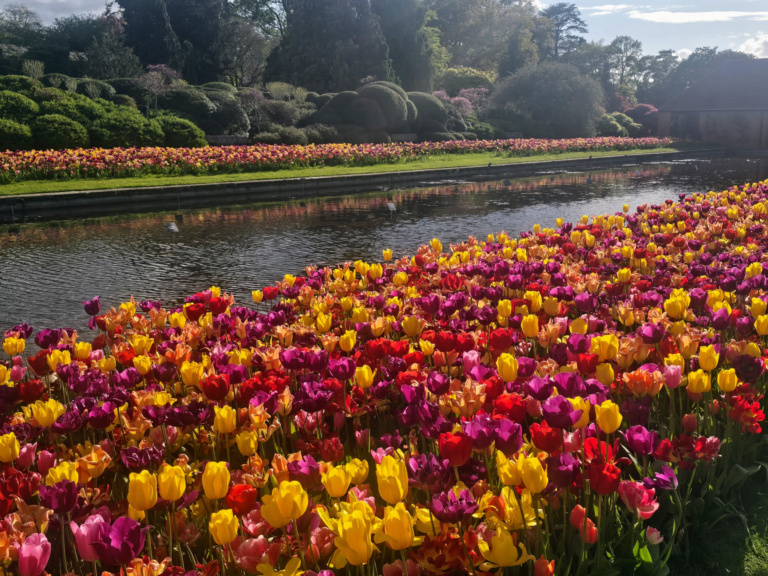
Two spots worth building into that wandering specifically: Vondelpark, Amsterdam’s largest and most popular park, good for a slower pace than the canal streets offer, and the area around the Rijksmuseum, where the museum’s own gardens and the surrounding Museumplein are worth a walk through even if you don’t go inside. If you happen to be visiting in spring, both spots also turn up as tulip festival locations, worth timing your walk around if the dates line up.
It’s a good reminder that some of the most memorable parts of a trip here aren’t ticketed attractions at all.
11. Use Amsterdam as a Base for a Longer Netherlands Trip
If you’re a first-time visitor with a handful of days to spend, I’d genuinely recommend treating Amsterdam as a base rather than trying to move hotels every time you want to see somewhere else. Five nights gave me enough time to properly explore the city itself while still fitting in multiple trips outside it, and being based near Amsterdam Noord’s station made combining the two easy. You don’t need to relocate just to see something beyond the city limits.
Practical Tips From My Amsterdam Trip
• Do a walking tour early. It gives you context before you start exploring on your own.
• Take a bike tour too. You’ll cover far more ground than walking alone allows.
• Consider staying near Amsterdam Noord instead of the center. It’s cheaper, less crowded, and still a major station that all the main trains pass through, especially useful if day trips are part of your plan.
• Explore the canals on foot. Not every part of a trip here needs to be a formal attraction.
• Try the local Dutch food, and don’t skip the Rijksmuseum or the I amsterdam sign. Even a quick stop at either is worth building into a walk through Museumplein.
• Check current rules before visiting the Red Light District. Guided-tour restrictions have changed since my visit.
• Give yourself several days if you can. Five nights was enough to properly combine the city with trips beyond it.
Conclusion
What started as a work trip turned into one of my favorite ways to actually experience a city, mixing a proper walking tour, a bike ride further afield, a lot of independent wandering, and a handful of day trips, rather than working through a checklist of formal attractions one by one. Amsterdam is compact enough to get a real feel for quickly, but varied enough that five nights still left me with plenty to do. If you’re deciding how long to stay, that’s roughly the sweet spot I’d point you toward too.
Frequently Asked Questions
How many days do you need in Amsterdam? Five nights worked well for me, enough to properly explore the city on foot and by bike, and still fit in a handful of day trips without feeling rushed. If you’re only interested in the city itself, three to four days covers the core sights comfortably.
Is it better to explore Amsterdam by walking or by bike? Both, ideally, and in that order. Walking suits the historic center and canal belt, where the interesting details are packed close together. A bike covers far more ground and gets you into neighborhoods a walking tour won’t reach in the same amount of time.
Should you book a walking tour in advance? It’s worth it, especially for a popular free tour, since space can fill up and the better-timed departures go first. Booking ahead also means you’re not stuck trying to find a spot on your first morning when you’re still getting oriented.
Is the Red Light District worth visiting for non-nightlife travelers? Yes, if you’re interested in the history and context rather than the nightlife itself. Going during the day with a guide who explains what you’re actually looking at is a completely different experience from wandering through at night, and it’s the version I’d genuinely recommend.
Do you need a car to see Amsterdam and take day trips? No. Amsterdam’s train connections, whether you’re based near Centraal or a station like Amsterdam Noord, make day trips genuinely easy without one, and having a car in the city itself is more hassle than it’s worth given how walkable and bike-friendly everything is.