3 Days in Paris: A Realistic Itinerary for First-Time Visitors
I visited Paris as a 20 year old, with my favorite cousin and my sister. This was also the first time that I was in Europe, and was genuinely excited to fit in as much into my trip as possible. Three days in Paris is enough for the major sights plus a bit of breathing room, but only if you group things geographically and stop trying to cross the city four times a day. That’s the whole trick, and it’s the thing most itineraries get wrong.
This plan is built from what I actually did on my own trip, reordered into a workable three-day route. I was there for five days split across two legs with a trip to Brussels in the middle, so this is everything I’d recommend based on what I loved, what I hated, and what I’d skip on my next Paris visit.
Before You Start: Two Things That Will Break This Paris Itinerary
Check which day you’re arriving. The Louvre closes on Tuesdays. The Musée d’Orsay closes on Mondays. If your three days include either, swap the days around rather than turning up to a locked door. Most Paris itineraries ignore this completely and it’s the single most common way a plan falls apart.
Book the Eiffel Tower ahead if you want to go up. Tickets are released in advance and the good time slots go quickly. If you don’t book, you can still see the tower from below, which is genuinely worth doing on its own, but you won’t be going to the top on a whim.
Beyond that, stay central if you can. I stayed in the 10th arrondissement near Gare du Nord, which was well connected but a long way from everything. Every single day started with a metro journey. If you’re in Paris for three days or more, the trip to and from the main sites can take up a significant portion of your time.
Day 1: Orientation, the Louvre, and the Eiffel Tower at Night
Morning: Take a Free Walking Tour
Start with a walking tour rather than an attraction. This was the first thing we did in Paris and it was the right call. You cover a lot of ground, you get your bearings, and you pick up practical information you’d otherwise learn the hard way.
Ours was arranged through our accommodation, which is worth asking about wherever you’re staying. Independent operators run them across the city too. Two to three hours in the morning is plenty, especially since most of these tour operators have been running an intro to Paris tour every single day for years. You can count on your tour guides to know the best routes, help you plan your itinerary better, and even ask them for recommendations on places to eat or day trips you can take easily.
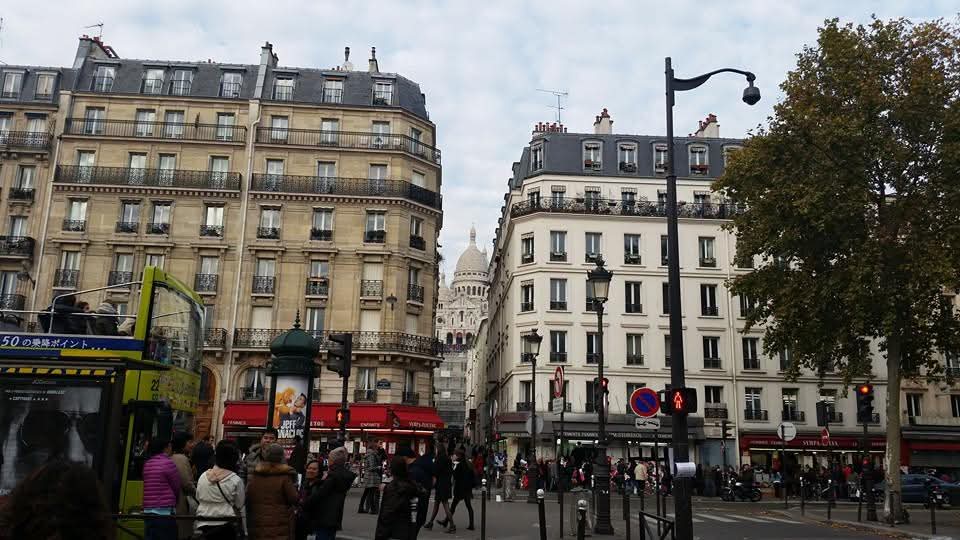
Pro Tip: While you’re there, pay actual attention when the guide points things out. Our guide told us exactly where the Louvre entrance was, and the following day we still couldn’t find it.
Midday: Eat Somewhere Ordinary
Grab lunch from a bakery rather than a café near a monument. A slice of quiche and something from the counter costs a fraction of a sit-down meal and takes ten minutes instead of an hour. Cheese and vegetable quiches are widely available if you’re not fond of eating meat or avoiding it for other reasons.

You can check out my blog on Foods to try in Paris for more information.
Afternoon: The Louvre
First, the entrance. The glass pyramid in the courtyard is the main entrance, but it is not as obvious from street level as everyone assumes, and it took us an absurdly long time to find even though our tour guide had told us about it the day before.
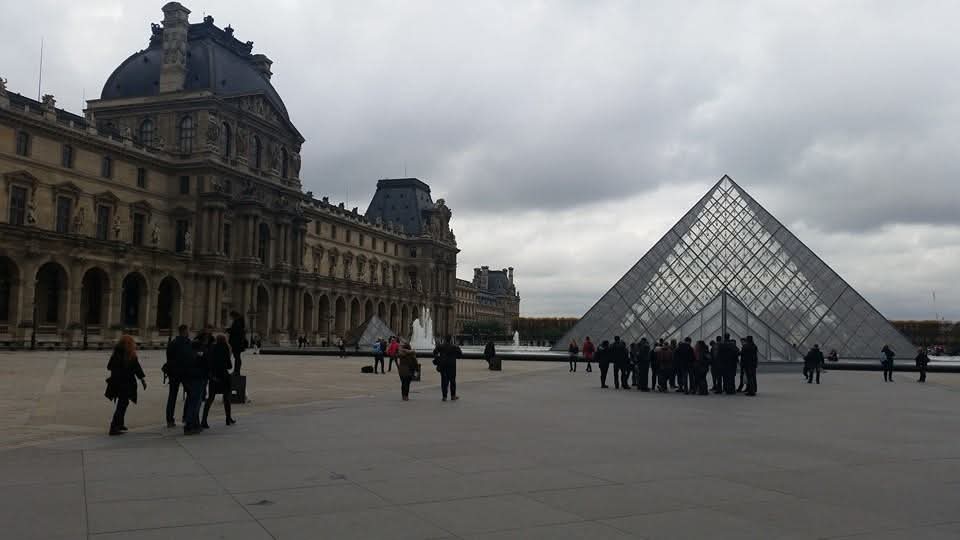
Second, the Mona Lisa. It’s a long walk from the entrance, it sits behind a dense permanent crowd, and it’s much smaller than nearly everyone expects. See it once so you’ve seen it. Do not build your visit around it, because it’s comfortably the most underwhelming famous thing in Paris.
The rest of the museum is worth your time if you’re in the mood to be indoors. If you’re not, move through it quickly and get back outside. I went to the Louvre when I was 20 and at that age, the last thing I wanted to do was be crammed up inside a museum on my first trip to Europe. I wanted to be outside, breathe the fresh air, and eat all the best food. So, for me, making the trip to the Louvre as quick as possible was the goal at the time. Would I stay longer if I went now? Definitely!
Before you go, check the Louvre’s official visitor page for current hours, and buy tickets there rather than from third-party sites, since the museum itself warns about mirror sites selling fraudulent tickets. Also make sure you have a student card with you if you’re looking for discounts in Paris and other places in Europe!
Give it two to three hours. Any longer on day one and you’ll be too tired for the evening.
Evening: The Eiffel Tower
Go at night. We saw the tower in daylight and after dark, and the night version wins by a wide margin.
We weren’t told this, but I’m preparing you: the tower sparkles for five minutes at the top of every hour after nightfall. Twenty thousand bulbs, all at once. We had no idea it was coming and it caught us completely off guard, which was honestly better than knowing.
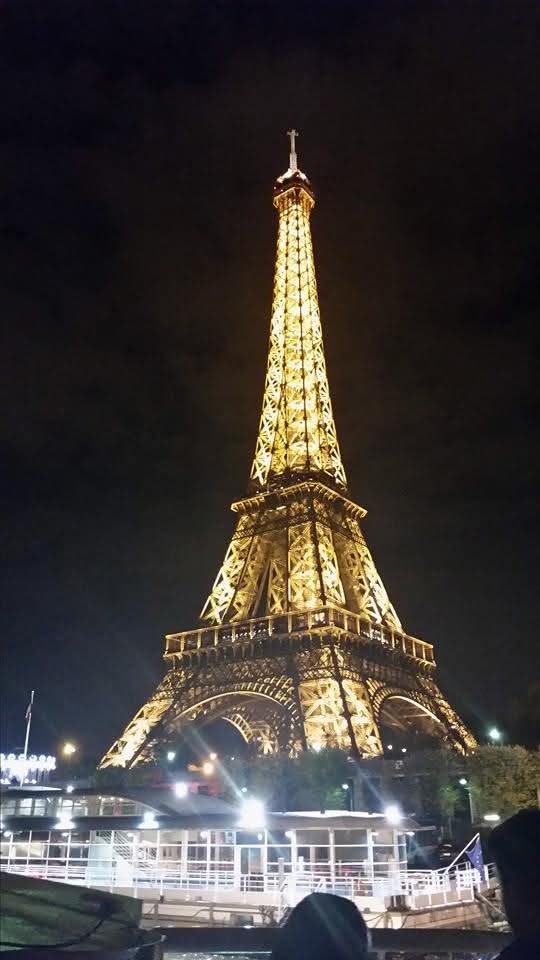
You don’t need a ticket for this. We sat in the park in front of the tower for a long stretch and just took the view in. It cost nothing and it beat several things we paid for that week. Check the official site for the current sparkle schedule, since the start and end times shift with the season and with energy-saving rules.
Day 2: Islands, Cathedrals, and the Seine After Dark
Morning: Notre-Dame and Île de la Cité
Start on the island. Notre-Dame reopened in December 2024 after a five-year restoration following the 2019 fire, and it has stood on the Île de la Cité for more than 800 years. Entry to the cathedral is free, though the visit route was redesigned after the reopening and booking arrangements have changed since, so check the official site before you go rather than turning up and hoping.
Walk the island afterwards. It’s small, it’s central, and the area around it connects easily to the next stop.
Late Morning: Le Marais
Cross into Le Marais and walk. This is the medieval part of the city, and it’s one of the few central areas that still feels like a neighbourhood rather than an attraction. You’ll find narrow streets, independent shops, and can wander around the area without a real plan in place.
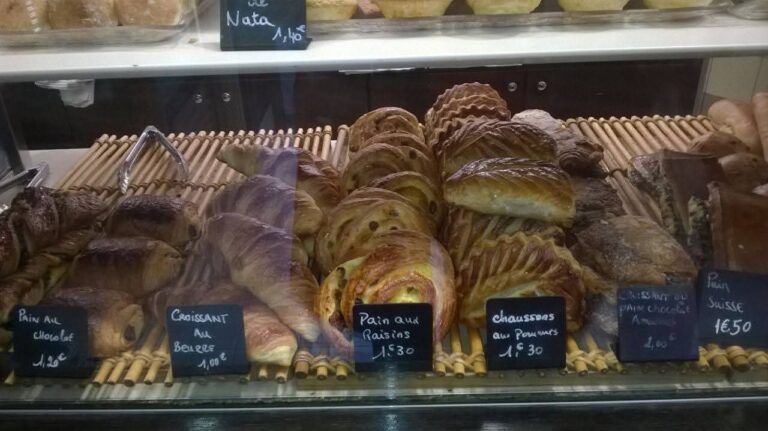
This is also a good area for a mid-morning pastry stop. The croissants and pain au chocolat in Paris are as good as the reputation suggests, and they’re good almost everywhere rather than only at famous addresses.
While I was in Paris, I was also lucky enough to visit the Centre Pompidou but it unfortunately shut in September 2025 for a major renovation and isn’t due to reopen until 2030. I visited before the closure and found it more engaging than the Louvre, so this is a genuine loss for anyone travelling in the next few years.
Afternoon: Arc de Triomphe and the Champs-Élysées
Head across to the Arc de Triomphe and walk down the Champs-Élysées. It’s a heavily commercial stretch and I won’t pretend otherwise, but it’s worth seeing once and the walk itself is easy.
If you’re visiting in late November or December, check whether the Christmas market is running along the avenue. We caught the start of it on one of our last days and had a good time. As with anything touristy, everything sold there is priced for the location. We bought macarons at that market and they were, comfortably, the most expensive macarons of our lives. Buy sweets from a normal bakery a few streets away instead.
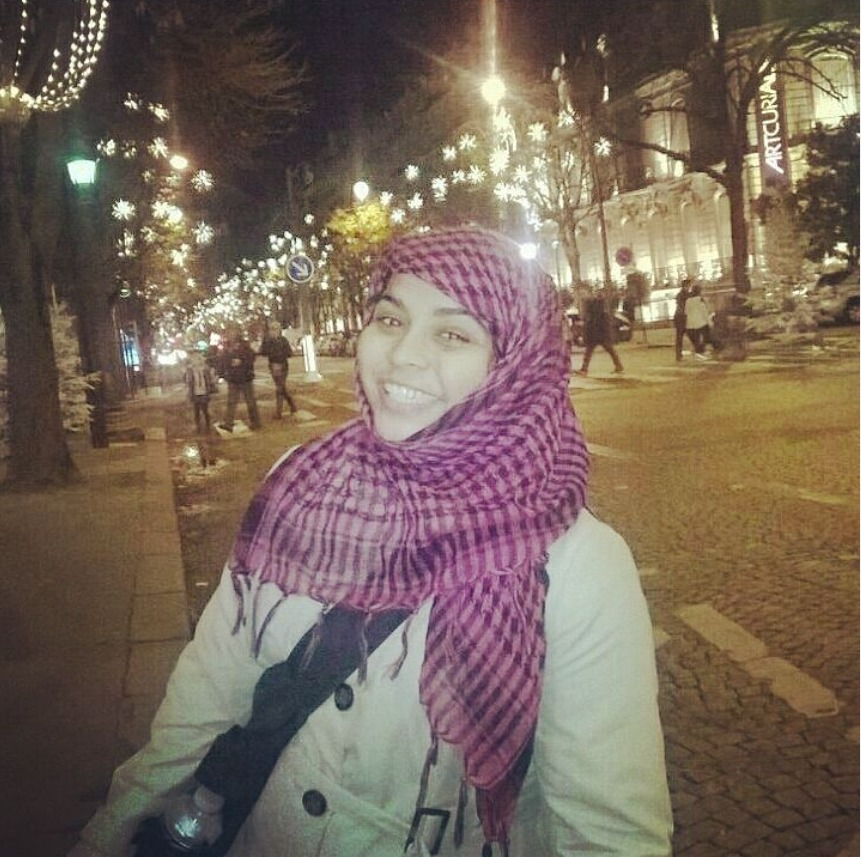
Evening: A Seine River Cruise
This was the single most memorable part of our entire trip, and I’d put it above most of the ticketed attractions.
Go at night so you see the city lit up. The cruise runs about an hour. We bought tickets directly from a sales booth near the departure point on the day rather than booking ahead, and had no trouble, though availability is likely tighter in peak season.
It was cold, we got seats at the front near the guide, and we spent the entire hour laughing at our own jokes until the guide eventually gave in and started laughing along.
Day 3: Montmartre and Whatever You Choose
Morning: Sacré-Cœur and Montmartre
Take the metro to Anvers and walk up. It’s a steep climb, but it’s worth the effort. There’s a funicular if you’d rather not walk, which uses a standard metro ticket.
Sacré-Cœur sits at the highest point in the city. It was built between the 1870s and the early 1900s, largely funded by public donations, in the aftermath of the Franco-Prussian War. The basilica itself is large and genuinely impressive inside, and entry is free, though access to the dome is paid.
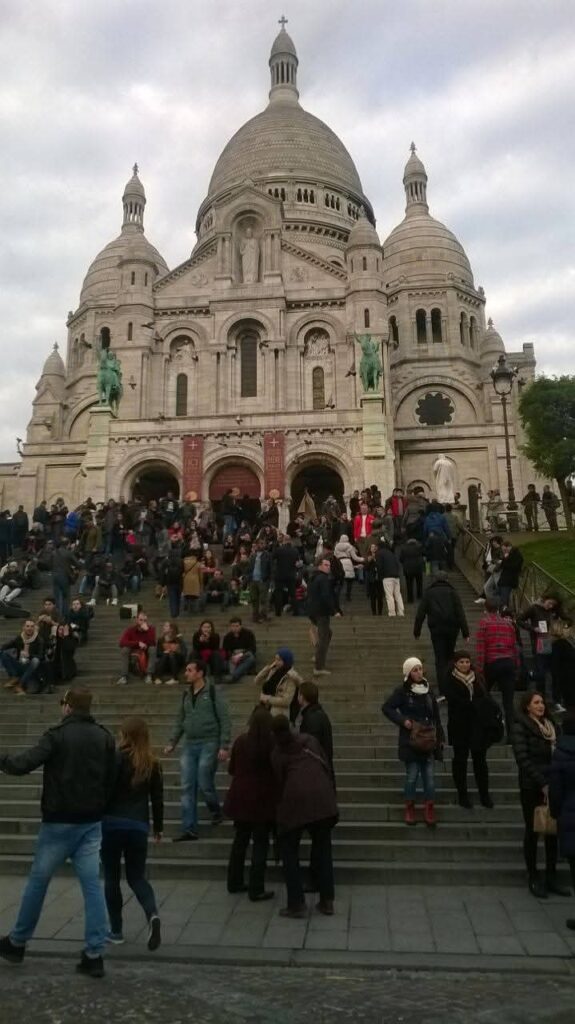
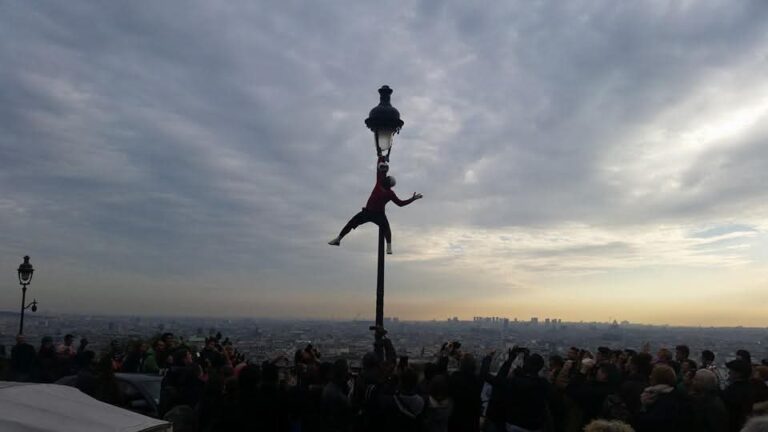
The view from the top is one of the better ones in Paris, though it depends entirely on the weather. We got a clear day and could see a long way.
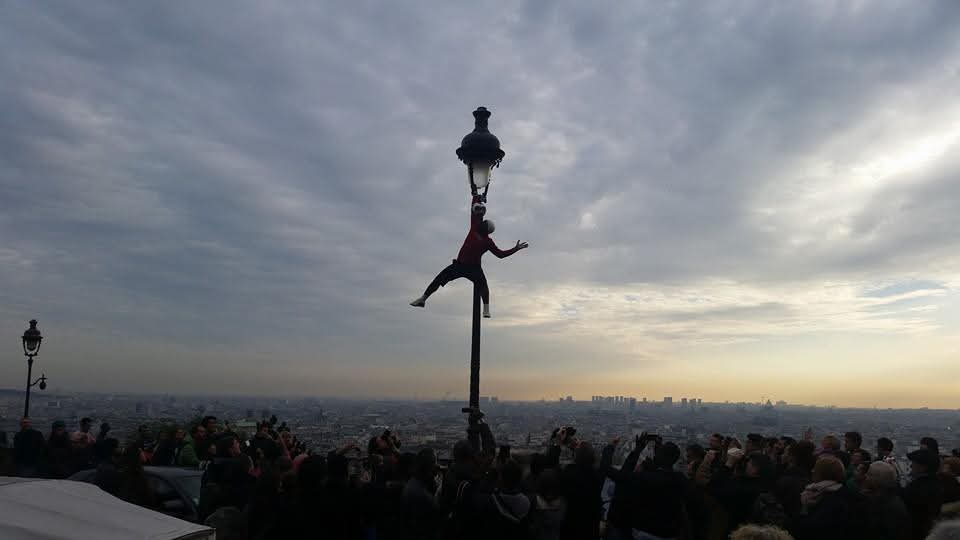
We spent a long stretch watching a street performer in the square near the basilica and even ended up taking pictures with him, which wasn’t on any plan and was one of the better parts of the day. Montmartre is definitely one of those areas that you shouldn’t rush at all though since that will take away from the experience.
Afternoon: Pick One
Day three afternoon is where you should build in flexibility rather than scheduling. A few options depending on what you’ve enjoyed so far:
- Musée d’Orsay if the Louvre left you wanting more art and less crowd. Closed Mondays, and timed entry has become the norm, so book ahead.
- A second look at somewhere you liked. We saw the Eiffel Tower multiple times across our trip and it never got old.
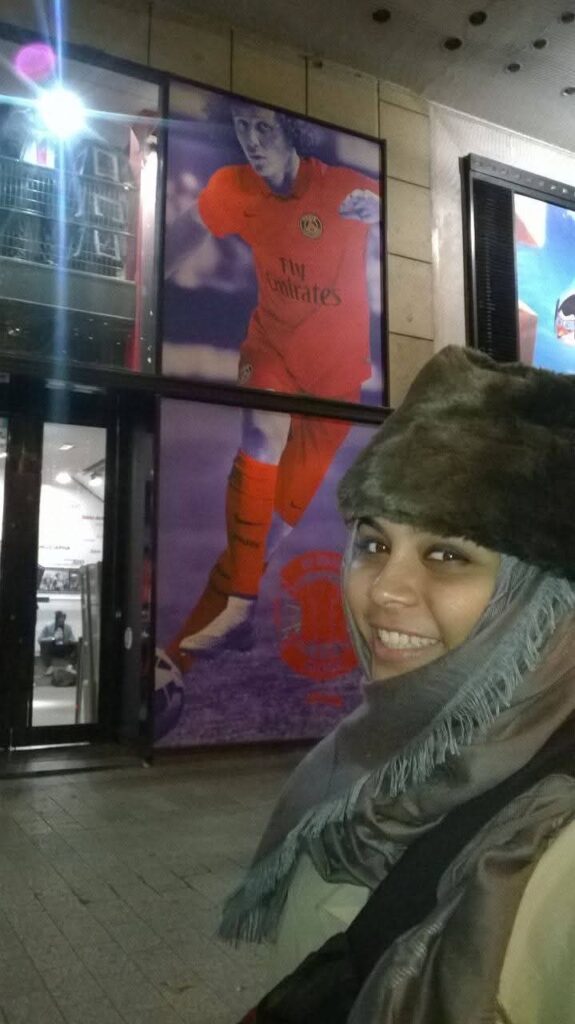
- A specific interest. I was a serious football fan at the time and made it out to Parc des Princes, the PSG stadium. It was a non-match day, we arrived late, and it was closed. If there’s a venue that matters to you, check its opening hours or fixture list first rather than assuming.
- Crêpes and a park. Get a crêpe from a street window rather than a sit-down crêperie. They’re made fresh in front of you, cost far less, and probably taste better than the more posh creperies.
Evening: Walk
Leave your last evening unstructured. On our final night in Paris we came across a rollerblade tour moving through the city, which was one of the strangest and best things we saw all trip and something we’d never have found by planning.
The thing that surprised me most about Paris wasn’t a monument. It was how much of ordinary life happens outdoors. Even on a cold Monday afternoon in late November, people were picnicking in parks, sitting outside cafés, and reading newspapers. If you spend your last evening walking rather than queuing, you’ll actually notice it.
How to Adjust This Plan
If you have two days instead of three: cut day three and fold Sacré-Cœur into the end of day two. Montmartre is the most geographically separate part of this itinerary, so it’s the cleanest thing to drop.
If you’re visiting in summer: move the Louvre earlier in the day and the outdoor walking later. Book everything further ahead than you think you need to.
If you’re visiting in winter: we went at the end of November, and it was cold and grey most days. Accommodation was noticeably cheaper, which is a real advantage, but plan for shorter daylight. Front-load the outdoor sights and use the afternoon for indoor ones.
If a museum closing day catches you: the Louvre closes Tuesdays and the Orsay closes Mondays, so if one is shut, the other almost certainly isn’t. Swap them rather than losing the day.
What This Itinerary Deliberately Leaves Out
Versailles. Plenty of three-day plans include a Versailles day trip, and I’d argue against it on a first visit. It eats most of a day in travel and queuing, and it comes at the cost of the unstructured time in the city that ends up being the memorable part. Save it for a return trip.
I’d also avoid long museum days if you’re just there on a short trip. Three days is not enough time to do Paris’s museums properly, so attempting it means doing several of them badly. One museum done well beats three rushed.
Three days in Paris works if you group things by geography, respect the museum closing days, and resist stopping for a meal every hour no matter how tempting the food looks. The version of this trip that goes wrong is the one where you cross the city repeatedly and spend more time in transit than anywhere else.

Do the walking tour first, see the Eiffel Tower after dark, take the boat at night, and leave your last evening open. The parts of this itinerary I remember most clearly aren’t the ticketed ones.
If you’re still finalizing the details, my guides to where to stay in Paris, things to do in Paris, and foods to eat in Paris cover the rest.
Frequently Asked Questions
Is 3 days in Paris enough?
For the major sights, yes, provided you group them geographically and stay reasonably central. It’s not enough to explore neighborhoods in depth or take day trips outside the city without sacrificing something else.
What should I book in advance for a 3 day trip?
The Eiffel Tower if you want to go up, and timed entry for the Louvre and Musée d’Orsay. Seine cruise tickets were available same-day from a booth when we went, though peak season may differ.
Which day should I do the Louvre?
Any day except Tuesday, when it’s closed. If your trip includes a Tuesday, use it for the Musée d’Orsay or outdoor sights instead, since the two museums have different closing days.
Can I walk between the sights in this itinerary?
Within each day, mostly yes. Between days, no. Each day is grouped around a different part of the city, so you’ll want the metro to get to the starting point each morning.
Should I add Versailles to a 3 day Paris itinerary?
I’d skip it on a first visit. It takes most of a day once travel and queuing are accounted for, and three days is already tight for the city itself.