Is It Safe to Travel to Paris Right Now? What’s Happening in October 2026
Last updated: 20 October 2026. This is a fast-moving situation, and the details below will date quickly. Check the official sources at the bottom before you travel.
If you have a Paris trip booked in the next few weeks, you’re probably wondering whether to go ahead. Here is our honest read on it.
Official advice right now is to exercise increased caution, not to stay away. Airports are operating, trains are running, and most visitors are moving around the city normally. What has changed is that parts of central Paris have seen serious disruption, some cities are under partial curfews, and the situation is still developing day to day.
If your dates are fixed and you’re already booked, you probably don’t need to cancel. If your dates are flexible and you were going for a relaxed city break, there are easier places to be in Europe this month.
What actually happened
On Saturday 17 October 2026, large demonstrations took place across France over the cost of living, underfunded public services and problems in education. They were called by a coalition of unions, student groups, teachers, firefighters and other workers.
Some of those gatherings turned violent. Reuters reported damage in Paris, Marseille, Bordeaux, Lille and Strasbourg, with renewed clashes around Place de la République in Paris on the Sunday. Paris city authorities deployed close to a thousand cleaning staff overnight and through Sunday morning to clear damage, and repairs were still underway on 18 October.
On 19 October, the Prime Minister’s office introduced partial curfews for Monday 19 and Tuesday 20 October in several cities including Lille, with reports that further curfews could follow for parts of Paris and other prefectures. Scattered protests may continue.
What this means on the ground
The disruption has been concentrated rather than citywide, which is the part most of the alarming social media posts leave out.
Air travel is operating normally and no strike was planned at the time of writing, though you should confirm with your airline.
Metro and rail are running, with no strike called. Demonstrations can trigger last-minute station closures for safety, so check RATP before you set out rather than assuming your usual route works.
Buses have seen protest-related diversions on several Paris routes.
Roads can be blocked by demonstrations and blockades, which matters most for airport transfers.
The areas repeatedly named in reports are Place de la République, Bastille, Nation and the major boulevards. Demonstrations tend to build through the middle of the afternoon.
If you are already booked
You almost certainly don’t need to cancel. If you’re thinking about it anyway, check your booking terms first, because disruption of this kind rarely triggers a free cancellation.
The better approach is to build flexibility into the trip. Book accommodation away from the squares named above, since residential arrondissements and the Left Bank have been far less affected. Leave considerably more time than usual for airport transfers. Check RATP and your airline on the morning of any travel day rather than the night before. Avoid the central squares in the afternoons, which is when gatherings have typically formed.
Museums, restaurants and the usual attractions have been operating. This is a city carrying on, with specific areas at specific times to stay away from.
If you have not booked yet
If Paris is the trip you’ve always wanted and your dates are flexible, there’s no reason to lock in dates this month while the situation is still unfolding. Wait a few weeks and see where things settle.
If what you actually want is a European city break in the next two weeks, there are places with less going on.
Where else in Europe is affected
Before we recommend anywhere, it’s worth saying that this is not a France-only situation. October 2026 has seen a run of separate labor disputes and demonstrations across Western Europe, and some destinations people assume are quiet aren’t.
Belgium had a run of public sector strikes and union action in Brussels in the first half of October.
The Netherlands has had regional bus strikes, with unions saying they will strike one day a week if talks don’t progress. City transport in Amsterdam, Rotterdam and The Hague is excluded from these, though, and NS trains have been running normally.
Where we would go instead right now
Based on the above, the Netherlands is the strongest option among the places we’ve covered, with one caveat to plan around.
Amsterdam
City transport is unaffected by the strikes, trains to and from Schiphol have been running normally, and the city itself has had nothing comparable to what France has seen. It’s also the easiest European city to do well in a short window.
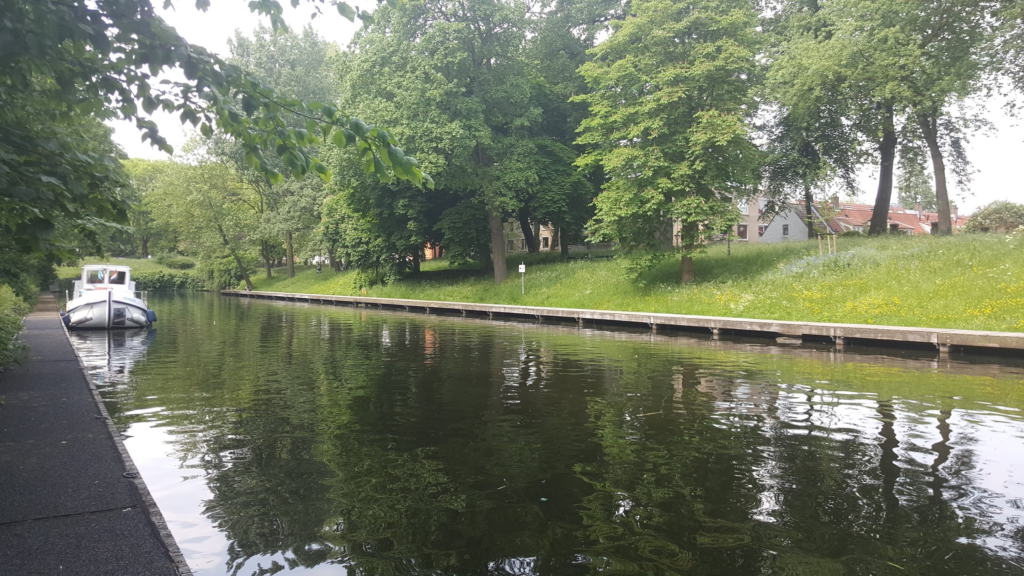
The caveat is the regional buses. If your plan involves a regional bus to or from Schiphol, take the direct train instead, or check the service before you rely on it.
Utrecht
Half an hour from Amsterdam by train, with a medieval center you can cross in fifteen minutes and canals built on two levels, which is something no other Dutch city has. It works as an easy day trip, or as a quieter base than Amsterdam if you’d rather stay there.
The Hague and Rotterdam
Both are under an hour from Amsterdam and both have city transport running normally. The Hague gives you Golden Age painting and a North Sea beach in the same afternoon. Rotterdam is the opposite of every other Dutch city, modern and architectural, because its center was destroyed in 1940 and rebuilt in a completely different style.
Turkey’s Aegean Coast
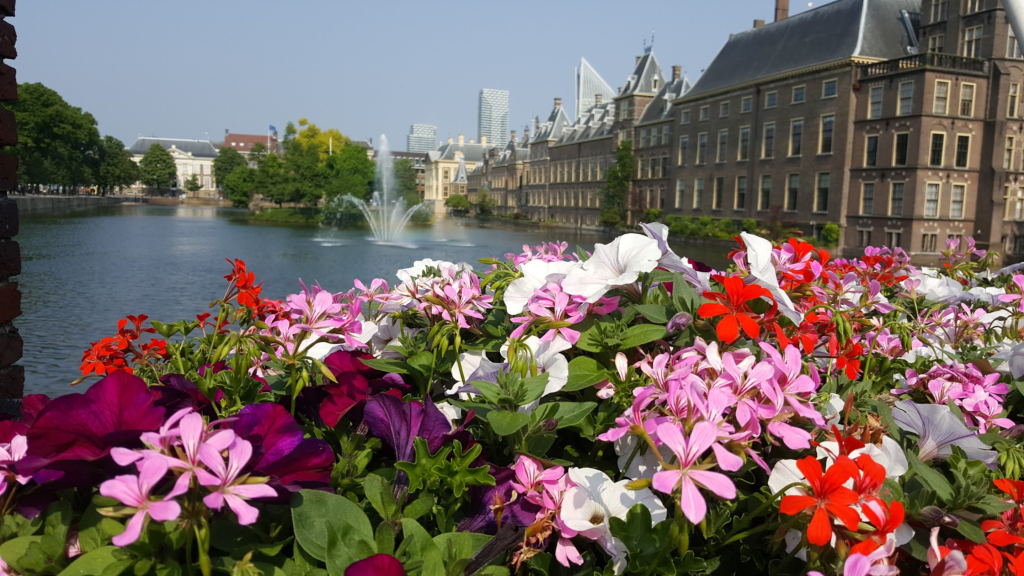
If you want to leave the European labor disputes behind entirely, Turkey’s Aegean coast is outside all of this, and late October is one of the better times to visit Kuşadası and Ephesus, with the summer crowds gone and the weather still mild. The Best Things to Do in Kusadasi, Turkey
Spain
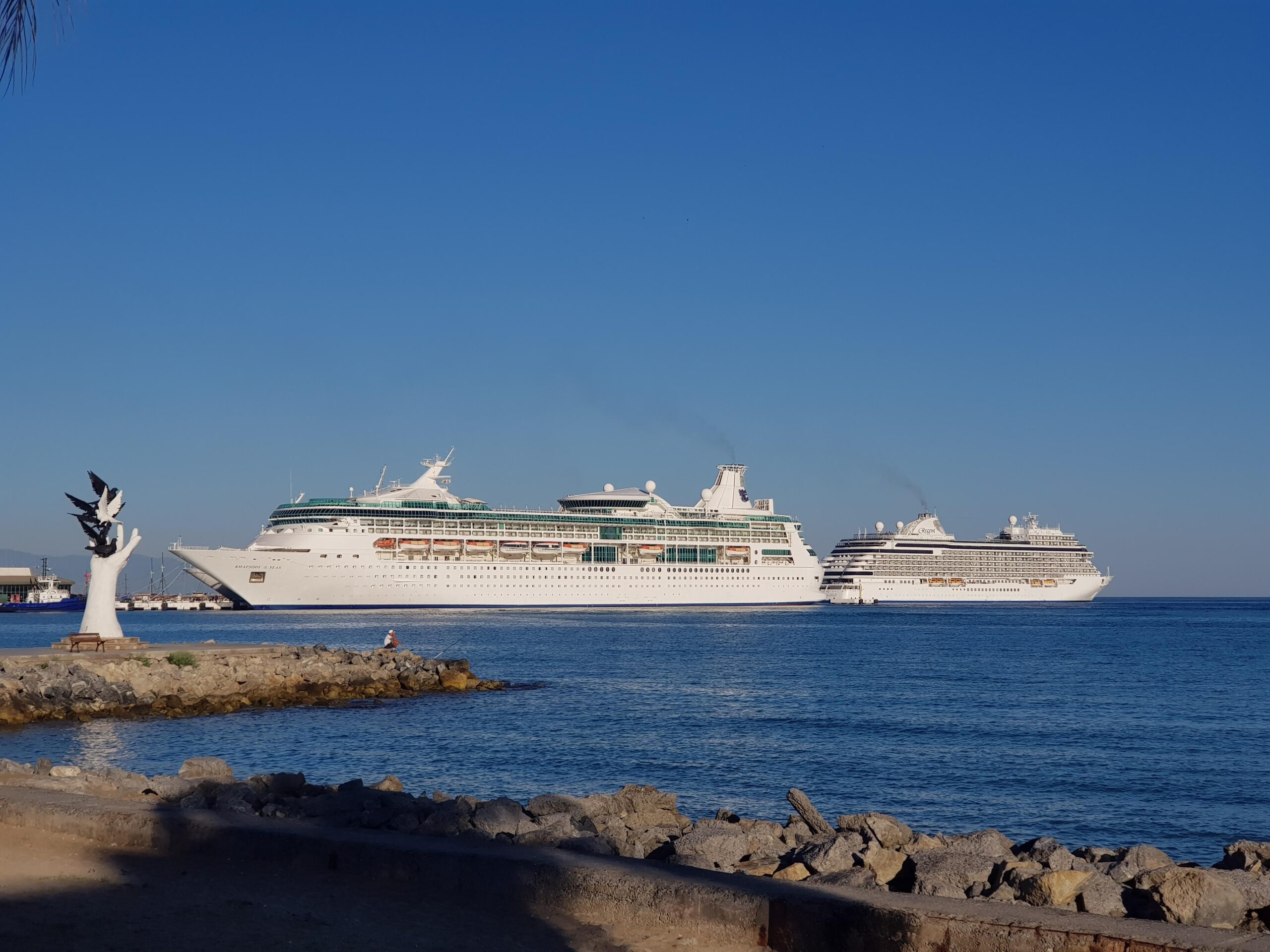
Spain has had its own housing protests this autumn, and while that’s worth knowing about, it shouldn’t put you off. Day to day, these cities are running completely normally.
Flights, trains, museums and restaurants are all operating as usual. Several cities have had peaceful encampments in central squares since late September, including Granada and Málaga, where the camp sits in Plaza de la Constitución in the old town. There were larger demonstrations across the country in early October, including one in Valencia that ended in clashes with police, and the national political picture is unsettled after the government fell on 4 October. Unions have discussed a general strike, though no date has been set.
For a visitor, none of that is likely to touch your trip. The encampments are static and in known places, and you’d walk past one rather than into anything.
Granada
Granada is the one worth rearranging a trip for, and the Alhambra is the reason.
October is one of the easier months to get tickets, which matters more here than anywhere else in Spain, because the Alhambra sells out weeks ahead through most of the year and entry runs on strict timed slots. If your dates are close, this is the month you have a realistic chance.

The city around it is worth two days on its own. The Albaicín is a hillside of whitewashed lanes facing the Alhambra across a valley, and walking it at the end of the day is the best free thing in the city. Be warned that Granada is built on hills in a way Málaga isn’t, so where you stay has a real effect on how much climbing you do.
Valencia
Valencia gets less attention than Barcelona and Madrid, which is most of its appeal.
The City of Arts and Sciences is the obvious draw, a complex of white curved buildings holding a science museum, an aquarium and an opera house, and it looks like nothing else in Spain. What makes the city work, though, is the Turia, a former riverbed that was diverted after a flood and turned into a nine-kilometre park running through the middle of the city. You can walk or cycle its whole length, and it connects most of what you’d want to see.
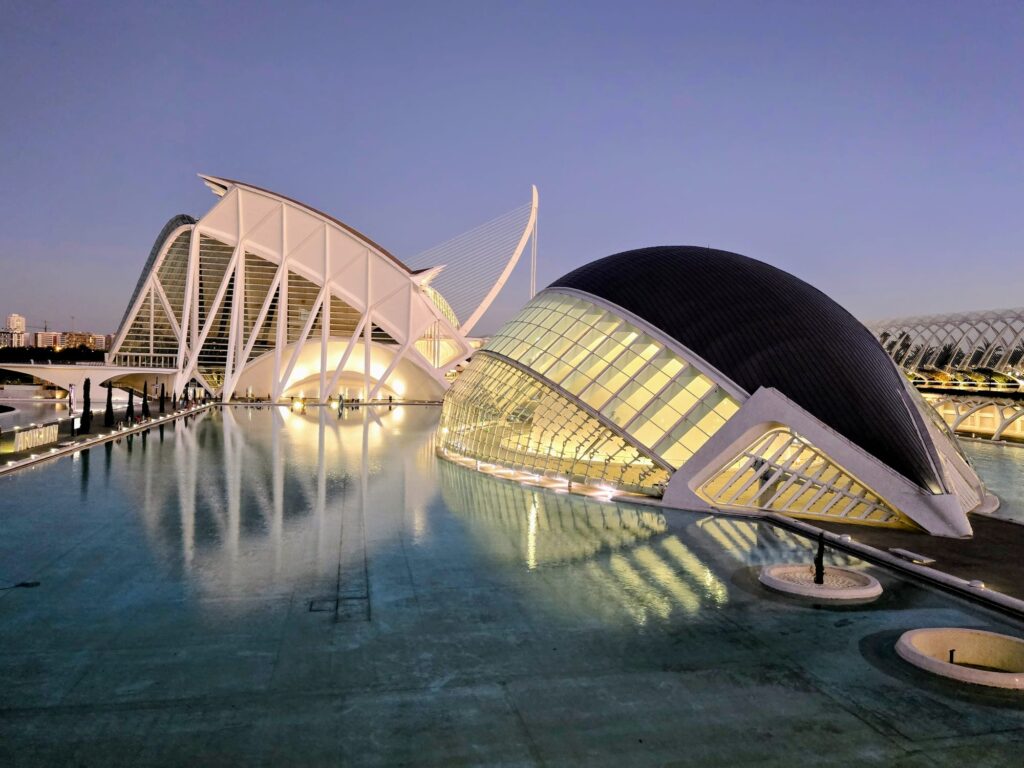
There’s a long city beach, a historic centre that’s genuinely lived-in rather than preserved for visitors, and this is where paella comes from, which is worth knowing before you order one anywhere else in Spain.
The only real planning advice is to check whether any demonstrations or strike dates are announced for your travel days, which is the same thing we’d say about anywhere in Europe this month.
Best Time To Visit Valencia, Spain
Málaga
It’s still warm enough to swim, the summer crowds have gone, and the city is small enough to see properly in two days.
The Alcazaba is the main reason to come. It’s the best-preserved Moorish fortress in Spain after the Alhambra, and unlike almost everything else in Andalusia it needs no advance booking at all. You buy a ticket from a machine at the entrance and walk in. Go on a weekday morning and you’ll have whole sections to yourself.
The rest of the city rewards doing very little. The historic centre is flat and pedestrianised, the beach is fifteen minutes’ walk from the cathedral, and the best food is out east in the old fishing neighbourhoods where they grill sardines over open fires on the sand.
How to check before you travel
Don’t rely on social media for this, and particularly not on the maps that circulate during events like these, which are frequently out of date or simply wrong.
The sources worth checking are your own government’s travel advice for France, RATP for Paris metro and station closures, your airline directly for flights, and France 24 or RFI for English-language news from inside France.
The US Embassy in Paris publishes security alerts as events develop, and those have been the most specific and current sources through this period.
Our honest verdict
Paris is not closed, and most people traveling there this month will have an ordinary trip. It’s also not the month we’d pick for a first visit, given the option, because a city break works better when you’re not checking transport alerts every morning.
If you’re going, go informed and stay flexible. If you’re still choosing, the Netherlands is where we’d point you this month, and Amsterdam in particular is as easy as European city breaks get right now.
We’ll update this post as the situation changes.
FAQs
Should I cancel my trip to Paris?
Official advice is to exercise increased caution rather than avoid travel, and airports and rail are operating. Most travelers don’t need to cancel. Check your booking terms before deciding, since this kind of disruption rarely qualifies for a free cancellation.
Are the Paris metro and airports running?
Yes. No strike was called for air travel or rail at the time of writing. Demonstrations can close individual metro stations at short notice, so check RATP on the day.
Which areas of Paris should I avoid?
Place de la République, Bastille, Nation and the main boulevards have been named most often, and gatherings typically build through the afternoon. Residential arrondissements and the Left Bank have been considerably less affected.
Is Spain a good alternative right now?
Spain has its own large protest movement over housing, with major demonstrations in Madrid and Barcelona in October and protest camps in several cities including Málaga.
Is Amsterdam affected?
City transport in Amsterdam is running normally and has been excluded from the regional bus strikes. Take the train to Schiphol where you can, and check regional bus services if you need one.
How long will this last?
Nobody knows, and anyone telling you otherwise is guessing. Curfews were introduced for 19 and 20 October with the possibility of more, and the situation is being reassessed daily.