Where to Stay in Paris: Best Areas for First-Time Visitors
The area you choose to stay in Paris will shape your trip more than the specific property you book. Get it right and you walk to most of what you came for. Get it wrong and you spend a chunk of every day on the metro, which is exactly what happened to us.
If you want the answer before you scroll: for a first visit, aim for the 1st, 7th, or 8th arrondissement. Those three put you within walking distance or a short ride of most of the major sights, which matters more than you’d think on a short trip.
In this guide, I’m sharing all the best tips and mistakes I made on my trip to Paris many years ago as a 20 year old. I’ll also be sure to add in what I’d do differently when I go again.
How the Arrondissement System Works
Paris is divided into twenty numbered districts called arrondissements. They spiral outward clockwise from the 1st, which sits in the center near the Louvre, and finish with the 20th out to the east. The lower the number, generally the more central you are.

This matters because Parisians and hotel listings both use these numbers constantly, and once you understand the spiral, you can read a hotel’s address and immediately know roughly how far out it sits. A hotel in the 4th arrondissement is central; a hotel in the 19th is not.
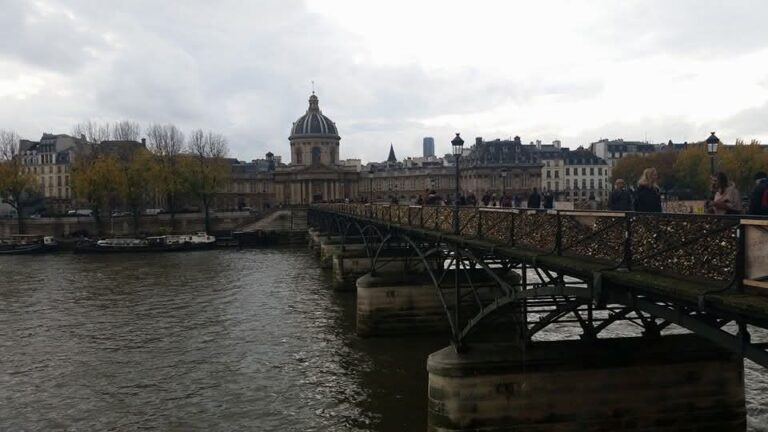
The Seine also splits the city into the Right Bank to the north and the Left Bank to the south. The Left Bank tends to feel calmer and more residential. The Right Bank is busier and more commercial. Neither is better, but the difference is noticeable if you’re choosing between two areas that look similar on a map.
Where to Stay in Paris for a First Visit
If this is your first trip and you have four or five days, prioritise proximity over character. You can find charming neighbourhoods on your second visit. On your first, the goal is spending your time at the sights rather than travelling to them.
1st Arrondissement
The most central option in the city. You’re beside the Louvre and the Tuileries Garden, with Notre-Dame, the Seine, and Le Marais all within a comfortable walk. Transport connections are extensive because everything converges here.
The trade-off is cost and atmosphere. This is the most expensive part of Paris to sleep in, and it can feel more like a tourist and shopping district than a neighbourhood people actually live in. If your budget stretches and convenience is the priority, it’s hard to beat.
7th Arrondissement
This is the Eiffel Tower district, and it also holds the Musée d’Orsay and Les Invalides. It’s a quieter, more residential area than the 1st, with a calmer evening feel and a reputation as one of the more peaceful central districts.
The 7th is large, and the parts closest to the Eiffel Tower are further from other sights than the map suggests. Check how far your hotel is from a metro station rather than how far it is from the tower itself.
8th Arrondissement
This arrondissement is home to the Champs-Élysées and the Arc de Triomphe, with good transport links and a wide range of hotels. It’s well positioned for reaching most of the city, and if you’re visiting in late November or December, this is also where the Christmas market on the Champs-Élysées sets up.

We spent time here and enjoyed it, though it’s a heavily commercial stretch, and prices for anything bought along the main avenue reflect that. We bought macarons at the Christmas market there and they were the most expensive of our lives.
Le Marais (3rd and 4th)
This is the medieval heart of the city, walkable to Notre-Dame and the Seine. These two arrondissements are full of narrow streets and independent shops, and it feels more like a living neighbourhood than the 1st does. If you want central plus character rather than central plus convenience, this is the compromise.
5th and 6th Arrondissements
The Latin Quarter and Saint-Germain-des-Prés, both on the Left Bank. Central, walkable to Notre-Dame and the Luxembourg Gardens, and generally considered safe and pleasant. The 6th in particular has a slower pace than the Right Bank equivalents.
Areas That Work Better for Return Visits
Some neighbourhoods are genuinely good places to stay but aren’t the right call for a short first trip.
10th Arrondissement
This is where we actually stayed, near Gare du Nord. It’s well connected, which was the main advantage. Gare du Nord is a major hub with metro, RER, and international rail links, so getting anywhere was straightforward.
That said, it was still a long way from the main sights. Every day started with a metro journey. For a five-day trip, that adds up. It’s a perfectly decent area to stay in and it made sense for our budget, but if I were advising a first-time visitor with limited days, I’d tell them to pay more to be closer in.
One thing that stood out about the area, and about Paris generally, was how much life happens outdoors. Even on a Monday afternoon in late November, there were people having picnics in the park, sitting outside cafés, and reading newspapers. I hadn’t expected that in cold weather, and it was one of the more memorable impressions of the trip.
We had to catch a bus to Brussels after just a few days though, so being near Gare du Nord with all its transportation options helped quite a bit.
11th and 18th
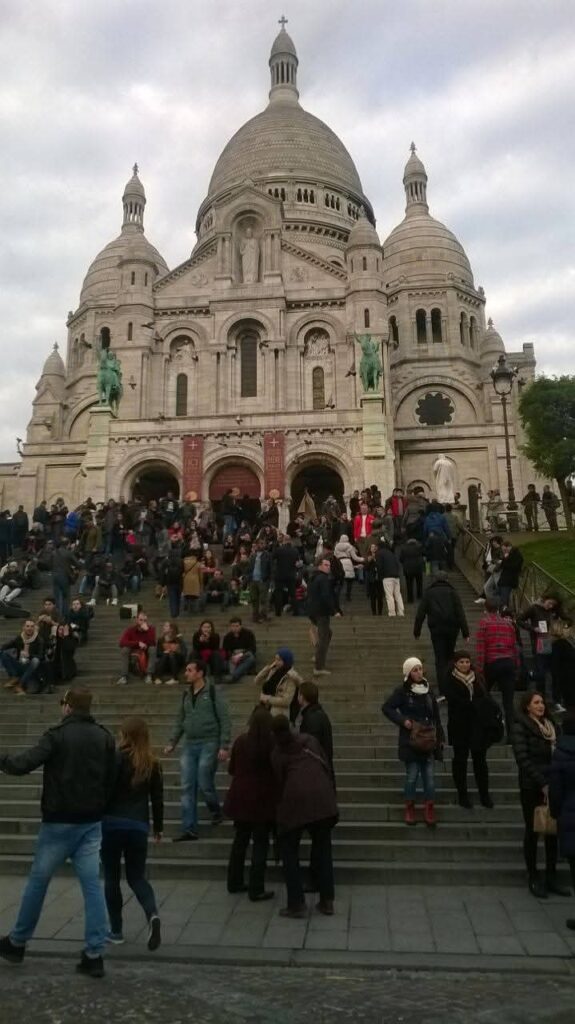
The 11th is known for food and a younger crowd, and the 18th covers Montmartre. Both have real appeal, but both sit further out and involve more travel time to the central sights. Montmartre in particular is hilly, which is a factor if you’re returning tired at the end of a long day.
Hotel, Hostel, or Serviced Apartment?
We booked a hostel, specifically St Christopher’s Inn. It was fine for a short stay and clearly geared toward younger travellers, which worked for us at the time. I was twenty and my cousin was around twenty-six, and we met a lot of people we got on with. My sister, who joined us for the second leg of the trip, did not enjoy it at all.
Would I book it again? Probably not. Looking back, a hotel or serviced apartment would have been considerably more convenient, and convenience turns out to matter more than I expected on a trip where you’re out walking all day. That’s not a criticism of the hostel so much as a recognition that the social, shared-space format suits a specific kind of traveller and a specific stage of life.
Here’s the rough breakdown:
- Hostels work if you’re travelling young, on a tight budget, and actively want to meet people. They’re less suitable if you value quiet, privacy, or a predictable routine, and they can be a poor fit if you’re travelling with someone who doesn’t want that environment.
- Hotels are the most straightforward option for short trips. Daily cleaning, a reception desk, and breakfast remove small frictions that eat into your day.
- Serviced apartments make more sense for longer stays, families, or anyone who wants a kitchen. Having somewhere to make your own breakfast is a genuine saving in a city where eating out constantly adds up.
If you’re considering a short-term rental, be aware that Paris has tightened its rules on these significantly in recent years. Legitimate listings are required to display a registration number, and the regulations around night limits and permitted properties have changed more than once. Check that a listing displays a registration number before booking, and check the current rules directly rather than relying on older articles, since this area has moved quickly.
Hotels Worth Looking At by Area
I didn’t stay at any of these, so treat them as a research-based starting point rather than personal recommendations. As always, make sure to research current reviews and availability yourself before booking.
1st arrondissement: Hôtel Mansart sits near Place Vendôme in a classic Parisian style. La Clef Louvre offers serviced suites with kitchenettes a couple of blocks from the Louvre, which suits travellers who want apartment flexibility with hotel service.
2nd arrondissement: Hôtel Square Louvois is frequently recommended as a mid-range option on a quiet street, still within walking distance of the Louvre and the Opéra.
7th arrondissement: Cler Hotel is a short walk from the Eiffel Tower and Champ de Mars. Hôtel d’Orsay sits close to the Musée d’Orsay. Jardins Eiffel comes up repeatedly as a mid-range choice in this district.

Serviced apartments generally: Citadines operates aparthotels across several central arrondissements, which is a practical option if you want a kitchen without hunting through rental listings.
Booking Mistakes Worth Avoiding
Check which branch you’ve actually booked. This one is ours. St Christopher’s Inn has more than one location in Paris, and we didn’t realise that when booking. We ended up at the Canal branch when we’d intended to stay at the Gare du Nord one. It worked out, but arriving in a new city on your first trip to Europe and discovering you’re at the wrong address is not a great start. If a chain has multiple properties in a city, confirm the exact address, not just the name.
Don’t optimize purely for price on a short trip. Cheaper accommodation further out costs you in travel time and daily energy. On a five-day trip, an extra half hour each way is a meaningful chunk of your holiday.
Check the walk to the nearest metro station, not the walk to the landmarks. A hotel advertised as near the Eiffel Tower might still be a long walk from a station, which matters far more day to day. You’ll easily find this information on all the popular accommodation booking sites, and even email or call the hotel to ask them in advance.
Book earlier for peak season. Availability in central arrondissements tightens considerably in spring and summer, and the good mid-range options go first.
When You Visit Paris Changes What You Pay
We went at the end of November, and accommodation was noticeably cheaper than it would have been in peak season. That was the main upside, and it’s a real one if budget is your constraint.
The downside was the weather. It was cold and grey for most of the trip. I wouldn’t recommend late November purely for the experience of being outdoors, though the Christmas markets starting up at the very end of the month were a genuine bonus we hadn’t planned for.
If you want mild weather for walking, spring and early autumn are the better windows. If you want the lowest accommodation prices and don’t mind the grey, late autumn works, and it buys you a more central location for the same money, which is arguably the better trade.
The short version of where to stay in Paris: on a first trip, pick the 1st, 7th, or 8th arrondissement and accept that you’re paying for the location rather than the room. The 10th where we stayed was well connected and perfectly fine, but the daily travel time was a real cost. If you can only get one decision right about your Paris trip, make it this one, because every other choice you make gets easier when the sights are on your doorstep.
If you’re still building the itinerary, my guides to things to do in Paris and foods to eat in Paris cover what to prioritise once you’ve sorted the base.
Frequently Asked Questions
Which arrondissement is best for a first-time visitor to Paris? The 1st, 7th, or 8th. All three put you close to the major sights and cut down significantly on daily travel time. Le Marais in the 3rd and 4th is a good alternative if you want somewhere with more neighbourhood character while staying central.
Is staying near Gare du Nord a good idea? It’s well connected, with metro, RER, and international rail links, which is genuinely useful if you’re travelling onward to other cities. But it’s a long way from the main sights, so it suits people prioritising transport connections or budget over walking distance.
Should I book a hotel or an apartment in Paris? Hotels are simpler for short trips. Serviced apartments make more sense for longer stays or if you want a kitchen. If you’re looking at short-term rentals, check the listing displays a registration number, since Paris has tightened its rules considerably.
Is it worth staying further out to save money? Sometimes, but weigh it properly. On a trip of four or five days, extra travel time each way adds up to a meaningful portion of your holiday. Travelling in a cheaper season is often a better way to save than moving further from the centre.
Are hostels in Paris a good option? They can be, depending on who you are and who you’re with. They’re well suited to younger solo travellers or small groups who want a social environment. They’re a poor fit if you want quiet and privacy, and worth thinking twice about if anyone in your group would rather not share space.