Foods to Eat in Paris: What’s Worth It and What to Skip
Most food guides to Paris are built around a spine of wine pairings, pork charcuterie, and dishes braised in alcohol. If you’re like us and don’t eat or drink any of that, roughly half of a typical “must-try” list becomes unusable, and the guides written for you tend to be restaurant directories rather than actual food guides. This one sits in the middle: what’s genuinely worth eating in Paris, what I ate on my own trip, what’s overpriced, and what to check before you order.
The Foods Paris Is Actually Known For
If you want the short version before you scroll, the foods most worth prioritizing in Paris are the ones the city does better than almost anywhere else, and most of them come from a bakery counter rather than a restaurant table.
The core list looks something like this:
- Croissants and pain au chocolat, ideally fresh in the morning
- Baguettes, either on their own or as the base of a picnic
- Crêpes, both sweet and savoury, often best from a street window
- Macarons, with a caveat about where you buy them
- Quiche, in its cheese and vegetable variations
- Frites, which show up alongside almost everything
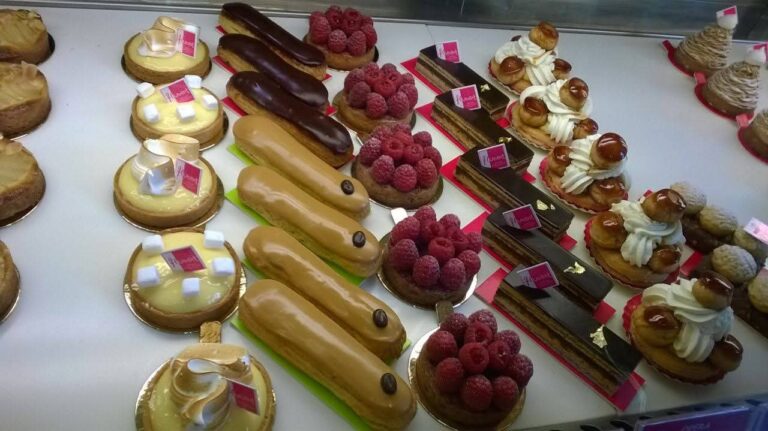
- Éclairs, tarte Tatin, Paris-Brest, and the wider patisserie counter
- North African couscous and tagine, which are a genuine part of the city’s food culture
Everything below expands on these, with honest notes on which ones actually earned their reputation. The best part about this list is that you can cover all the items here even if you’re just in Paris for 3 days, making it the ideal guide for foodies.
Start With the Bakeries
Bakery culture is the real backbone of eating in Paris and you’ll always find one regardless of where you stay on your Paris trip. It’s cheap relative to sit-down meals, it’s everywhere, and it’s the one category where the standard is consistently high even at unremarkable neighbourhood shops. If you do nothing else food-related on your trip to Paris, eat from bakeries.
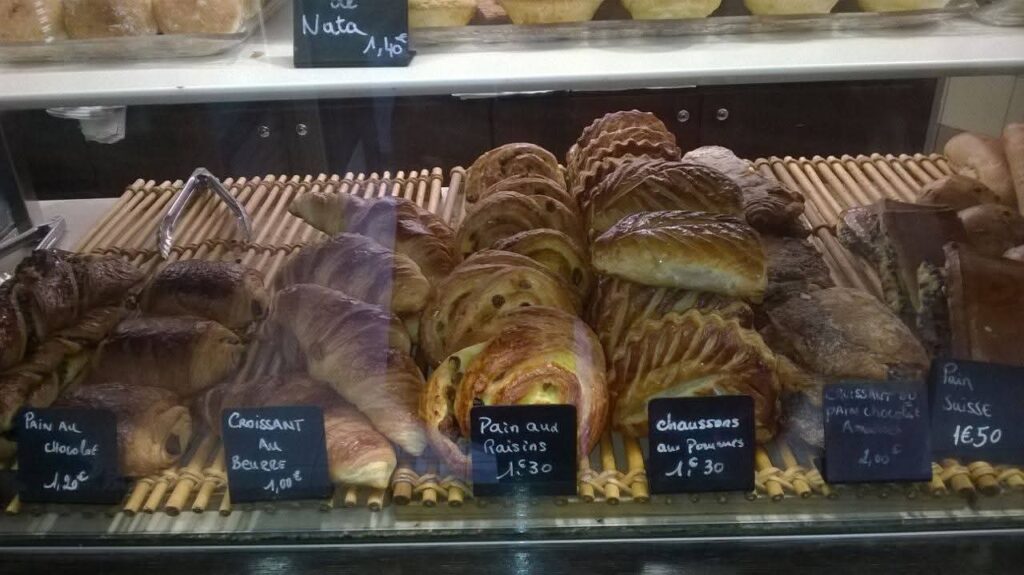
When you’re in Paris, it’s good to know that a boulangerie is a bread bakery. Under French law a shop can only call itself that if it bakes its bread on the premises from scratch, without pre-made or frozen dough. A pâtisserie is a pastry shop, focused on the more delicate sweet items. Plenty of boulangeries sell both, so you don’t need to hunt for one or the other, but knowing the difference helps you understand what a place is likely to do best.
Croissants and Pain au Chocolat
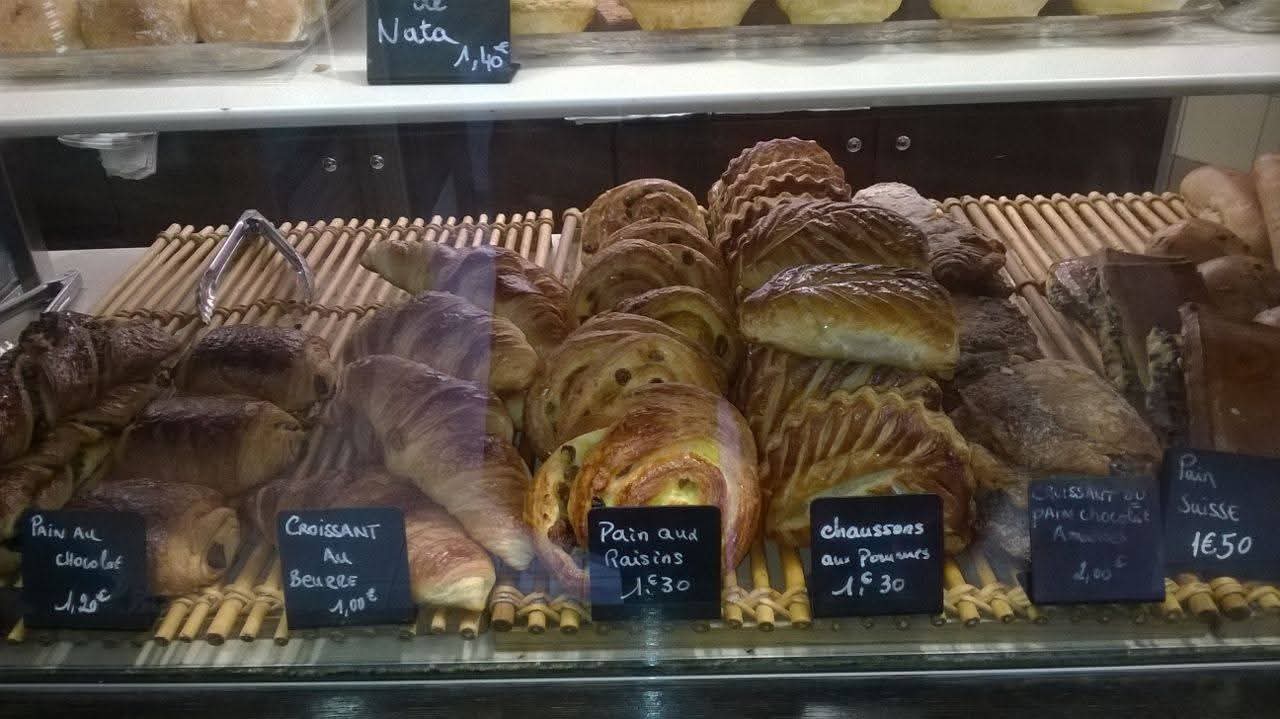
These are the two I ate most on my trip, and they’re the easiest recommendation in this entire post. Both fall under viennoiserie, the category of buttery breakfast pastries, and both are best in the morning when they’ve come out of the oven recently rather than sat under a display light since dawn.
A pain au chocolat is essentially the same laminated dough as a croissant, wrapped around chocolate batons instead of curved into a crescent. If you can only try one, the plain croissant is the better test of a bakery’s skill, because there’s nothing to hide behind.
Baguettes
Worth knowing before you order: many boulangeries sell both a standard baguette and a baguette tradition, which is smaller, made without additives, and baked on site. The tradition costs a bit more and is generally the better one. If you’re assembling a picnic, this is your foundation.
How to Spot a Good Bakery
A short queue of local people at mid-morning is a more reliable signal than a pretty shopfront. Bakeries directly facing major landmarks tend to charge more for less, which is the same principle that applies to cafés in those spots. Walking two or three streets away from a monument usually improves both price and quality.
Pastries and Sweets Worth the Detour
The patisserie counter is where Paris shows off, and it’s also where you’re most likely to overspend without realizing it. A few of these are genuinely worth building a stop around, with some words of caution on where to buy from and what to look out for.
Macarons
Macarons are almond meringue shells sandwiched around a flavoured filling, and they’re the single most photographed food item in the city. They’re delicate, they come in a huge range of flavours, and they are also relentlessly marketed to tourists.
I would say, don’t buy them at a Christmas market or any high-footfall tourist setup. We bought macarons at the market on the Champs-Élysées and they were, without exaggeration, the most expensive macarons of our lives. The same item from an ordinary patisserie a few streets away would have cost a fraction of that. Buy them somewhere you’d buy an everyday pastry, not somewhere that exists to catch people walking past a landmark.

Oh, and just so you know, a macaron is not a macaroon. The macaroon is the dense coconut mound. The macaron is an almond-based sandwich cookie. They are completely different things.
Éclairs, Tarte Tatin, and the Rest of the Counter
Beyond macarons, the patisserie standards worth looking at include the éclair, choux pastry filled with cream and glazed on top; the Paris-Brest, a ring of choux filled with praline cream; tarte Tatin, an upside-down caramelized apple tart; and kouign-amann, a caramelized butter pastry from Brittany that is somehow both a pastry and a dessert.
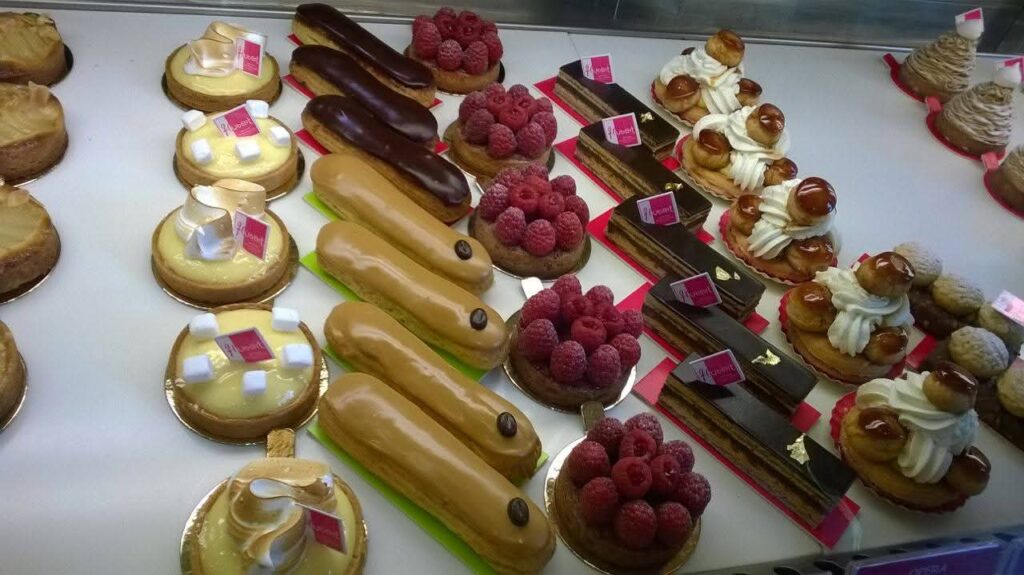
If you’re avoiding alcohol like us, be aware that some patisserie items use rum, kirsch, or other spirits in syrups and creams. The rum baba is the obvious one, but it also turns up in fillings and glazes where you wouldn’t expect it. Asking at the counter is normal and nobody will find it strange.
Savoury Dishes Worth Trying
Paris does have savoury food beyond the bakery, though this is where the standard “must-try” lists become least useful if you avoid pork and alcohol. These are the ones that hold up.
Crêpes
Crêpes were one of the better things I ate in Paris, and I’d specifically recommend getting them from a street vendor rather than a sit-down restaurant. The window-front crêperies make them fresh on the griddle in front of you, they cost a fraction of the restaurant version, and eating one while walking is a completely normal way to have a snack in this city.
Sweet crêpes come with fillings like chocolate spread, sugar and lemon, or jam. Savoury versions, often made with buckwheat and called galettes, come with cheese, egg, mushrooms, and similar.
Quiche
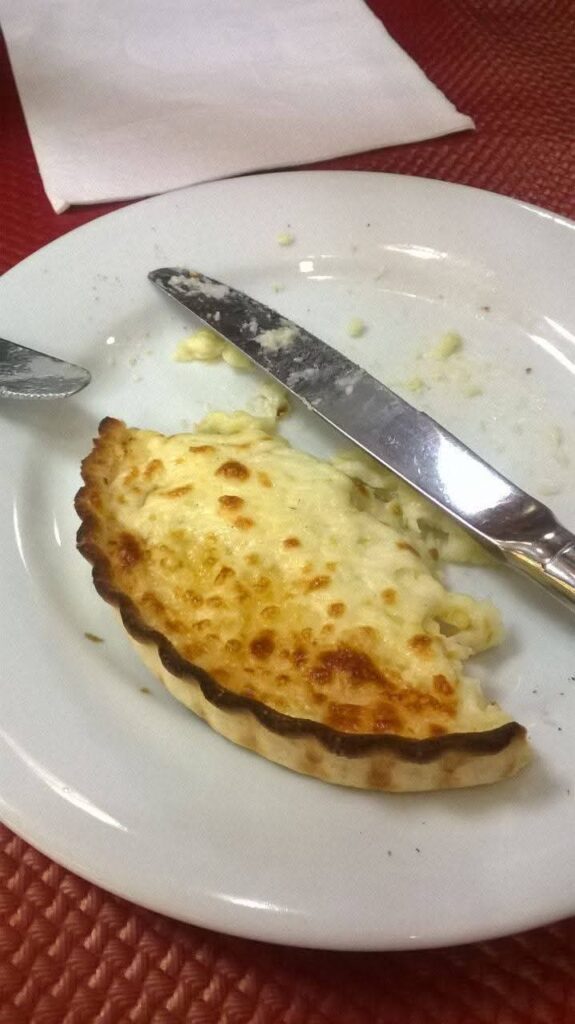
A slice of quiche from a bakery counter is one of the more practical lunches in Paris. It’s filling, it’s portable, and it’s available almost everywhere. I had a mixed cheese quiche which was even better than most sit-down meals. Cheese, spinach, mushroom, and vegetable quiches are widely available and are the ones to ask for.
Frites
Frites turn up alongside nearly everything in Paris, and they’re a reliable default when a menu is otherwise difficult to navigate. They’re also a reasonable fallback when you’re tired of deciding.
Omelettes and Soups
A café omelette is a solid, uncomplicated meal and one of the easier things to order without ingredient concerns. We also had a buffet breakfast included at our hotel in Paris, and ended up trying more cheese than ever before. I can’t remember which one it was, but one of the cheeses was truly one of the strangest things I had in Paris. It was probably an acquired taste as no one else seemed to have the kind of (bad) reaction my family and I had.
Eating Well as a Halal-Conscious Traveller
Paris has a large and long-established North African community, and that has shaped the city’s food in ways most travel guides skip entirely. Neighbourhoods in the 18th, 19th, and 20th arrondissements, including areas around Belleville and Goutte d’Or, have concentrations of Moroccan, Algerian, and Tunisian restaurants and butchers. Couscous and tagine are not niche foreign options here; they’re part of how a large number of Parisians actually eat.
The Grande Mosquée de Paris in the 5th arrondissement runs a restaurant and tearoom serving North African food, which is a practical option if you’re spending time around the Latin Quarter.
For bakeries and patisseries, the situation is more mixed than either optimistic or pessimistic guides suggest. Many pastries contain no meat products at all, and some shops use fish-based gelatine, but this varies shop to shop and isn’t something you can safely assume. Gelatine turns up in mousses, glazes, and set creams rather than in plain viennoiserie, so a straightforward croissant or pain au chocolat is generally the simpler choice, and anything more elaborate is worth a question at the counter.
Kebab shops are extremely common across the city and are the most widely available quick halal meal, though quality varies enormously. In fact, I also ended up at an Algerian restaurant and ordered a cheeseburger which was one of the best I’ve ever had. The owner and I also had a great conversation even though I don’t speak a word of French or Arabic, and he didn’t speak much English.
How to Eat Well Without Overspending
Food in Paris has a reputation for being expensive, and it can be, but a lot of that comes down to where and when you eat rather than the city itself.
Here is a list of things to look out for which might help:
- Lunch menus are often better value than dinner. Many restaurants run a fixed-price midday menu that costs noticeably less than ordering the same kind of meal in the evening.
- Standing at the counter is usually cheaper than sitting. Cafés commonly charge different prices at the comptoir versus a table or terrace. If you’re just having a coffee, the counter is the local move.
- Assemble picnics from bakeries and markets. A baguette, some cheese, and fruit from a market stall makes a good lunch and lets you eat somewhere with a view rather than paying for the view.
- Avoid cafés with a direct line of sight to a major monument. You’re paying for the sightline, and it usually shows in the food.
- Street crêpes and bakery quiche cover a lot of meals cheaply. Between them you can eat well for days without sitting down to a full restaurant meal.
Common Food Mistakes First-Time Visitors Make
Buying sweets at tourist markets. This was our mistake with the macarons. Festive markets and landmark-adjacent stalls charge a significant premium for items you can get better and cheaper at any decent patisserie.
Expecting a large savoury breakfast. A typical French breakfast is a hot drink and a pastry or bread, not eggs and a spread of sides. Cafés that do serve eggs often switch to lunch service late morning, so an early start matters if that’s what you want.
Eating dinner at the hour you’re used to. Restaurants in Paris often don’t reopen for dinner service until well into the evening. Turning up at six and finding a kitchen closed is a common first-night experience.
Treating the bakery as a backup option. For a lot of visitors, the bakery ends up being the best food of the trip. Build it into the plan rather than defaulting to it when nothing else works out.
Prioritize the bakery counter, be selective about where you buy sweets, and ask about ingredients rather than guessing. The city’s food is genuinely good, but the version of it that’s worth your money is usually the everyday one, not the one positioned in front of a monument.
If you’re still putting the trip together, my guide to things to do in Paris covers how to prioritise the sights themselves.
Frequently Asked Questions
What’s the difference between a macaron and a macaroon? A macaron is the almond meringue sandwich cookie with a filling. A macaroon is a dense coconut mound. They’re unrelated despite the near-identical name, and the confusion is common enough that it’s worth knowing which one you’re actually ordering.
Is food in Paris expensive? It depends heavily on where you eat. Bakery items, street crêpes, and midday fixed-price menus are reasonable. Sit-down dinners in tourist-heavy areas are where costs climb fastest. You can eat well on a modest budget if you lean on bakeries and markets.
What do Parisians actually eat for breakfast? Usually something light: a hot drink with a croissant, another viennoiserie, or bread. It’s not a large savoury meal, and cafés often move to lunch service by late morning.
Are patisseries in Paris halal-friendly? It varies by shop. Plain viennoiseries like croissants and pain au chocolat are usually the simplest option, while mousses, glazes, and set creams may contain gelatine of uncertain origin. Some shops use fish gelatine, but this isn’t something to assume, so ask at the counter.
Where do locals actually eat? Away from the monuments. Neighborhood bakeries, market stalls, and cafés a few streets back from major sights are where the everyday eating happens, and they’re consistently better value than anything with a landmark view.