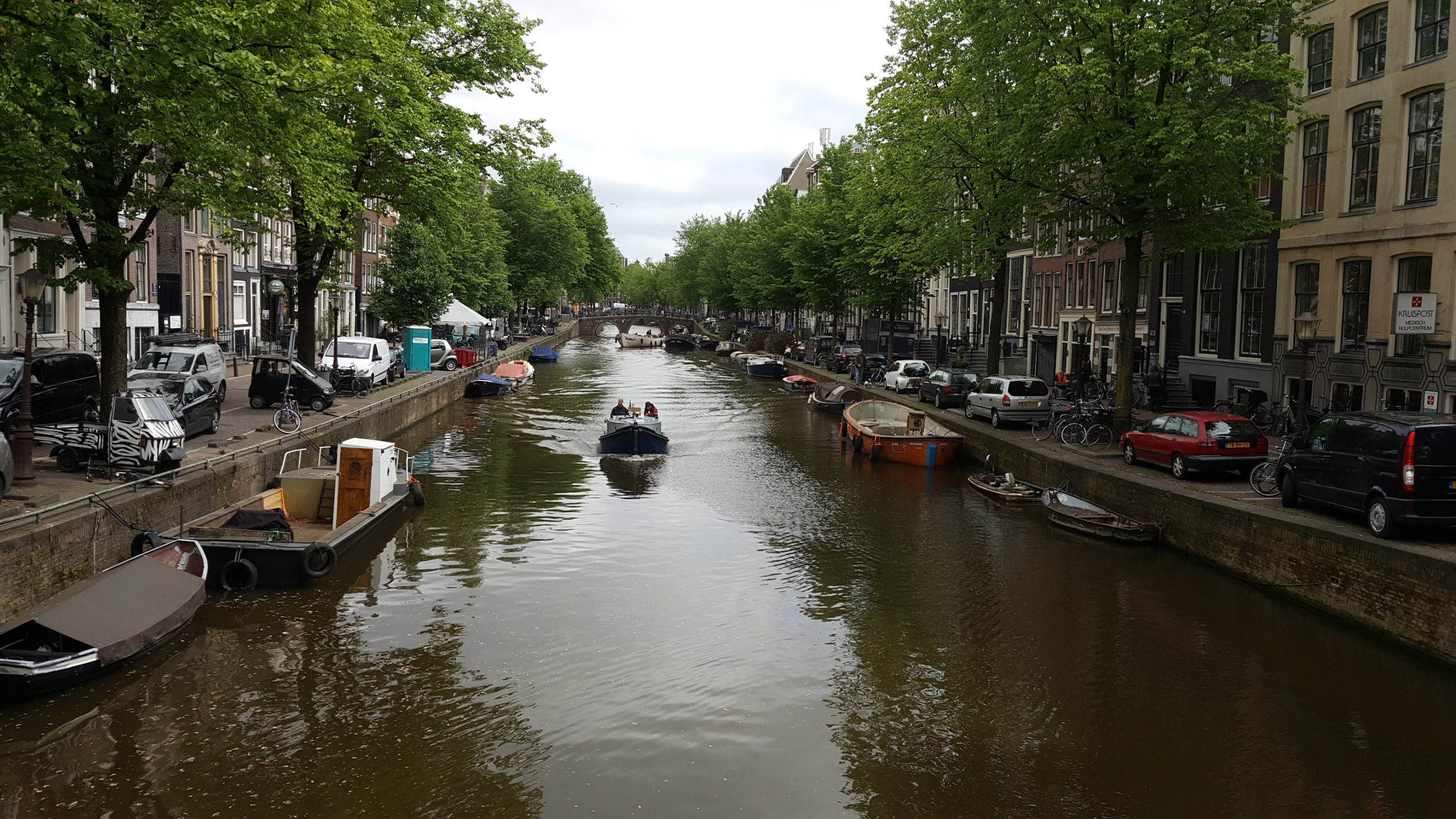
3 Days in Amsterdam: A Realistic First-Timer’s Itinerary
Three days sounds tight for a capital city, but Amsterdam is one of the few places where it’s genuinely enough. You can walk across the middle of it in under an hour, which is exactly why so many people get it wrong. They look at a map, decide everything is close together, and then try to squeeze the Anne Frank House, two museums, a canal cruise and three neighbourhoods into a single afternoon. Most of that afternoon ends up being spent in queues.
So I’ve built this around one main thing per day. A walking tour on the first day, a cycling tour on the second, and a food-focused third day. That’s more or less how I spent my own first three days before heading out on day trips for the rest of the week, and it left enough slack to actually wander, which is the part of Amsterdam worth having. If you would like a detailed information on things to see and do in Amsetdam you can check out the full blog here.
Are 3 Days in Amsterdam Enough?
Yes, for a first visit. Three days covers the historic centre, one or two major museums, the canal belt and at least one neighbourhood beyond the tourist core, without turning the trip into a march.
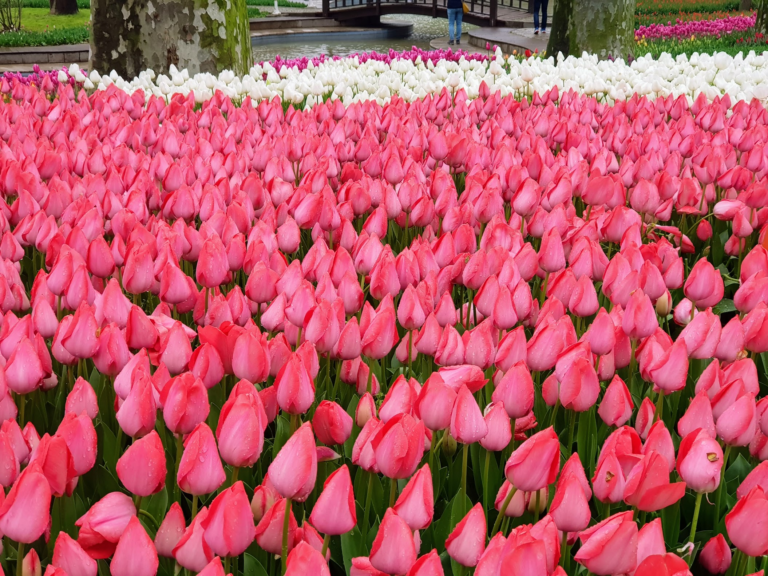
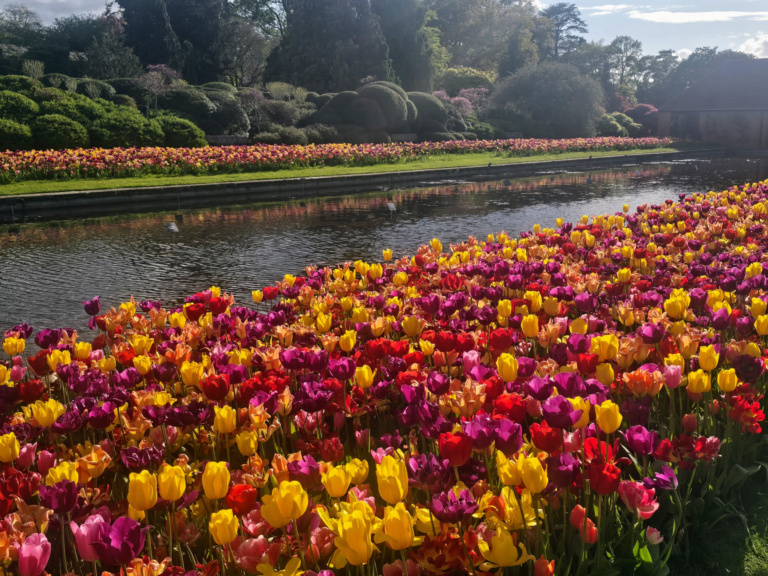
What three days won’t do is give you the city and the surrounding country. If windmill villages, tulip fields or other Dutch cities are on your list, you need a week rather than a long weekend. Two days is enough for a taste but forces you to cut something you’ll regret.
What to Book Before You Arrive
A few things genuinely can’t be left to chance, and they’re the difference between a smooth trip and a frustrating one.
Anne Frank House. This is the one that catches people out. Tickets are sold only through the official Anne Frank House website for a specific time slot, and there’s nothing available at the door. All tickets for a given date go live every Tuesday at 10am Amsterdam time, six weeks ahead, and in summer they disappear fast. If you want to go, set a reminder and build the rest of your day around whatever slot you get rather than the other way round.
Worth knowing: there are fake sites with similar URLs, and third-party sellers advertising Anne Frank House tours don’t actually get you inside. Book through annefrank.org and nowhere else.
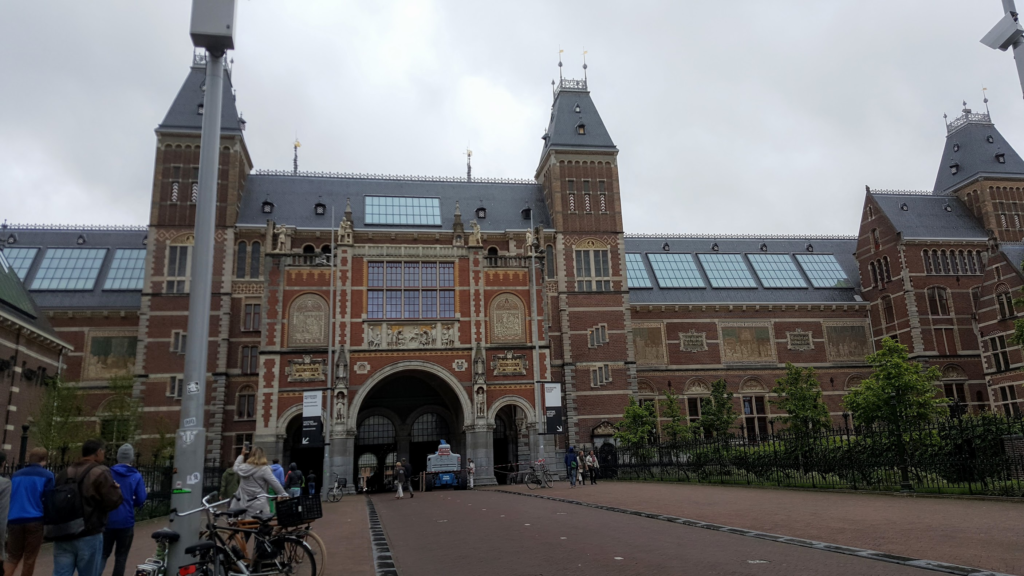
Rijksmuseum and Van Gogh Museum. Both use timed entry. The Rijksmuseum is usually bookable a few days out, though weekend and holiday slots fill up. The Van Gogh Museum sells online only and is harder to book at the last minute, particularly between March and October.
Walking and cycling tours. These can often be booked a day or two in advance, though popular morning slots go faster in summer.
Check current opening hours and ticket release times on each museum’s official site before you travel. These change, and outdated information, is the most common reason people miss things.
Day 1: A Walking Tour and the Historic Centre
Start with a guided walk. It’s the single most useful thing you can do on a first morning, because it gives you the shape of the city before you start making your own decisions about it. Amsterdam’s centre is a set of concentric canals, and understanding that layout early stops you wandering in circles for the rest of the trip.
Morning: Guided Walking Tour
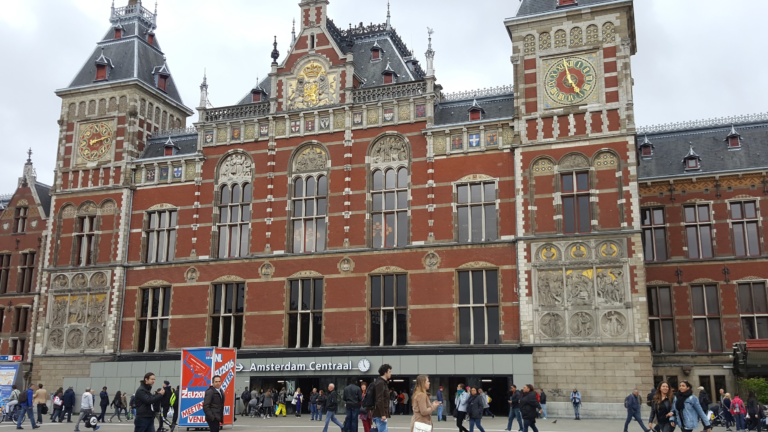
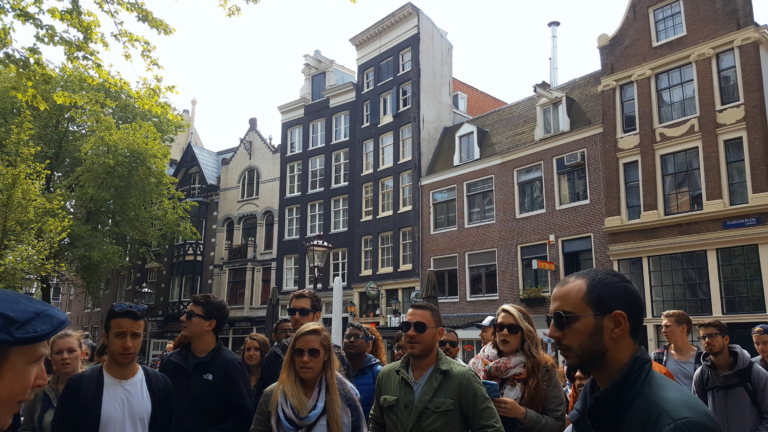
Most walking tours run around two to two and a half hours and start from Dam Square or near Centraal. A typical route takes in Dam Square, the Begijnhof courtyard, the edge of the Jordaan, the flower market and Rembrandtplein. If the general highlights loop doesn’t appeal, some operators run themed walks instead, focused on the Jewish Quarter or on canal architecture.
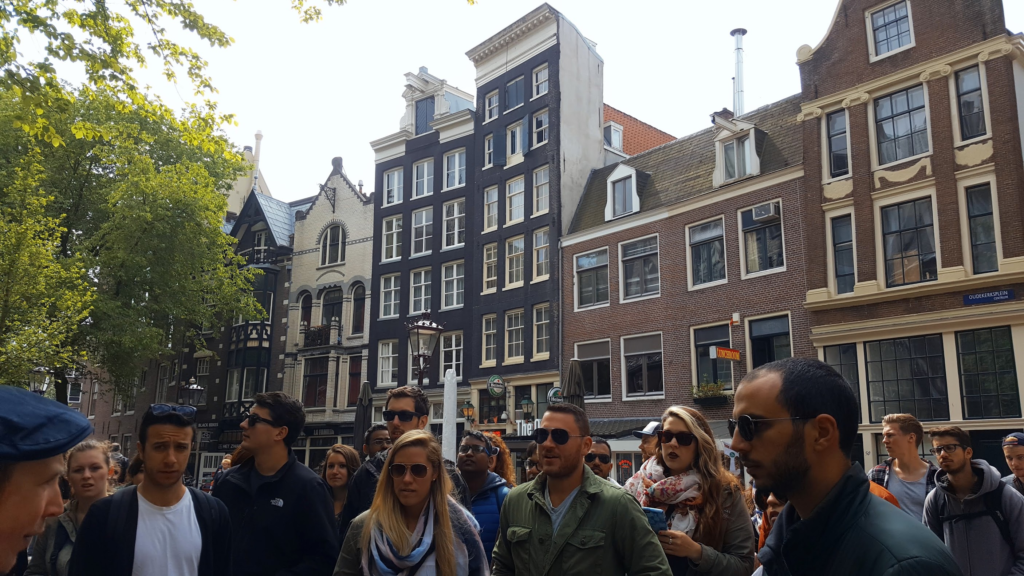
The tour I took covered most of the central sights and gave me a proper introduction to the city, which meant the rest of the day was mine to fill without a map in my hand. This gave me a great introduction to the city layout, and i got an idea of the places that I would like to visit later in more detail. Landmarks you’re likely to pass on a general centre route:
- Dam Square and the Royal Palace, which began life as a city hall during the Dutch Golden Age
- Nieuwe Kerk, next to the palace
- Begijnhof, a quiet courtyard that holds one of the city’s oldest wooden houses
- The Nine Streets, a grid of small shopping lanes between the main canals
- Westerkerk and the exterior of the Anne Frank House
- Nieuwmarkt and the Waag, a fifteenth-century city gate
Afternoon: Walk It Again on Your Own
Here’s the thing about the tour route: it’s designed to cover ground, not to let you linger. The afternoon is for going back to whatever caught your attention.
Amsterdam is genuinely walkable, and you can cover the central sights in a couple of hours if you keep moving. Add a lunch stop and a coffee break and it fills a day comfortably. That’s the pace I’d recommend rather than adding a museum on top.
The Jordaan is the obvious place to spend the afternoon. It’s residential, quieter than the centre, and the small canals and courtyards are more pleasant to walk than the busier stretches around Damrak. If you’d rather see a different side of the city, De Pijp to the south has the Albert Cuyp Market and a less polished feel.
Evening
Canal cruises are heavily marketed and mostly worth doing once, particularly in the evening when the bridges are lit. They’re also the one activity where the tourist-trap version and the good version cost about the same, so book a smaller boat if you can. I did the canal cruise because I wanted to see the city from a different perspective and it was the perfect add on to my already beautiful day.
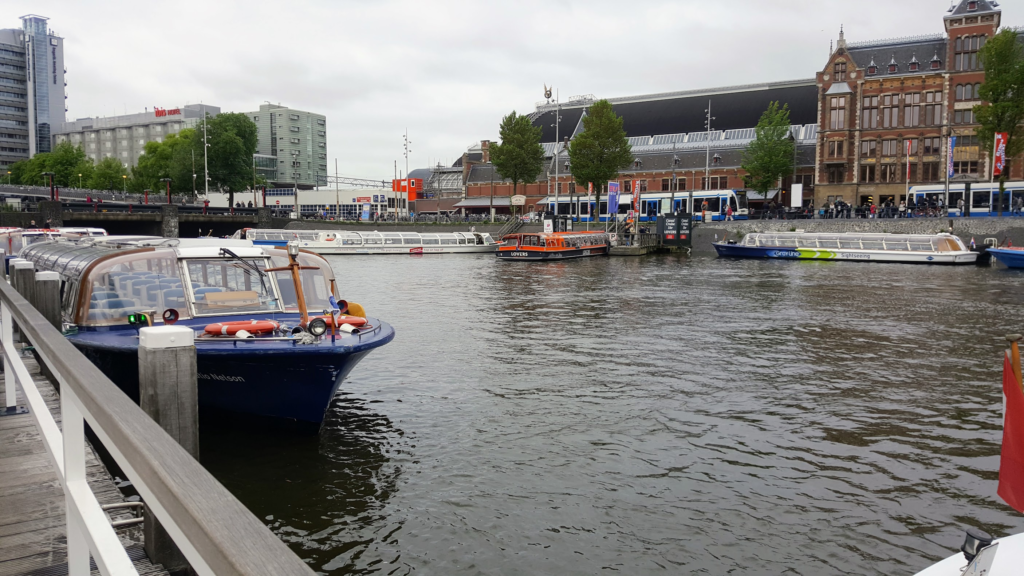
If you’d rather stay on foot, the canal belt after dark is quieter than you’d expect, and the walk between Prinsengracht and Herengracht is a reasonable way to end the day.
Day 2: Cycling Amsterdam and the Windmills
Day two is where the trip stops feeling like a standard city break. Cycling isn’t a novelty activity in the Netherlands, it’s how people get around, and a bike gets you out to parts of the city that walking doesn’t reach in a reasonable time.
Why a Guided Cycling Tour Beats Renting on Your Own
The bike lanes are busy, locals ride fast, and the rules aren’t obvious if you’ve never cycled in a city like this. A guided tour handles the navigation and keeps you out of the way of commuters, which makes the first ride considerably less stressful than working it out alone.
I did a cycling tour on my second day and it was one of the better parts of the trip. Beyond the practical side, it took us out past the traditional windmills, the older wooden and stone mills rather than the modern turbines you see from the train.
The Windmills You’ll Actually See
A cycling route will usually take in at least one of the traditional mills still standing in the city. There are only a few left, and they’re worth knowing apart.
De Gooyer in the east is the tallest wooden mill in the country, though you can only see it from outside. Molen van Sloten on the western edge is the one to aim for if you want to go in, since it’s the only city mill open to the public and still works as a polder mill, pumping water the way it always did. De Otter on the western waterfront is a rare surviving sawmill, squeezed in among modern housing.
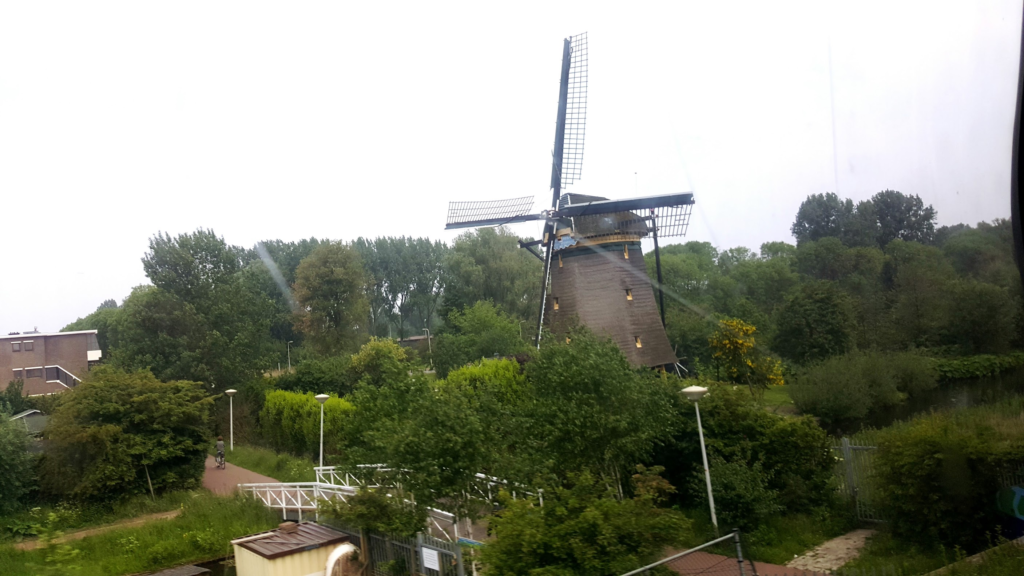
Set your expectations accordingly. These are single mills spread across a city, seen from a bike, and that’s a different thing from the row of them lined up along the water that most people have in their heads. If that’s the image you’re after, it’s a day trip rather than an afternoon.
Cycling Rules Worth Knowing from our guide
- The red asphalt strips are bike lanes. Don’t walk or stand in them, and this applies on day one too
- Signal with your arm before turning
- Bikes generally have right of way over cars at intersections, but don’t assume it
- Lock your bike properly if you rent independently, since bike theft is common
Day 3: Food, Markets and the Rijksmuseum
The third day is the one where you can slow down. I spent mine on a food tour, which is a better introduction to Dutch food than reading a menu and guessing, and then went into the Rijksmuseum.
Dutch Food Worth Trying
Dutch food has a reputation for being plain, which is only partly fair. The street food is the interesting part, and the markets are where to find it.
- Stroopwafel. Two thin waffle layers with caramel syrup between them. You’ll find stalls at Albert Cuyp Market making them fresh, and a warm one straight off the iron is a completely different thing from the packaged version you’ve had at home
- Poffertjes. Small, fluffy pancakes made with buckwheat flour, served with butter and powdered sugar. Street market stalls do them better than most sit-down places
- Kibbeling. Battered and fried pieces of white fish, usually cod, served with a herb mayonnaise and lemon
- Haring. Raw herring with onions, eaten standing at a fish stall. Not for everyone, but it’s the most genuinely Dutch thing on this list
- Dutch cheese. Gouda and Edam are the obvious ones, and market stalls will let you taste before you buy
- Appeltaart. Dutch apple pie, denser and less sweet than the version you’re probably used to
- Patat. Thick-cut fries in a paper cone with sauce. Ask for patatje speciaal if you want the standard combination
Where to Find It
Albert Cuypmarkt in De Pijp is the biggest street market and covers stroopwafel, fish and poffertjes stalls in one go. Noordermarkt runs on Saturdays and is smaller and less touristy. De Foodhallen is an indoor food hall if the weather turns, with a range of stalls under one roof.
A guided food tour earns its place on this day specifically because a local walks you to the good stalls rather than the ones with the biggest signs. Most run three to four hours and include enough food that you won’t need lunch afterwards.
For a fuller breakdown of what to eat and where, see my guide to foods to try in Amsterdam.
The Rijksmuseum
The Rijksmuseum is the one museum I’d prioritise if you only do one. It covers Dutch art and history broadly rather than focusing on a single artist, which makes it a better fit for a first visit than the Van Gogh Museum unless you specifically want Van Gogh.
Give it two to three hours minimum. You could spend a full day and not see everything, so pick a couple of sections rather than trying to walk every floor. I genuinely love art museums so i spent a good 4 hours inside. Plus it was raining so it was the perfect escape from the weather outside.
The museum sits on Museumplein alongside the Van Gogh Museum and the Stedelijk, so if you want a second museum they’re a few minutes’ walk apart. I’d resist the urge to do two in one day unless you’re a committed museum person. Also dont forget to take your picture in front of the Iamsterdam sign
Where to Stay for Three Days
Staying inside the canal ring isn’t the automatic best choice. It’s the busiest and most expensive part of the city, and on a three-day trip you’ll be out walking most of the day anyway, so what matters more is a quiet room and a short journey back to it.
I stayed in Amsterdam Noord. The free ferry from behind Centraal runs constantly and crosses in a few minutes, so you’re not as far out as the map suggests. What sold me on it was the quiet in the evenings, which is hard to find near the centre. The trade-off is real though: if your plan involves dropping back to your room mid-afternoon, that ferry crossing gets old, and Noord is a weaker choice for a three-day trip than it is for a longer one.

The Jordaan suits this itinerary well since day one ends there anyway. De Pijp works if you want the Albert Cuyp Market on your doorstep for day three. My where to stay in Amsterdam guide covers the neighbourhoods properly.
Getting Around
Walking covers most of what’s in this itinerary. The centre is compact and the tram network fills in the rest.
Trams and buses run on the GVB network, and you can tap in and out with a contactless bank card or buy a travel pass covering a set number of days. If you’re staying in Noord, the ferries behind Centraal are free and don’t need a ticket.
Taxis are expensive and slow in the centre, given how many streets are narrow or restricted. There’s rarely a good reason to use one for a journey within the city.
What I’d Skip on a Three-Day Trip
Not everything that appears on Amsterdam lists earns its place in a short trip.
Madame Tussauds and the Amsterdam Dungeon. Both sit on Dam Square and both could be in any city. Neither tells you anything about Amsterdam. I have done Madam Tussauds in Hongkong and i didnt want to spend a beautiful afternoon looking at wax statues, but thats my personal choice.
Renting a bike on day one. If you’ve never cycled in a Dutch city, doing it on your first morning while jetlagged and unfamiliar with the layout is a poor introduction. Walk first, cycle on day two.
Trying to do three museums. The Rijksmuseum alone can absorb half a day. Stacking it with the Van Gogh Museum and the Anne Frank House in one day means rushing all three.
Day trips. Tempting, and I know Haarlem is only fifteen minutes away. But three days is already tight for the city itself, and a day out means cutting one of the three days above. Save it for a longer stay.
Is a Three-Day Amsterdam Trip Worth It?
Three days in Amsterdam works well as long as you accept what it is: enough time to see the city properly, not enough to see the country. Built around one anchor a day, with walking as the default way to get around, it’s a comfortable pace rather than a rushed one.
If I were doing it again within the same three days, I’d keep the same structure. The walking tour on day one earns its place by making everything afterwards easier, and the cycling day is the one that stops the trip feeling like a checklist.
With more time, the sensible next step isn’t more days in the city. It’s using Amsterdam as a base and heading out, which is what I did for the rest of my own trip.
FAQs About Spending 3 Days in Amsterdam
How much walking should I expect in three days? A fair amount. The central loop between Centraal, Dam Square, the Jordaan and the canal belt runs roughly six to seven kilometres if you walk it as a circuit. Comfortable shoes matter more here than in most European cities.
Do I need to book museum tickets before I arrive? For the Anne Frank House, yes, and weeks ahead. For the Rijksmuseum and Van Gogh Museum, a few days is usually enough outside peak season, but both use timed entry so turning up without a slot is a risk.
Is Amsterdam walkable, or do I need public transport? Walkable for almost everything in this itinerary. Trams are useful for reaching Museumplein or De Pijp quickly, and the Noord ferries are free, but you can do three days largely on foot.
What’s the best time of year for a three-day trip? Late spring and early autumn give you long days without peak summer crowds. Summer has the longest daylight, with sunset around 10pm in June, which effectively extends each day. Winter is quieter and cheaper but you lose several hours of usable light.
Can I fit a day trip into three days? You can, but something in the city gets cut. If a windmill village or another Dutch city is a priority, plan for four days minimum or use a longer trip and treat Amsterdam as a base.
Can I visit Amsterdam as a layover if I dont have three full days? Yes you can absolutely do Amsterdam as a layover. We have done it a few times. Here is our full guide for a layover in Amsterdam.