Best Foods to Try in Amsterdam: A Halal-Friendly Food Guide
I didn’t expect food to become one of the biggest parts of my Amsterdam trip but it did. Let me just say, I ate fries almost every day, tried a different sauce nearly every time, and somewhere along the way, found a genuinely good döner, thanks to Amsterdam’s sizable Turkish community.
As a Muslim traveler, I was thinking about what I could and couldn’t eat the whole trip, so this list is entirely halal-focused. It’s a mix of what I personally ate, what I saw everywhere whether I tried it or not, and a few additions worth knowing about. Oh, and before I start, it’s best to know: traditionally vegetarian doesn’t automatically mean halal. Sauces, fats, and flavorings can complicate things, so I’ll flag where you actually need to ask.
What I Actually Ate, and What I’d Point You Toward
Between the fries, the döner, and everything I picked up wandering through markets, a pattern showed up pretty quickly: Amsterdam doesn’t force you to choose between eating well and eating halal, you just have to know where to look and which questions to ask once you get there. Some of what’s below I ate myself during my three-day stay in Amsterdam and can vouch for directly. The rest is stuff I saw constantly around the city or dug into afterward, worth knowing about even if I didn’t personally get to try it this time.
1. Dutch Fries
This is my strongest recommendation on this whole list, because I genuinely lived it. I ate fries nearly every day I was in Amsterdam, and friet shops are everywhere, you’ll pass two or three on any normal walk without even trying. They were easy to grab between sights, and I worked through a handful of different sauces along the way rather than sticking to one.
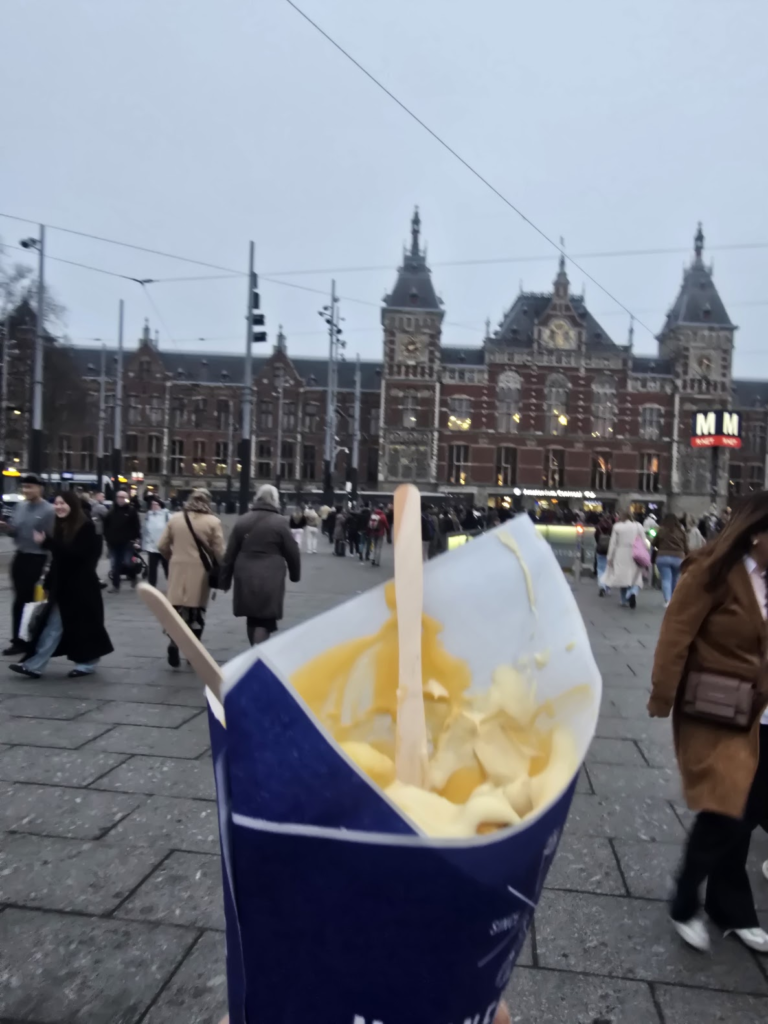
Dutch fries are among the best foods to try in Amsterdam and noticeably thicker than typical fast-food fries, served in a paper cone rather than a box, and built around sauce culture in a way that goes well beyond ketchup. Mayonnaise is the default, but peanut sauce and curry sauce show up constantly too, sometimes layered together on the same portion.
Pro tip: If you’re keeping this halal, stick to plain fries and pay attention to the sauce specifically, since ingredients vary from shop to shop, and it’s worth asking whether the fryer is shared with non-halal meat products. Plenty of shops fry everything in the same oil, so that’s a real question, not a formality.
2. Turkish Döner Kebab
Some of my favorite meals in Amsterdam weren’t Dutch at all. I had döner a few times during the trip and it was genuinely good. Honestly, it was good enough to become my go-to whenever I wanted a proper halal meal instead of another snack. That comes down to Amsterdam’s Turkish community, especially in Amsterdam Oost, where halal butchers, Turkish bakeries, and döner shops are just part of the neighborhood rather than something aimed at tourists.
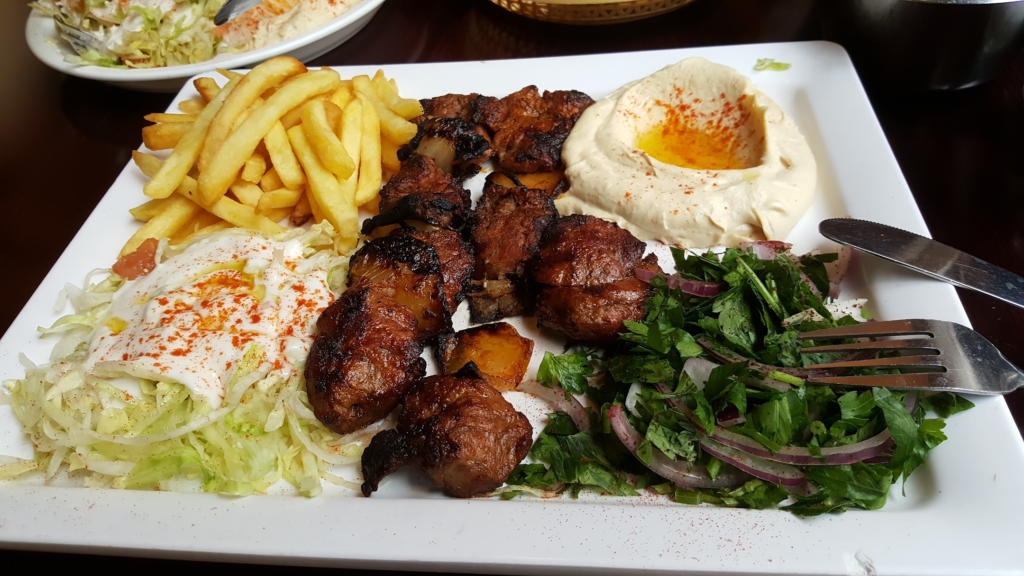
The one thing worth being careful about is that döner in Amsterdam isn’t automatically halal just because it’s Turkish-run. Look for places that clearly advertise halal meat, and if it isn’t stated on a sign or menu, ask before you order. Amsterdam Oost gives you the best odds of finding this made obvious.
3. A Fresh, Warm Stroopwafel
A stroopwafel is two thin waffle layers pressed together with a warm caramel syrup filling, and it’s a completely different food fresh off a griddle than the packaged version you’ll find in a supermarket. It actually started in Gouda rather than Amsterdam, which surprised me when I read it, but it’s become one of the most recognizable Dutch foods regardless, and Albert Cuyp Market keeps coming up as the place to get one fresh.
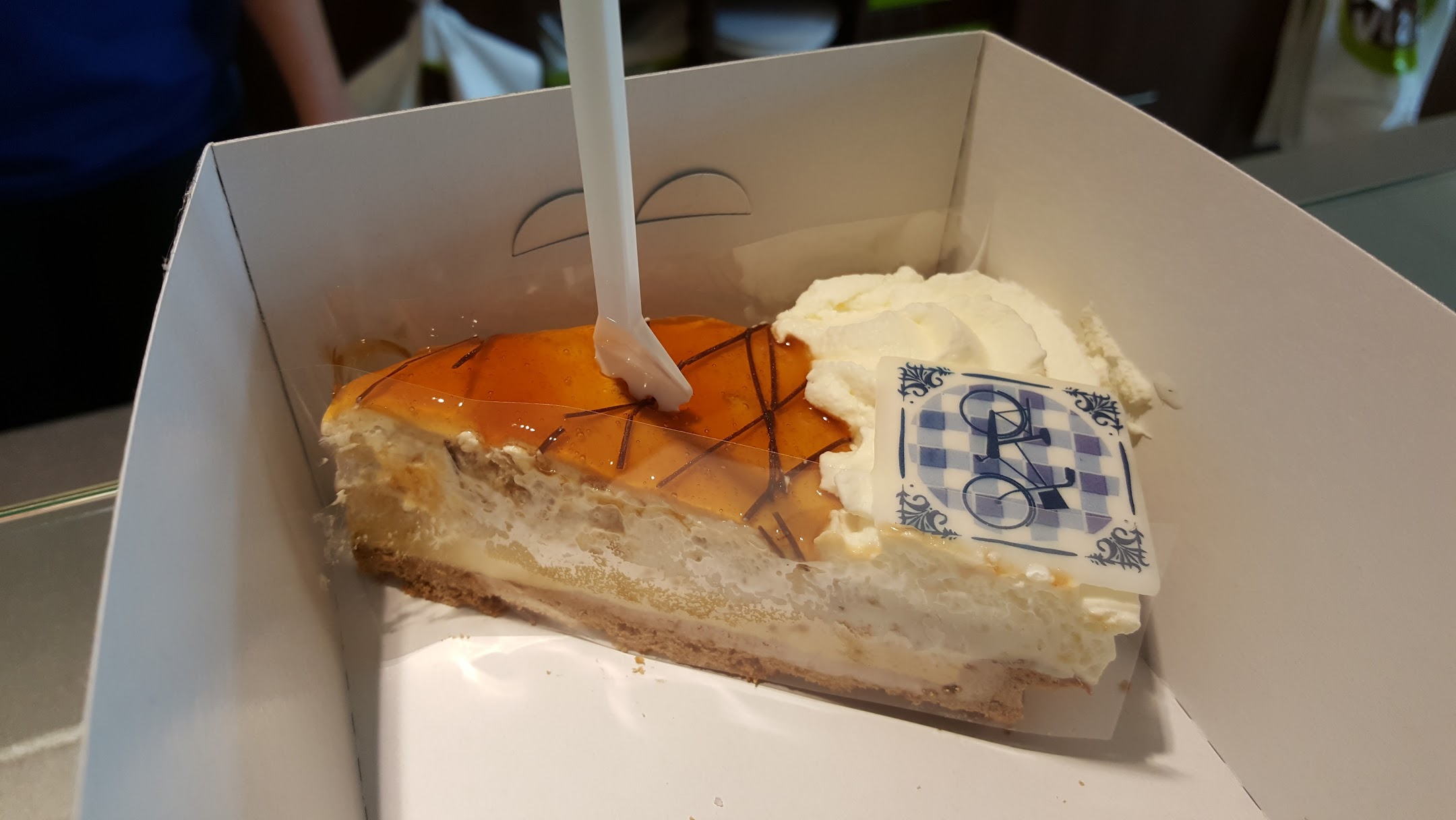
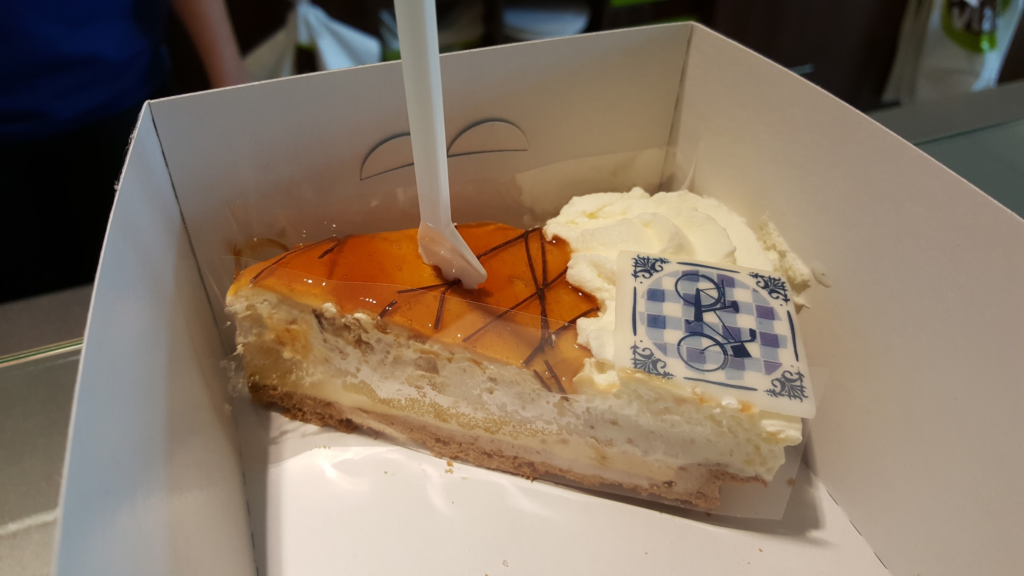
I’d say you should buy from a vendor where you can actually ask about ingredients. If halal matters to you, the syrup, any fats or emulsifiers, and flavorings can all vary, so don’t assume every stroopwafel in the city is automatically fine just because it looks simple. Since I couldn’t find a halal stroopwafel, I actually ended up trying a stroopwafel cheesecake instead and it didn’t disappoint. My favourite was the mini Dutch bicycle topping.
4. Poffertjes
Poffertjes are small, fluffy Dutch mini pancakes, cooked on a griddle with tiny indentations, usually served warm with butter and a dusting of powdered sugar. Personally, I haven’t tried this but I ‘ve watched enough videos to know they’re genuinely fun to watch being made. Albert Cuyp Market is a strong spot for these too, fresh off the griddle rather than sitting around.
Keep to the simple version here, butter and powdered sugar, after confirming ingredients, rather than more elaborate toppings you can’t easily check. It’s an easy food to keep halal as long as you don’t overcomplicate it.
5. Pannenkoeken (Dutch Pancakes)
Pannenkoeken are thinner and considerably larger than poffertjes,. They are somewhere between an American pancake and a crêpe, and they come with both sweet and savory toppings depending on where you order them.
Stick to the sweet versions if halal matters to you: fruit, powdered sugar, syrup, apple and cinnamon are all common and generally straightforward once the restaurant confirms the ingredients. Skip the bacon and ham versions that show up constantly in generic Amsterdam food guides, they’re popular with everyone else, but they’re obviously not part of this list.
6. Halal Turkish and Moroccan Food Beyond Döner
My döner meals were really my first proper introduction to how useful Amsterdam’s food scene is if you’re trying to eat halal without stress for an entire trip, and it’s worth its own section rather than getting folded into the döner entry alone. Amsterdam Oost has been shaped by generations of Turkish and Moroccan migration, and it shows in the food, halal butchers, teahouses, and Turkish bakeries are part of the everyday fabric there, not a novelty aimed at visitors.
Beyond the döner wrap itself, it’s worth looking for Turkish grilled dishes and kebabs, Moroccan harira (a warming, tomato-based soup) and tagine (slow-cooked stews served with couscous or bread), Turkish baklava if you want something sweet, and Middle Eastern mezze spreads if you’d rather share a few smaller plates than commit to one large meal. These are amongst best among the best foods to try in Amsterdam along with traditional Dutch foods.
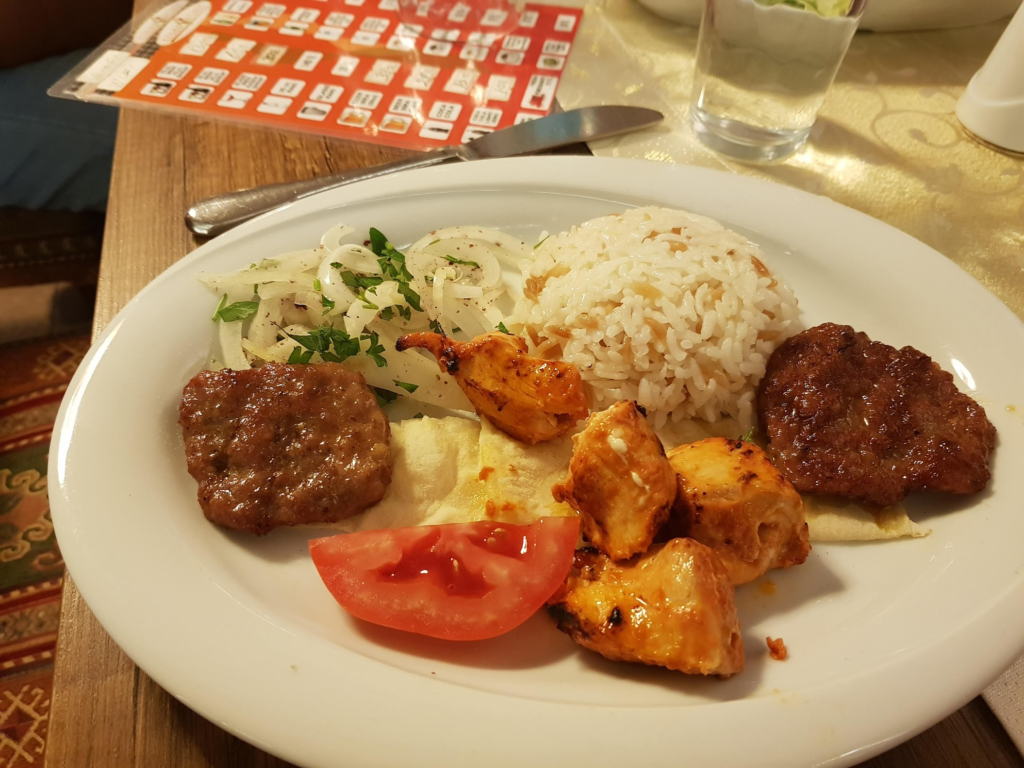
If you’re looking for the current halal-food coverage of the city, then here’s a list:
- Meram, a halal Turkish chain with multiple branches, notable for being one of the first alcohol-free restaurants in the Netherlands;
- Restaurant Mozo in Amsterdam Oost, Moroccan, known for its tagines;
- Bazar Amsterdam in De Pijp, Middle Eastern and North African, set inside a converted church.
I’d still double-check current halal status directly before you go, menus and ownership change, but these are a solid starting point rather than a guess.
7. Albert Cuyp Market
Albert Cuyp Market is Amsterdam’s largest daily market, running since 1905 and stretching nearly a kilometer along Albert Cuypstraat in De Pijp, and it’s exactly where several of the foods on this list, stroopwafels and poffertjes especially, get made right in front of you rather than sitting under a heat lamp somewhere.
Markets work well for travelers for a few practical reasons: you can try smaller portions instead of committing to a full meal, watch food actually being prepared, grab something quickly while sightseeing, and compare a few vendors before deciding where to spend your money. Amsterdam Oost’s Dappermarkt is worth knowing about too, specifically for halal shopping, it runs daily with halal meat stalls and Middle Eastern groceries alongside the usual market stalls.
Don’t assume everything at a market is automatically suitable just because the market itself has halal options somewhere in it. Ask what’s actually in a dish, check how it’s cooked, and favor vendors who can answer ingredient questions clearly over ones who seem unsure or brush the question off.
Beyond the Food: A Few Things Worth Knowing
Eating your way through Amsterdam is really only half the picture. A couple of other things came up during the trip that had nothing to do with what was on my plate, but ended up mattering just as much, one a language mix-up worth avoiding entirely, the other just the practical groundwork behind everything on this list.
Café or Coffeeshop? Know the Difference Before You Walk In
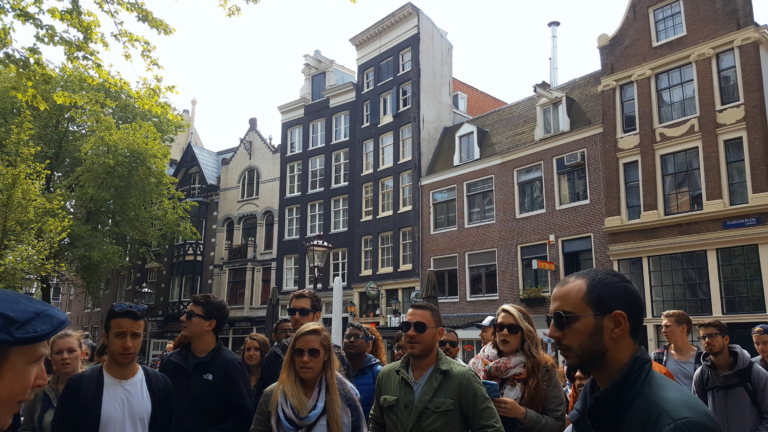
This isn’t a food, but it’s practical enough to be worth including on its own. In Amsterdam, a café is exactly what it sounds like anywhere else, coffee, tea, pastries, a normal place to sit down. A coffeeshop is a completely different kind of establishment, a licensed venue for cannabis, not somewhere you’d go for a regular coffee. Our guide warned us about this early in the trip, before we’d even properly started exploring, specifically so we wouldn’t make that mistake ourselves, and it’s exactly the kind of thing that trips up first-time visitors who assume the words mean the same thing they do everywhere else. Just make sure you know which one you’re actually walking into.
How I Actually Found Halal Food
Turkish and Middle Eastern restaurants were my most reliable fallback whenever I wanted something more substantial than a snack. I never assumed meat was halal just because a place served kebabs or grilled dishes, plenty of restaurants serving that style of food aren’t necessarily halal-certified, so I looked specifically for clearly stated halal menus / singage or asked staff directly whenever it wasn’t obvious. For fries, I checked whether the fryer was shared with non-halal meat. For anything sweet, I paid attention to flavorings and gelatin rather than assuming a dessert was automatically fine just because it looked simple. Its aleays best to ask
Google Maps was useful for finding options in the first place, but I always confirmed with the restaurant directly rather than trusting an old listing, menus and suppliers change, and a review from a year ago doesn’t guarantee today’s kitchen runs the same way. Amsterdam genuinely does have a meaningful halal dining scene, the city’s own Ramadan guidance spans Turkish and Moroccan restaurants and plenty of cuisines you might not expect, and it ended up being a lot less stressful than I worried it might be before I arrived.
Conclusion
Amsterdam surprised me with how varied its food scene actually was. Fries became the thing I never planned to eat every day but somehow did. Döner made finding a proper halal meal easy whenever I wanted one. And the city’s traditional sweets and pancakes give Muslim travelers real options too, once you take the time to check ingredients rather than assume. If you’re planning your own trip, don’t limit yourself to the stereotypical Amsterdam food experience, there’s a lot more here worth exploring than fries and cheese alone.
Frequently Asked Questions
Is it easy to find halal food in Amsterdam? Yes, more than I expected before arriving. Amsterdam Oost and De Pijp have a genuine concentration of halal butchers, Turkish and Moroccan restaurants, and market stalls, so it doesn’t take much extra planning once you know where to look.
Are Dutch fries halal? Plain fries generally are, but check two things: the sauce, since ingredients vary shop to shop, and whether the fryer is shared with non-halal meat products at that location.
Is döner kebab in Amsterdam halal? Not automatically. Amsterdam has a large Turkish community and plenty of döner shops, but halal certification isn’t universal. Look for restaurants that clearly advertise halal meat, and ask if it isn’t stated.
Which Amsterdam neighborhoods have the most halal food options? Amsterdam Oost, particularly around Javastraat and the Dappermarkt, and De Pijp, especially around Albert Cuyp Market, are the two most consistently mentioned areas for halal butchers, restaurants, and market stalls.
Are Dutch sweets like stroopwafels and poffertjes halal? They can be, but not automatically, syrup fillings and toppings vary by vendor. Buy from a stall where you can ask about ingredients directly rather than assuming.