Munich Travel Tips: Everything to Know Before Your First Visit
Munich is an easy city to visit for the first time, and I mean that as a compliment. The old town is small enough to walk across in twenty minutes, the trains go everywhere you’d want to go, and you will never once need a car.
We spent about seven days there in February, using the city as a base for day trips out into Bavaria and across the border into Austria. Our first mistake happened before we had even left the airport. Our flight landed somewhere between half eleven and midnight, which meant we paid for a full night in a hotel purely to sleep in it, and we lost the whole of the following morning to catching up on rest. If you have any choice in the matter, an early morning arrival buys you a day that a late night one takes away.
What trips people up after that isn’t the sightseeing. It’s four small things: buying the wrong transport ticket, landing on a Sunday and finding every shop shut, assuming a card will be accepted, and leaving Neuschwanstein tickets until the week before. Sort those out at home and the rest of your trip mostly runs itself. Give yourself three days if you can.
Munich travel tips at a glance
If you’re skimming, here’s the short version.
- Three days is enough for Munich itself. Longer only if you’re building in day trips around Bavaria
- Avoid a late night arrival if you can, because it costs you a hotel night and a morning
- The airport sits in a different fare zone, so a city ticket won’t get you in
- Buy a day ticket instead of singles if you’re making more than two journeys
- The Deutschlandticket is a genuine money saver the moment day trips are involved
- Carry cash. More places than you’d expect still won’t take a foreign card
- Shops close on Sundays, and they close early on weekdays too which was quite a surprise for us during our visit
- Bavarian state museums charge one euro on Sundays, which is the best deal in the city
- Watch for bike lanes on the pavement. Cyclists won’t slow down for you
- Room prices jump in late September and again through December
How many days do you need in Munich?
Munich has a bigger reputation than its actual size, and that catches people out both ways. Some arrive expecting weeks of material and run out by day three. Others give it a single afternoon and wonder what the fuss is about.
Here’s my honest read on it.
Two days
You’ll see the old town, get into a museum or two, and have a walk through the Englischer Garten. What you won’t do is fit in a day trip without cutting something you’d rather keep. Two days works fine if Munich is one stop on a longer route through Europe. As a standalone destination, it’s tight.
Three days
Three days is the sweet spot, and I’d go further and say it’s the ceiling for the city on its own. Two days for the old town, the museums and the Englischer Garten at a pace where you can actually sit down occasionally, then a third for whatever you liked enough to go back to. Push beyond that and you will genuinely start running out of things to do, unless luxury shopping is part of your plan, because Munich is very good at that and it can absorb an extra day easily.
A week or more
We were based in Munich for the best part of a week, and I’d only recommend that length if you’re doing what we did and treating the city as a base rather than the whole trip. Munich itself does not need seven days. What it does have is an unusually good position for getting out into the rest of Bavaria, with fast, frequent regional trains reaching the Alps, the castles, Nuremberg and across the border into Austria. If you’re not planning to use that, three days is plenty and you’d be better off giving the rest to somewhere else.
Getting from Munich Airport into the city
We flew into Munich Airport, properly called Franz Josef Strauss and coded MUC. That’s the main airport for the city and the one you want, for reasons that become clear in the mistakes section further down.
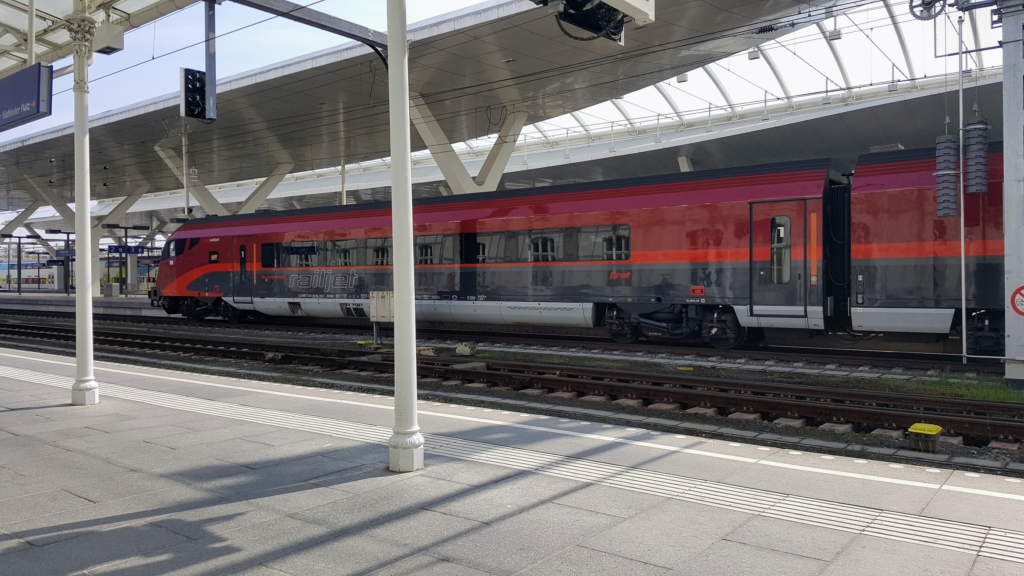
Getting from there into the city is normally simple. Two S-Bahn lines run from the airport, the S1 and the S8, alternating roughly every ten minutes, which means each individual line comes around every twenty. Either one gets you into the centre in about thirty-five minutes, so take whichever leaves first. The S1 loops round the west of the city and the S8 the east, but both stop at the Hauptbahnhof and Marienplatz, so the difference only matters if your hotel sits clearly on one side. Deutsche Bahn’s S-Bahn München page covers the route in detail.
Normally, that is. Our flight landed close to midnight, by which point the last train had long gone, and there was no way into the city but a taxi. The airport sits a long way out, and that single ride cost us more than a month of unlimited regional travel across the whole of Germany would have. Arrive at any sensible hour and you’d simply use your Deutschlandticket and pay nothing extra at all.
The bit worth paying attention to is the fare zone. The airport is out in zone 5, nowhere near the city zone, so any ticket sold as covering Munich alone will leave you short. You need one that spans zones M to 5. The Airport-City-Day-Ticket does exactly that and covers unlimited travel between the airport and the whole city for the rest of the day, which usually beats a single once you factor in the journey to dinner that evening. If there are a few of you, look at the group version. It covers up to five people and works out noticeably cheaper than buying separately.
Prices shift, so check the MVV site rather than trusting a number in a blog post, including this one.
There’s also an express coach to the central station if the thought of changing trains with a suitcase doesn’t appeal. Taxis are the expensive option and rarely faster, because the airport is genuinely far out.
How Munich’s public transport tickets actually work
The network here is genuinely good. It’s also where first-timers most often lose money, so give this ten minutes before you fly and you’ll save yourself the hassle. MVV publishes a full ticket and price overview in English, which is the only page you need.
Zones and which ticket to buy
Everything runs on zones. Zone M is the city of Munich, and the numbered zones spread outwards from there. Almost everything you’ll want to see sits inside zone M, with the airport at zone 5 as the obvious exception. Singles are fine for the occasional trip, but a day ticket wins from about two journeys onwards, and it stays valid until six the next morning rather than expiring at midnight. From January 2026, children travel free on an adult single-day ticket, which is a real saving if you’re travelling as a family.
Is the Deutschlandticket worth it for visitors?
If you are doing day trips, this is a life saver and a money saver, and I would buy it again without thinking about it.
This one depends entirely on how long you’re staying, and most advice online gets it wrong in one direction or the other.
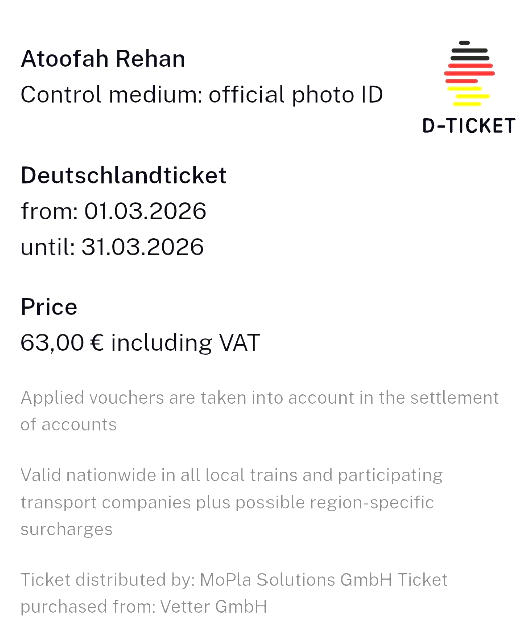
It’s a monthly subscription rather than a travel pass, so you buy it through an app and have to remember to cancel it before the deadline or it rolls over into the next month. For a two or three day city break with no trips out of town, that admin isn’t worth it and day tickets are simpler and cheaper.
It’s the ticket I bought and it’s definitely something I recommend. Where it changes is if you’re staying a week and heading out of the city. The ticket covers local and regional transport across the whole of Germany, not just Munich, which means your day trips stop costing anything extra. That’s what we used, and with several trips out of the city it paid for itself comfortably.
The moment you leave the city, the calculation changes completely. The ticket covers local and regional transport across the whole of Germany rather than just Munich, so your day trips stop costing anything extra. It also works anywhere else in the country, and I’ve since used the same ticket for day trips out of Berlin, which is worth knowing if Munich is one stop on a longer German trip.
It is not valid on ICE, IC or EC trains. Those are the fast services, so you’ll be taking the slower regional trains everywhere. On most day trips from Munich that costs you twenty or thirty minutes each way, which is a fair trade. On longer journeys it stops being one.
Validating your ticket
This is the one I’d underline. Tickets bought from the fixed machines around the city need stamping before you board, and the machines tell you so with a “validate here” label. Tickets bought through the app, online, at the airport, or from the machines on board buses and trams are already sorted.
Expect to be checked, particularly on day trips. We were asked to show our ticket on every single trip we made out of the city, which makes sense given those journeys are worth far more than a tram ride across town. We also saw officers working the U-Bahn and tram lines inside Munich.
The check itself is quick and unremarkable. We simply opened the Deutschlandticket app, the officer scanned the QR code, and that was the end of it. Having one code to show every time was easier than juggling a separate paper ticket for each day trip, and it removed any chance of losing a ticket or fumbling for it as a train was about to leave.
Inspectors are frequent and wear normal clothes, so you get no warning before someone asks to see your ticket. An unstamped ticket counts as no ticket at all, and being a visitor won’t get you out of the fine.
Apps to download before you fly
Get the MVV app and MVGO installed while you’re still at home. Both show live departures and let you buy tickets straight from your phone, which sidesteps the whole validation problem. Doing this at the airport with a queue behind you is nobody’s idea of a good start.
Where to base yourself for a first visit
Where you stay matters less here than in a sprawling city, because the network is dense enough that most neighbourhoods are twenty minutes from the middle. What matters more is how many changes you need, not how far you look on a map. A cheaper room that costs you two connections each way starts to grate by day three, and that’s the trade people underestimate.
We stayed at the Aparthotel Adagio access München City Olympiapark, out beyond the main tourist area, and it worked out well for the way we were travelling. Because it sits away from the centre, we paid considerably less for a modern, clean apartment with a kitchen than the same money would have got us near Marienplatz, and staying somewhere residential meant we came back each evening to a quiet, safe area rather than to crowds.
The thing that made it work was the U-Bahn station next door. It ran direct to the Hauptbahnhof, which mattered enormously on day trip mornings when we were running late and had a train to catch, and again in the evenings when we were tired and wanted to get back without changing lines twice. If you’re staying outside the centre, I’d treat a direct connection to the Hauptbahnhof as a requirement rather than a bonus.
The honest drawback is that there wasn’t much around us beyond a shopping centre, and not many places to eat, so we got into the habit of eating before heading back. If you want to wander out for dinner on a whim, stay closer in and pay for it.
For the record on the other areas: the old town gives you walkability at the highest prices. Around the central station you get convenience and cheaper rooms, though I’ll be honest that the immediate streets there are scruffier than the rest of Munich and some travellers don’t love them after dark. Maxvorstadt makes sense if you’re building your trip around museums, since the Pinakotheks are right there. Haidhausen and Schwabing are quieter and residential, with a short ride in.
One thing I would say from staying longer: if day trips are part of your plan, weigh your choice towards being near the Hauptbahnhof or a direct line to it. Early starts are much easier when you’re not making two changes before you’ve even left the city.
Money, cards and tipping
Germany runs on cash far more than most visitors expect, and Munich is no exception. Big shops and hotels take cards without blinking, but smaller restaurants, bakeries, market stalls and cafés often want cash or a German debit card. Foreign credit cards get refused more often than you’d think, and always at the moment you’re standing there trying to pay. Keep euros on you and top up whenever you pass a machine.
Tipping works differently to what you might be used to. You round up and tell the server the total you want to pay as you’re handing the money over, rather than leaving coins behind on the table. Ten percent is generous rather than expected. Tap water doesn’t arrive automatically either, so expect to be offered the bottled kind.
One more thing worth knowing: Munich is Germany’s priciest city which is exactly why staying slightly out of the centre made such a difference to what our week cost. Budget above whatever you’d allow for Berlin.
Opening Hours: catch you out if you let them
Almost everything closes on Sunday. Not just clothes shops, but supermarkets too, which surprises people who planned to stock up after landing. The exceptions are shops inside the main station and at the airport, plus petrol stations and kiosks for the basics. If you arrive on a Saturday evening, do your shopping then and thank yourself later.
The weekday hours caught us out just as badly. Shops and supermarkets tend to open around seven in the morning and close by about seven in the evening, and that includes a lot of cafés. We went looking for somewhere to sit down with a coffee after a long day and found the city had essentially shut, which is not what you expect from a major European capital. Plan your sitting-down time for the afternoon rather than the evening, and buy anything you need for the next morning before the shops close.
Bavaria also observes more public holidays than most German states, several of them Catholic feast days that won’t show up on a general German calendar. Worth a quick check against your dates.
Now the upside, and it’s a good one. Bavarian state museums charge a single euro on Sundays. That includes the Pinakothek museums, , the Glyptothek, the Bavarian National Museum and a handful of others, and the city tourist board keeps a full list of the low-cost and free options. Under-18s go free at several of them year round. If your trip crosses a Sunday, I’d build the day around it. Just expect company, because everyone else has worked this out too, and note that special exhibitions can still carry a separate charge. The Pinakothek museums’ own site is the place to check before you go.
Using Munich as a base for day trips
This is the part of the trip I’d plan hardest, because it’s where the time goes and where the mistakes are expensive. Four of our days went on trips out of the city, and all of them ran on the same Deutschlandticket.
Salzburg is the one I’d point most first-timers towards, and it’s the one we did. It sits just over the Austrian border, and because Salzburg’s main station counts as a border station under German fares, the Deutschlandticket takes you the whole way. You need the Bayerische Regiobahn RE5 rather than a fast train, and the journey runs roughly two hours each way on the same train in both directions. The Salzburg tourist board explains the rail options from the Austrian side.
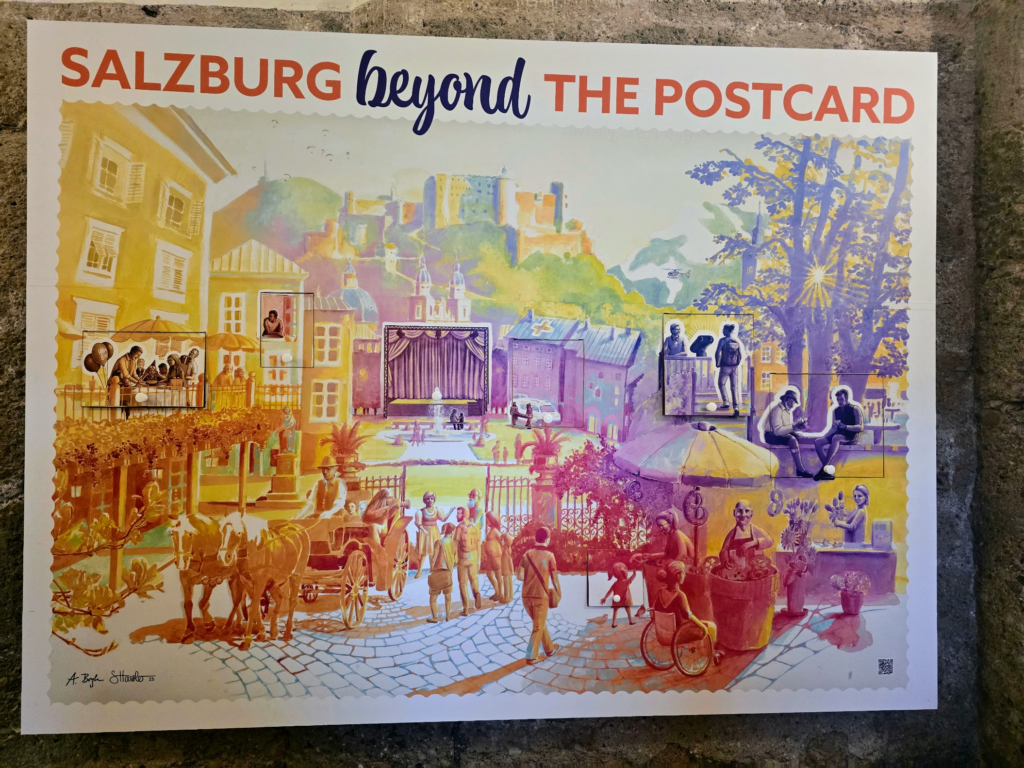
Two practical notes. It is a border crossing, so although there are no routine checks, conductors do sometimes ask for a passport or ID and it’s not worth the argument. And the old town is compact enough that a two hour journey each way still leaves you a full and unhurried day.
We did a walking tour, which runs about two hours with several stops and covers the gardens, the Mozart sites and the old town.
The meeting point is usually the south entrance of the Mirabell Gardens, which is convenient on a day trip because it’s on the walk in from the station. You can see the gardens before the tour even starts. I’d recommend it without hesitation, and I’d say the same about walking tours generally when you only have one day somewhere. Beyond the history, the guide is the fastest way to find out where to eat and what to do with the rest of your afternoon. I always ask about local dishes worth trying and anything specific to the place, and guides are consistently generous with that sort of recommendation in a way no guidebook manages. You can read more details about our Salzburg day trip here.
The other three days went to Garmisch-Partenkirchen for the Alps, Neuschwanstein for the castle, and Nuremberg for its old town and its twentieth-century history. What I would not do is stack four day trips into five days the way we did. By the last one we were tired, and Nuremberg deserved better attention than we had left to give it. Three is the number I’d recommend, with a rest day at the end.

Beyond Salzburg, the obvious candidates are Neuschwanstein, the Dachau Memorial and the lakes south of the city. What I would not do is stack three of them into four days. Day trips eat more of the day than the timetable suggests once you add the walk to the station, the wait, and the tired journey home.
You can read more about the day trips we did from Munich here.
What to book before you arrive
Very little in Munich itself needs booking ahead. The one thing that does is out of town, and it needs sorting before you fly rather than once you arrive, which is why it belongs here. Neuschwanstein is a day trip rather than a Munich sight, but it’s the single booking that will make or break a week based in the city. . Entry is by timed slot, every visit is a guided tour, and the system has no give in it. The Bavarian Palace Administration recommends booking through the official ticket shop well ahead, and for summer dates I’d do it the moment your plans are firm.
We took our chances and bought a same-day ticket at the counter, and we got a slot within the hour. That worked because we went in February, when visitor numbers are low, and I would not gamble on it in summer. Same-day tickets are sold first come, first served and only for that day, and in high season they go early enough that you would need to be waiting at opening with no guarantee of getting one.
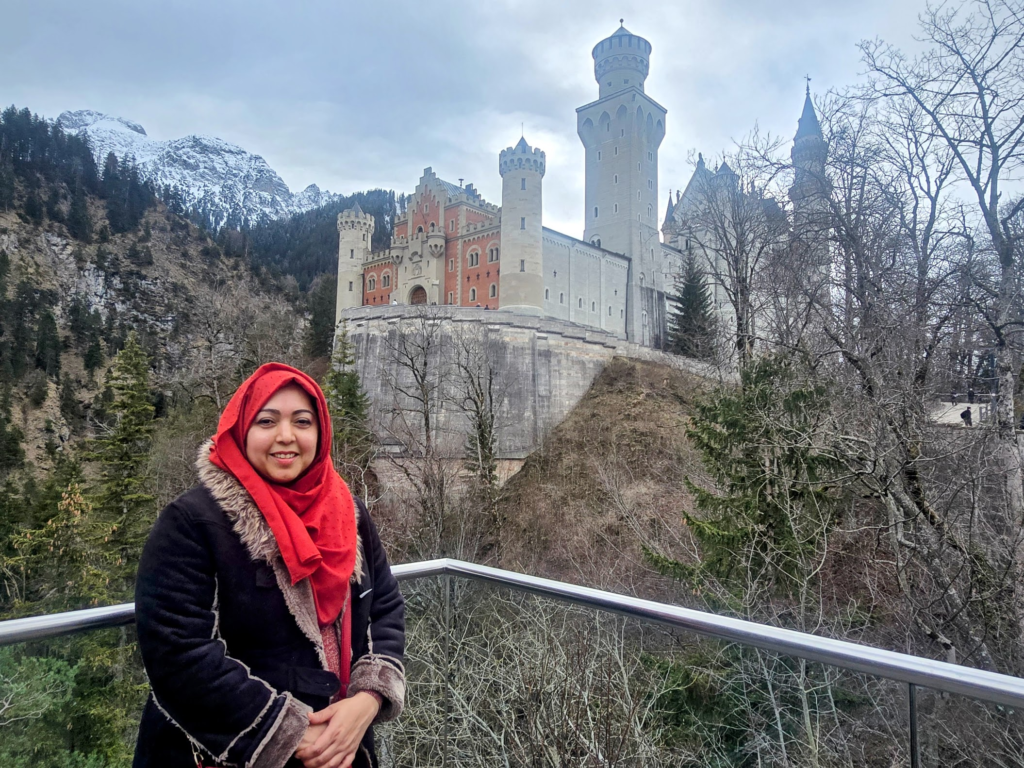
Whichever way you book, you collect tickets down in the village of Hohenschwangau rather than at the castle, and then there’s a solid uphill walk to the entrance. We walked up, which is a proper uphill hike rather than a stroll, and it’s worth allowing real time for it. If you’d rather not, there are horse-drawn carriages you can pay for at the bottom.
Restaurants worth crossing town for do fill up, especially at weekends. Booking a table is normal here, not fussy.
Hotels are the other thing to plan around. Prices climb sharply during Oktoberfest, which runs 19 September to 4 October in 2026, and again through the Christmas market season, with the Marienplatz Christkindlmarkt running 20 November to 24 December 2026. Munich also hosts big trade fairs throughout the year that most visitors never hear about until they see the rates.
What you don’t need to book: the Dachau Concentration Camp Memorial Site, which is free and open daily from 9am to 5pm, along with Marienplatz, the Englischer Garten and most of the churches. Staying a full week rather than a few nights also got us a noticeably better rate, so it’s worth checking whether a longer booking works out cheaper per night.
Mistakes I’d tell a friend to avoid
Some of these are minor annoyances. A couple will cost you a day.
- Landing at midnight. Our own mistake. You pay for a hotel night you sleep through, you miss the last train into the city, and you lose the next morning as well.
- Walking in the bike lane. They run alongside the pavement and aren’t always obvious. Cyclists have the right of way and they will not slow down.
- Assuming your card works. See above. This is the daily irritation that gets people.
- Expecting the city to be open in the evening. Shops and many cafés shut around seven.
- Flying into the wrong airport. Budget airlines sell Memmingen as “Munich West”. It’s about 110 kilometres away with a coach transfer well over an hour. Check the airport code before you book anything.
- Buying a Deutschlandticket and then booking a fast train. The ticket doesn’t cover ICE, IC or EC services. Filter for local transport only when you’re planning journeys or you’ll pay twice.
- Defaulting to the Hauptbahnhof every time. Munich has several large stations, and depending on where you’re staying, another one may be closer and save you a change.
- Treating Neuschwanstein as a half day. Between the train, the bus, collecting tickets and the walk up, it’s a full day.
- Crossing on a red light. People here wait, even on an empty street at midnight, and you will feel ridiculous standing there when there isn’t a car in sight. Do it anyway, because you’ll get looks if you don’t.
- Running late. For a tour, a table, a train. Punctuality is taken seriously and lateness reads as rude rather than relaxed.
- Stacking up day trips. Four day trips in five days means you’ve seen Bavaria, not Munich.
What I’d skip
The Glockenspiel at the New Town Hall is the one thing I’d tell people not to build a morning around. It pulls a large crowd at 11am and noon for a fairly short mechanical show, and the amount of attention it gets is out of proportion to what actually happens. There’s a quieter 5pm performance from March to October if you do want to see it. Watch it in passing rather than planning for it.
I’d also skip the New Town Hall tower in favour of St Peter’s, which gives you the better photograph for the simple reason that the town hall is in it.
One thing I’d do differently rather than skip: we arrived at Viktualienmarkt too late in the day and found the stalls packing up around us. It’s a produce market that works to market hours, not restaurant hours, so go in the morning or you’ll be looking at empty tables.
Weather and what to pack
Munich weather turns fast. A clear summer afternoon can become a proper thunderstorm within the hour, and winter mornings get properly cold. We got caught out by this more than once, so check the forecast every morning before you leave rather than once at the start of the trip, and layer up with something waterproof on top in case the day turns on you.If you have any say in timing, late spring and early autumn give you the best balance of weather and crowds. Late September is warm but bumps into Oktoberfest pricing. Winter is cold and dark by mid-afternoon, though between the Christmas markets and the one euro museum Sundays and the far shorter queues at places like Neuschwanstein , I’d still call it a fair trade. Whenever you go, bring shoes you can genuinely walk in. The old town is cobbled and you’ll cover more ground than you planned to, and that goes double on day trip days. We went in February and never once queued for anything.
Eating in Munich, including halal options
Traditional Bavarian food is heavy, meat-led and mostly not halal, so it’s better to plan around that than to hope something turns up on the day.
The good news is that Munich has a long-established Muslim community and finding food isn’t difficult. Turkish, Afghan, Pakistani, Uyghur and Middle Eastern restaurants are spread right across the city, and plenty display halal signage in the window. I’d still ask directly rather than assume, particularly anywhere serving a mixed menu.

Viktualienmarkt near Marienplatz is worth a wander, whatever you end up eating as long as you get there in the morning. It’s a produce market rather than a row of restaurants, so think bread, cheese, fruit, spices and pastries. Bakeries open early here and are one of the cheapest ways to eat properly, which is also the easiest way to sort breakfast before an early train.
Our trip happened to end on the night the Ramadan moon was sighted, with the first fast beginning the next morning, and we prayed taraweeh at a mosque near the city centre. Mosques are spread across several districts including Sendling and Ludwigsvorstadt, and finding a congregation was straightforward.. The airport is well set up too, with prayer areas in Terminal 1 both before and after security and separate washrooms for ablutions.
Safety, language and the small stuff
Munich is a low-crime city by European standards and most visitors have an entirely uneventful trip. Pickpocketing around Marienplatz and the central station is the realistic thing to watch for, and it’s the ordinary opportunistic kind.
English is widely spoken in hotels, museums and restaurants used to visitors. It’s patchier on buses, in small shops and with older residents, so a few words of German go a long way. The local greeting is “Grüß Gott” rather than “Guten Tag”, and using it usually gets you a warmer response. If you’re staying in an apartment, quiet hours apply on Sundays and in the evenings, and your neighbours take them seriously.
Final thoughts
The most useful Munich travel tips are the boring ones. Buy the right transport ticket and stamp it, give the city three days, keep cash on you, shop before Sunday, and book Neuschwanstein the moment your dates are set.
If you’re staying longer than that, be honest with yourself about why. Munich rewards a longer stay only if you’re using it as a base, and it’s a very good one for that. Either way, what goes wrong here is logistical rather than dramatic, so handle that side of things and you’ve got a city that’s comfortable, walkable and genuinely pleasant to spend a first trip in.
Munich travel FAQs
Is Munich expensive compared with other German cities?
Yes, it’s generally the most expensive in the country, and accommodation is where you’ll feel it most. Food and transport sit closer to the national average, and if your trip crosses a Sunday, the one euro museums claw a fair bit back.
Do I need to speak German in Munich?
No, but a few phrases help. Hotel, museum and restaurant staff in the centre speak English comfortably. Bus drivers, smaller shopkeepers and older residents may not, and opening in German before switching goes down well.
Is two days enough for Munich?
It covers the old town and a museum or two at a brisk pace. It’s not enough to add a day trip. If Munich is your main destination rather than a stopover, find a third day.
Can you do Salzburg as a day trip from Munich?
Comfortably. The regional train takes around two hours each way and Salzburg’s old town is small enough to see properly in a day. If you’re on a Deutschlandticket, the whole journey is covered, though you’ll need the regional service rather than a fast train.
Can you visit Neuschwanstein from Munich without a tour?
Yes, and plenty do. Regional train to Füssen, then a local bus to Hohenschwangau where the ticket centre is. It’s straightforward but long, so start early and have your timed entry booked. A tour mainly saves you the planning, not the hours.
Is Munich walkable, or will I need transport every day?
The old town is very walkable and you can do the main sights on foot. You’ll want transport for the museums in Maxvorstadt, the northern end of the Englischer Garten, the Olympic Park and anything beyond the centre.
What’s the cheapest way to get around Munich for three days?
Day tickets for zone M on the days you’re moving around, plus walking in the centre. Buy through the app so validation never becomes an issue. For a week with day trips, run the numbers on a Deutschlandticket instead.