Salzburg Day Trip from Munich: How to Do It Without a Tour
Salzburg is the easiest day trip out of Munich, and you don’t need a guided tour to do it. The regional train takes just under two hours each way; one transport ticket can cover the entire journey, including the crossing into Austria, and the old town is small enough that you can see the main sights on foot without hurrying.
Realistically, you get around seven hours on the ground. That sounds tight and isn’t. Salzburg’s center is walkable end to end in twenty minutes, so seven hours is enough for a fortress visit, a proper wander and a sit down somewhere.
This was our Day 3 during a week based in Munich. It was also my second time in the city, so I could see the difference after 10 years.
Is Salzburg worth a day trip from Munich?
Yes, and I can answer this from both sides, because I have done Salzburg both ways.
Ten years ago I stayed in Salzburg itself after a work trip and used it as a base for day trips around Austria, which is a completely different experience from the one in this article. This time I came the other way around, in for the day from Munich. Both work, and which one suits you depends on whether Austria or Bavaria is the trip.
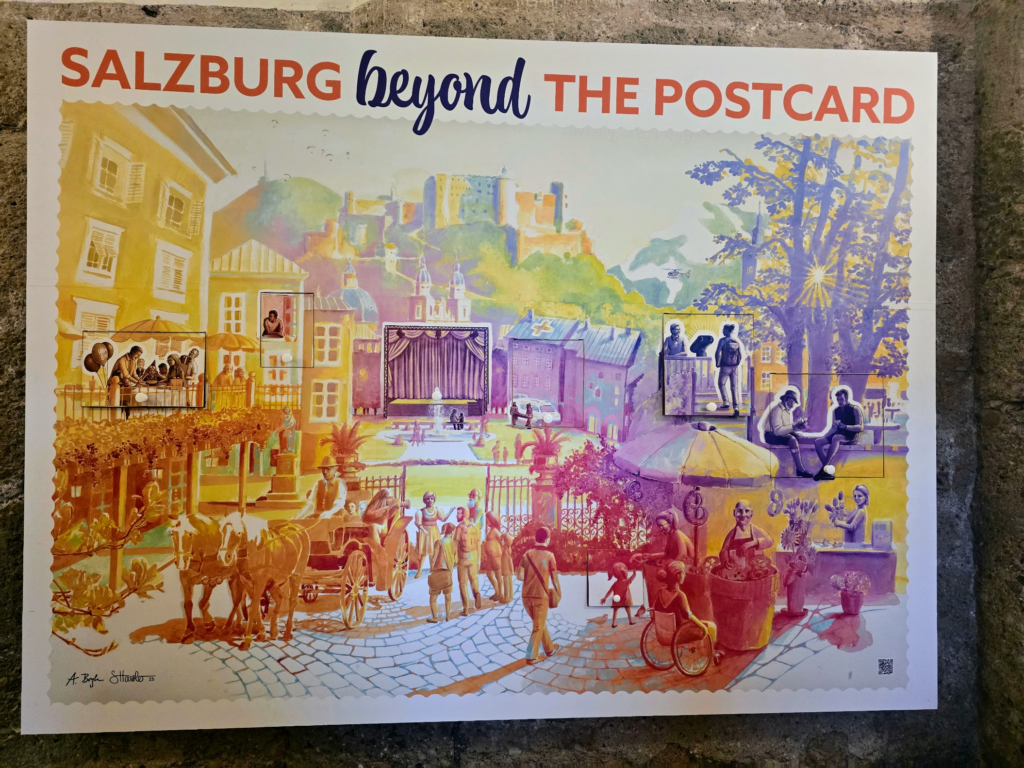
Coming back a decade later, what struck me is how green it is. The mountains, the trees and the hiking trails running out of the city gave me the same feeling I get in Islamabad, which is not a comparison I expected to make about an Austrian city. The old town sits wedged between a river and a cliff with a fortress on top, the whole center is genuinely walkable, and the fortress gives you the best unobstructed view over all of it.
For a day trip, the compact size is the point. You get the old town, the fortress and the gardens properly in one visit rather than skimming them. If you want the hiking, the lakes and the surrounding Austrian towns, that is a separate trip with Salzburg as your base, and I will write that one up separately.
If your week in Bavaria has room for four day trips, this is the first one I would book in. You can see more about the day trips I did from Munich here
Getting from Munich to Salzburg by train
This is where the money is either saved or wasted, so it’s worth ten minutes of reading before you go.
The regional train
The service you want is the RE5, run by Bayerische Regiobahn. It leaves Munich Hauptbahnhof roughly every hour and takes just under two hours to reach Salzburg Hauptbahnhof, running via Rosenheim, Traunstein and Freilassing.
This is exactly what we took, on our Deutschlandticket, and the appeal is how little thought it needs. There are no seat reservations on this service. We turned up at the station, got on the first train going to Salzburg and found seats, with nothing booked in advance. That is usually fine outside peak summer weekends.
It’s a basic regional train rather than anything luxurious, but the second half of the route runs towards the Alps and the view earns the extra twenty minutes.
The express train trap
This is the mistake that costs people money, and almost no guide flags it clearly.
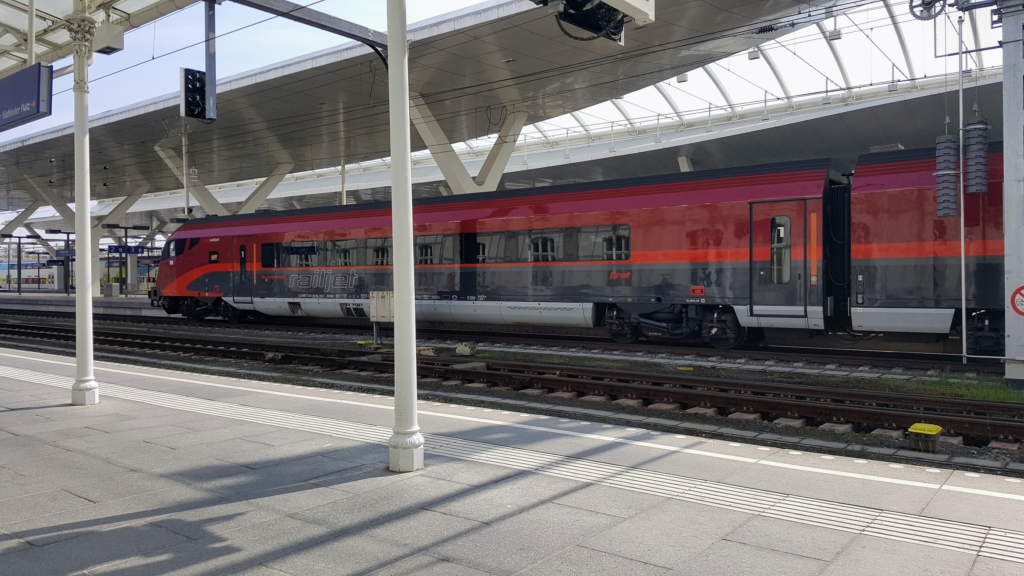
There are faster services on this route. Austrian railjet, EuroCity, Intercity and ICE trains all run Munich to Salzburg in around ninety minutes. They are more comfortable and they get you there sooner.
They are also not covered by any regional ticket, including the Deutschlandticket and the Bayern Ticket. If you board one holding a regional pass you are traveling without a valid ticket, and the inspectors on this route check.
The problem is that journey planners show the fast trains first, because they’re faster. When you search the route, filter for local transport only. On the Deutsche Bahn site and app there’s a tick box for exactly this. Use it, and the RE5 services are what you’ll see.
Which ticket to buy
Three options make sense, depending on how long you’re in Bavaria and how much else you plan to do.
The Deutschlandticket is what we used, and what I’d suggest for anyone staying a week or more with several day trips planned. It’s a monthly subscription covering local and regional transport across all of Germany, and it covers this route in full. Salzburg Hauptbahnhof counts as a border station under German fares, which is why a German ticket takes you into Austria at all.
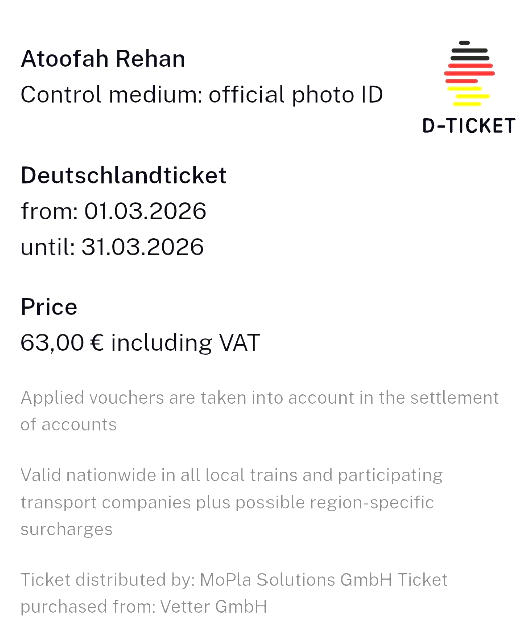
The catch is that it auto-renews, so you have to cancel it. Something I always do now is set a reminder on my phone for the cancellation date the moment I buy it, because otherwise I forget and pay for a second month I’m not in the country for.
The Bayern Ticket is the better call if Salzburg is a one-off and you aren’t doing other day trips. It’s a day pass for regional trains across Bavaria, valid through to Salzburg on the same basis, and it gets cheaper per person when there are several of you traveling together.
A single ticket only makes sense if you’re traveling alone, going once, and don’t want to think about it.
Prices change, so check current fares rather than trusting a number in a blog post. I’ve gone into the ticket options in more detail separately.
What time to leave
Getting the early train matters more than anything else about this trip.
We took the eight o’clock train and it gave us a full day. You’re in Salzburg before ten, with the fortress not yet busy and the coach tours not yet arrived. Leave at eleven instead and you’ve cut your day roughly in half.
Coming back, the last useful train is late enough that you don’t need to watch the clock all afternoon. What we did was photograph the departure board when we arrived, so we had the evening times on our phones and could decide later without hunting for them.
We ended up taking a train around six or seven in the evening, once the shops had started closing and the old town was winding down. We also ate before boarding rather than after, which I’d recommend. It’s a two hour ride back and there’s nothing on the train.
Do you need your passport?
Both countries are in the Schengen area, so there’s no border control on the train and nobody stops you from crossing. That said, carry your passport or ID card anyway. Conductors on this route do sometimes ask for it alongside your ticket, and it isn’t a conversation worth having without one.
Austria uses the euro, so there’s no currency change. Card acceptance is broadly similar to Germany, meaning better than it used to be but still worth carrying cash.
Pro tip, and this one matters most if you’re visiting from the US or anywhere outside the EU. If your phone plan is EU-based, roaming works the same in Austria as it does in Germany and you won’t notice the crossing. If you’re on a non-EU plan, check what the border does to your data before you rely on maps all day. Plenty of plans treat Germany and Austria as separate countries for roaming purposes, and finding that out when you’re trying to navigate to the fortress is an expensive way to learn it.
How we spent the day
The rough shape below works better as a template than a schedule, because the middle of the day is where Salzburg rewards wandering.
We took the morning train from Munich and walked into the old town from the station, which takes about fifteen to twenty minutes and is pleasant rather than a chore. We started with a guided walk to get oriented, went up to the fortress afterwards, then did the old town properly on foot, fitting in the Mirabell Gardens depending on which direction we were heading. Then the evening train back.
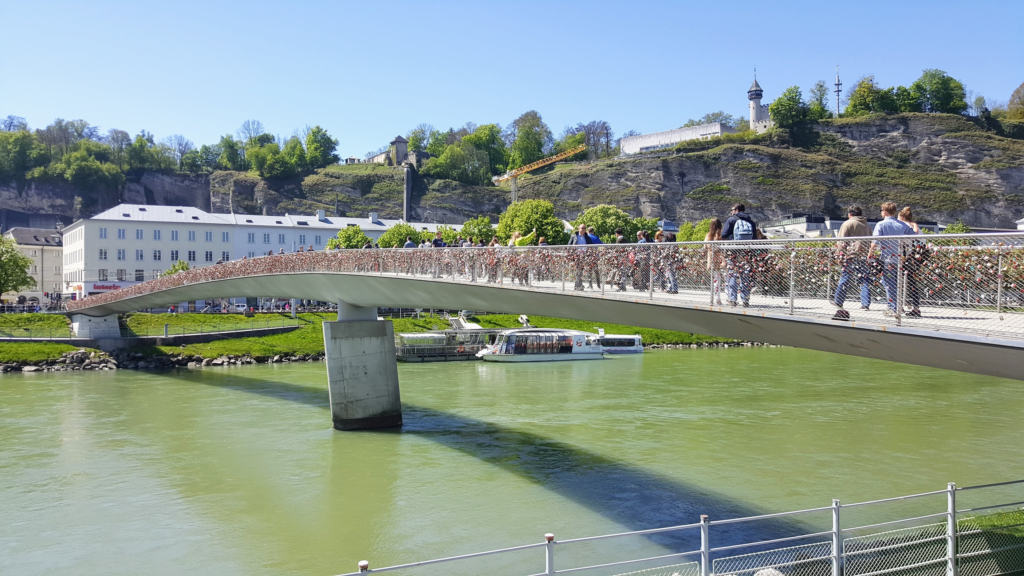
The walking tour
We did a walking tour, which runs about two hours with several stops and covers the gardens, the Mozart sites and the old town.
The meeting point is usually the south entrance of the Mirabell Gardens, which is convenient on a day trip because it’s on the walk in from the station. You can see the gardens before the tour even starts.
Hohensalzburg Fortress
The fortress on the cliff above the old town is the one paid attraction most day trippers pay for, and it’s the one I’d tell you not to skip.
It’s one of the largest surviving fortresses in Europe, it was never successfully taken, and the view from the top covers the old town, the river and the Alps behind. This was my favorite part of the day, and it was my favorite part ten years ago too. The views are completely unobstructed, the air up there is noticeably fresher than down in the old town, and it’s a genuinely beautiful building rather than just a viewpoint with walls.

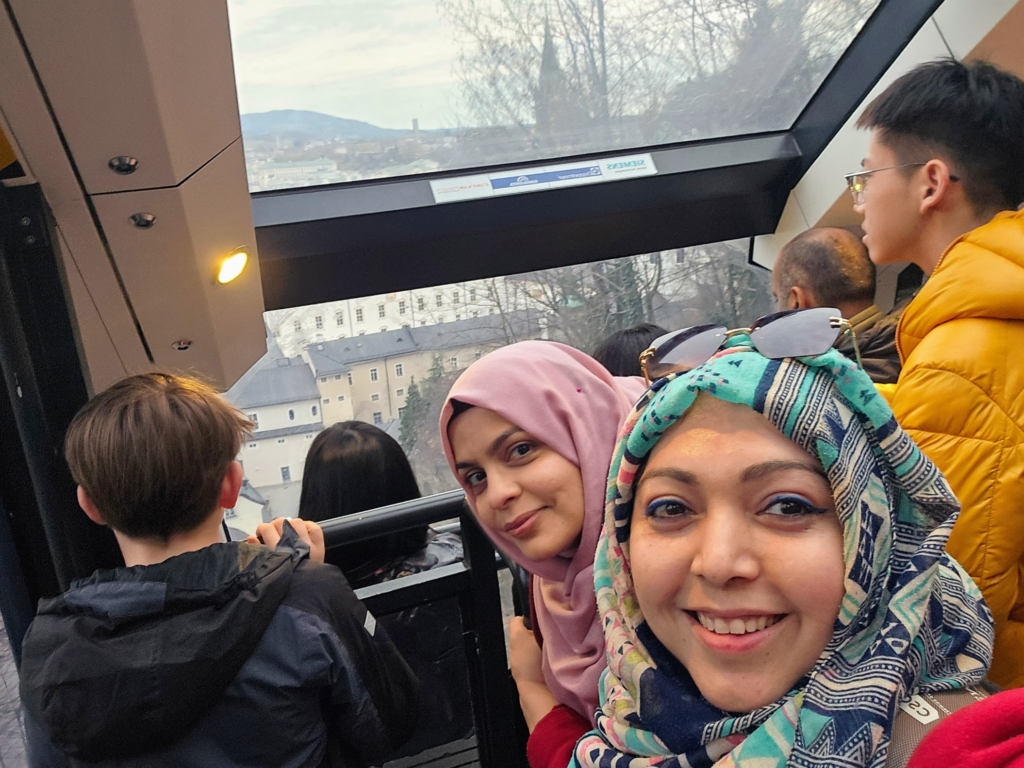
Getting up there is via the funicular from Festungsgasse in the old town, which runs every ten minutes and takes under a minute. There’s also a footpath if you’d rather walk, and it’s steep but manageable.
Hours and closures
Opening hours swing considerably by season, so check before you build your day around them. The fortress is open every day of the year, running 9.30am to 5pm from October through April and 8.30am to 8pm from May through September, with the museums and indoor areas inside closing earlier than the grounds in summer.
The funicular also closes for maintenance for stretches of the year, and the dates move.
Which ticket
There are two tiers. The cheaper one covers the funicular and the main grounds. The upgrade adds the Prince’s Rooms and the Magic Theatre.
I’ve now visited the fortress twice, ten years apart, and took the basic ticket both times. On a day trip where time is the real constraint, the grounds and the walls give you more than enough before you hit the point of having seen enough of one attraction. Spend the saved time outside looking at the view.
The old town on foot
Most of what makes Salzburg worth the journey costs nothing at all.
Getreidegasse is the narrow shopping street with the wrought iron guild signs hanging over it, and it’s the photograph everyone takes. Mozart’s birthplace is on it, marked by a bright yellow facade. The museum inside charges, and unless you’re properly into Mozart, seeing it from the street is enough on a day trip.
Salzburg Cathedral dominates Domplatz and the nave is free to enter. The scale inside is the surprise, since the exterior doesn’t prepare you for it.
Kapitelplatz behind the cathedral has the giant golden sphere sculpture with a man standing on top, plus the best angle up towards the fortress. It’s where I’d take the photo if you only take one.
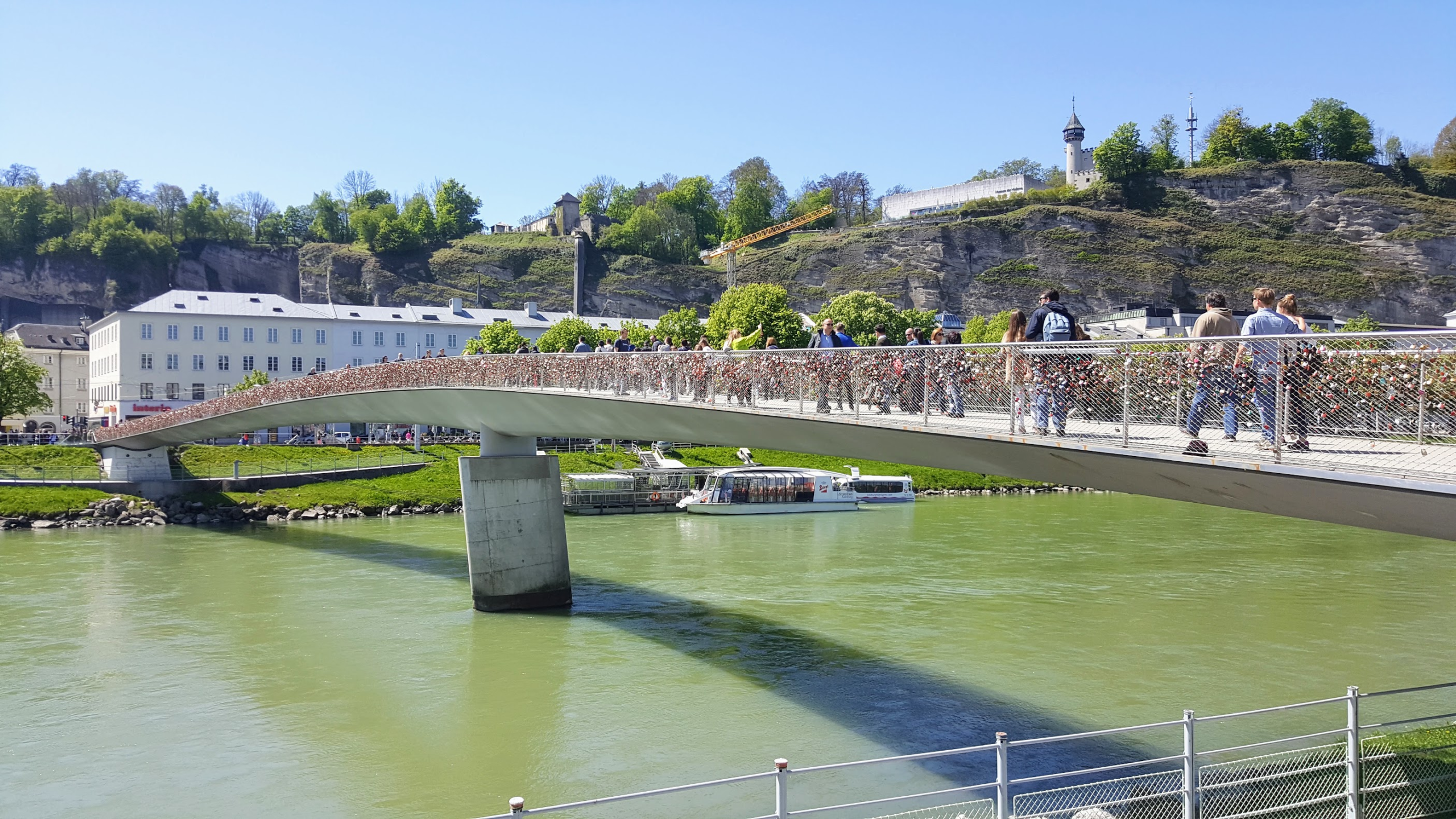
Residenzplatz with its fountain, and the Salzach bridges for the view back at the old town against the cliff, round out the walk.
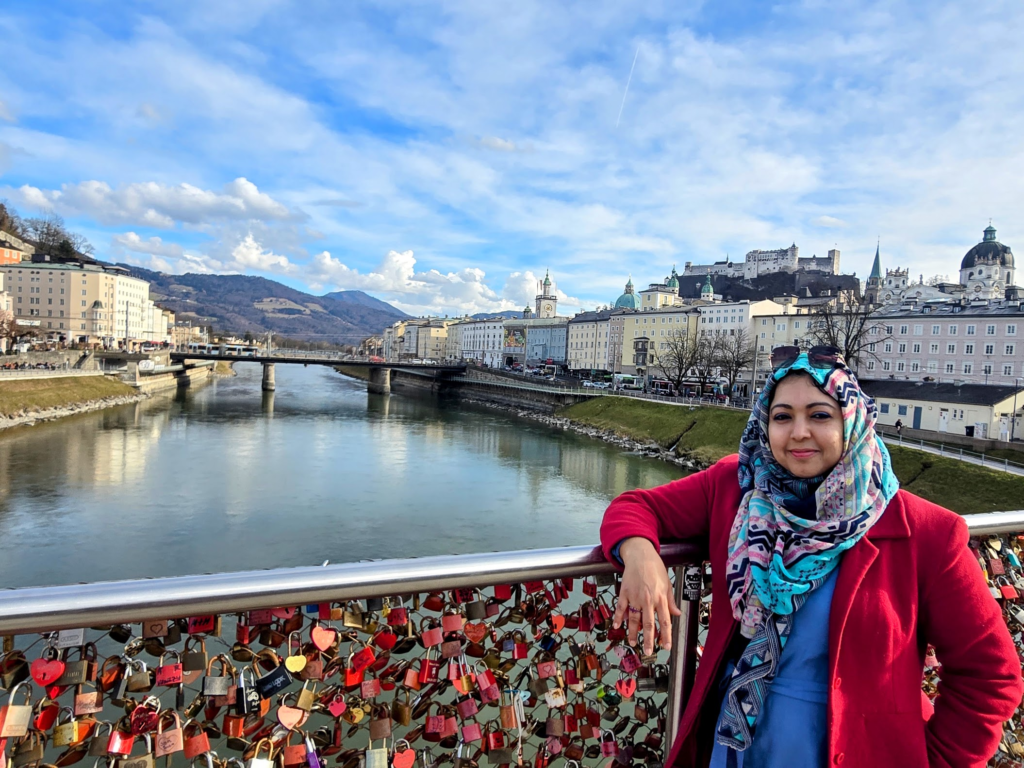
All of that fits comfortably into a couple of hours at a slow pace. Salzburg’s center is genuinely small, and that’s the reason a day trip works at all.
Mirabell Gardens and the Sound of Music
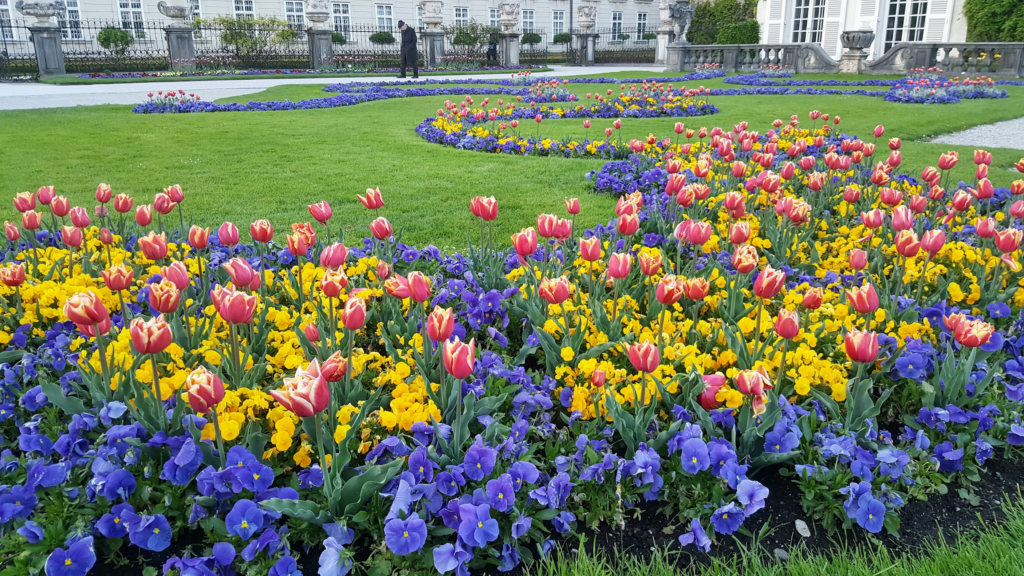
The gardens sit on the station side of the river and are free to walk into. They’re formal, symmetrical and well kept, and the steps at the far end are the ones from the Do-Re-Mi sequence in the film, which is why there’s usually a line of people photographing a staircase.
These were my other favorite part of Salzburg, and I’ll admit the reason is partly sentimental. I was here on my birthday ten years ago, so walking back in a decade later came with a memory attached. Even without that, the gardens are worth twenty minutes for the framed view back towards the fortress.
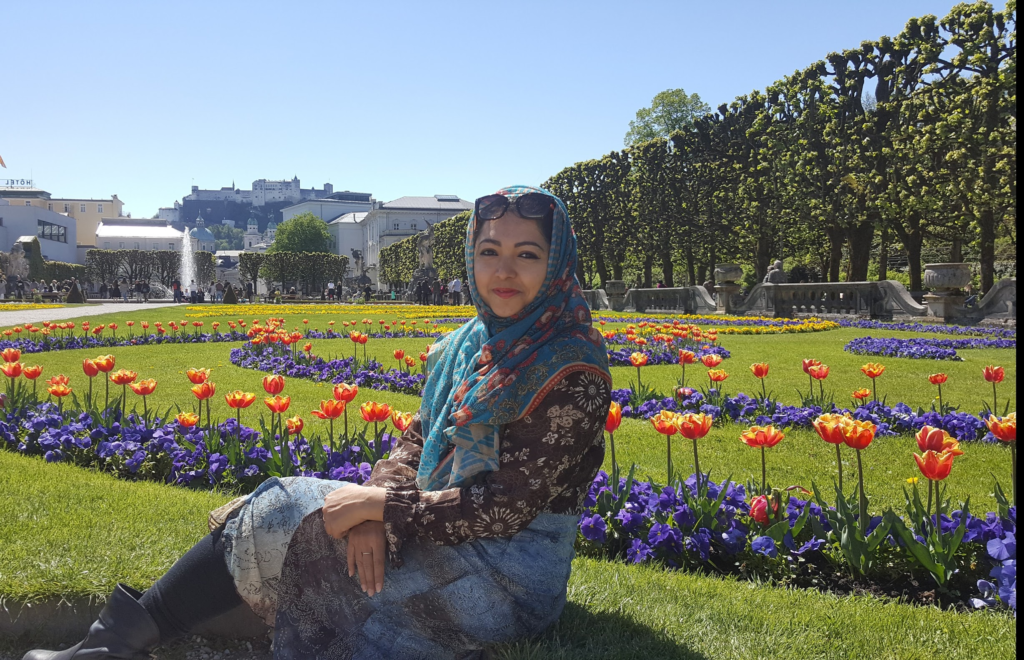
The practical point is placement. Because they’re between the station and the old town, they work naturally either as your first stop or your last, depending on which train you’re catching. Don’t backtrack for them in the middle of the day.
The full Sound of Music bus tour is a different proposition. It runs several hours and takes you out into the countryside, which means giving up most of Salzburg itself. On a day trip I’d skip it.
What to leave out
Salzburg is surrounded by things people will tell you to add, and adding any of them turns a relaxed day into a scramble.
Hallstatt is the big one. It looks close on a map and it isn’t, and doing it as a second stop on a Munich day trip means several more hours of travel to spend a rushed hour somewhere that deserves better. Do it from Salzburg overnight, or don’t do it.
Hellbrunn Palace and its trick fountains sit a bus ride south of the city and are seasonal, closing over winter.
The salt mines and the Untersberg cable car are both fine, and both cost you half a day.
The full Sound of Music tour, as above.
None of these are bad. They just belong to a longer trip, which is the one where you stay in Salzburg rather than visiting it.
Eating in Salzburg
This is worth planning ahead a little. Austrian food in the old town leans heavily on pork, and a large share of the traditional restaurants are attached to breweries, which narrows things considerably if you eat halal.
What works is the same approach that works in Munich. There are Turkish and Middle Eastern places around the station end of town and along the main streets away from the tourist core, which is also where prices drop noticeably. The Grünmarkt on Universitätsplatz is good for bread, fruit and pastries if you’d rather assemble something and eat it by the river.
Expect Salzburg’s old town prices to run above Munich’s for anything sit down, since it’s a small center with a lot of visitors.
When to go
Late spring and early fall give you the best combination of weather, daylight and manageable crowds.
Summer means the longest fortress hours and the most daylight to use, but also the Salzburg Festival from mid July through August, when the city is at its fullest and accommodation across the region gets tight even if you’re only visiting for the day.
Winter shortens everything. The fortress closes earlier, the light goes mid afternoon, and a two hour train each way eats into a short day. What you get in exchange is the Christmas market season and a considerably quieter old town.
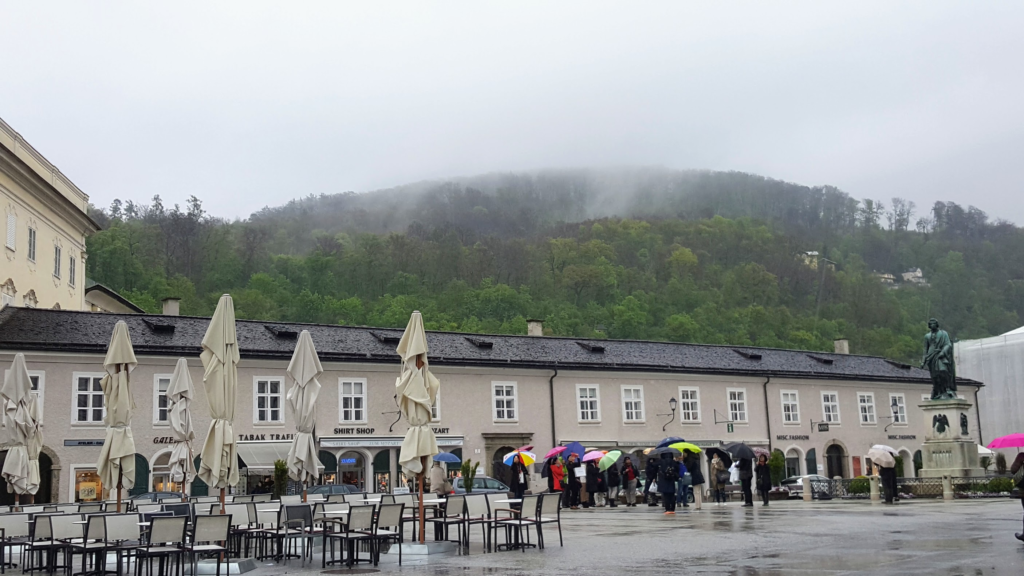
A Salzburg day trip from Munich is one of the most straightforward things you can do with a spare day in Bavaria. Get the early regional train, make sure your ticket covers the service you’re actually boarding, and give yourself the full day rather than a rushed afternoon.
The city is small, which is both a criticism and a compliment. Small enough to see properly in a day, which is exactly what you want from a day trip. If it turns out you want the mountains and the hiking and the rest of Austria as well, that’s not a longer version of this trip. That’s a different one, and Salzburg makes a very good base for it.
FAQs
How many hours do you need in Salzburg?
Around six to seven hours covers the old town, the fortress and the Mirabell Gardens at a comfortable pace. That’s what a day trip from Munich gives you if you take an early train, so the timing works out well.
Can you use the Deutschlandticket from Munich to Salzburg?
Yes, on the regional RE5 service only. Salzburg’s main station counts as a border station under German fares, which is what makes it work. The ticket is not valid on railjet, EuroCity, Intercity or ICE trains, so filter your search for local transport only.
Is Salzburg walkable from the train station?
Yes. It’s roughly fifteen to twenty minutes on foot into the old town, passing the Mirabell Gardens on the way. There are buses if you’d rather, but the walk is easy and gets you oriented.
Should you book a guided tour from Munich instead?
Only if you’d rather not think about logistics. A tour costs considerably more than a train ticket and gives you less time in Salzburg, because the schedule has to accommodate everyone. Going independently is straightforward on this route, and the free walking tour once you arrive does the orientation job for a tip.
Is Salzburg expensive compared with Munich?
For food and attractions in the old town, slightly more. It’s a small center with heavy visitor numbers and prices reflect that. Getting there costs very little if you already hold a regional ticket, which offsets the rest.
Can you do Salzburg and Hallstatt in one day from Munich?
Technically possible and not worth doing. You’d spend most of the day on trains and get an hour in each place. Pick one.