Best Things to Do in Granada, Spain for First-Time Visitors
Most first-time tourists believe there’s not much to do in Granada besides the Alhambra, and that’s exactly where they’re wrong. That single monument on the hill takes care of itself once your tickets are secured, and the rest of the city turns out to be the part people talk about afterwards. The old Muslim quarter, the viewpoints across the valley, the river walk and a scattering of medieval buildings hidden in the streets are all free or close to it, and they fill more time than most first-time visitors allow for.
You should give the city two full days at minimum and three if you can, because the terrain slows you down considerably more than the distances suggest.
The short version
- Book the Alhambra first and book it early, because nothing else on this list needs planning at all
- Two days is the minimum and three is comfortable
- The Albaicín, the viewpoints and the river walk cost you nothing
- Almost everything involves climbing, so bring shoes you can actually walk hills in
- The Nasrid buildings scattered around the old town are the most overlooked thing in Granada
- Sunset at the famous viewpoint is a scrum, and there are better options a few minutes away
The Alhambra
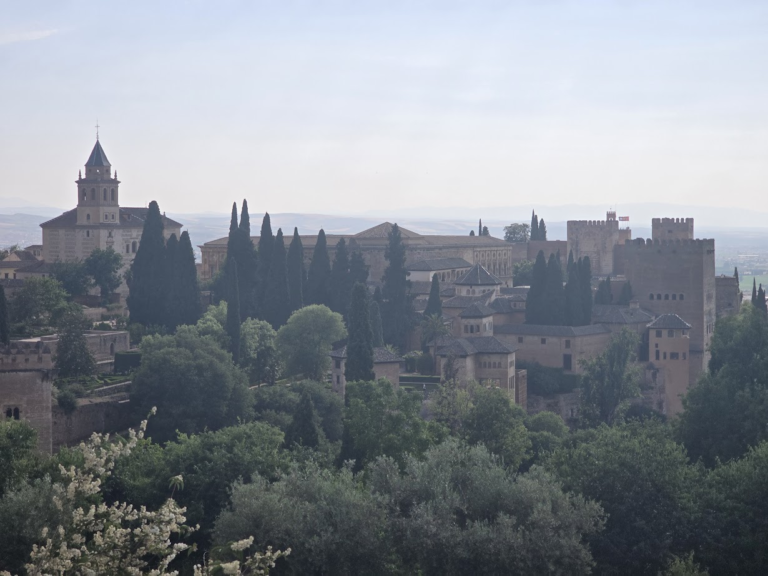
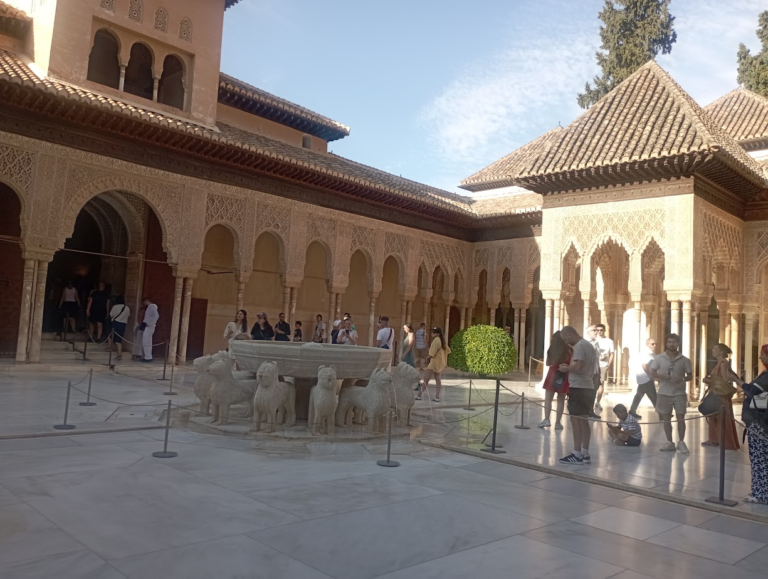
The Alhambra is a fourteenth century Nasrid palace complex on the hill above the city, and no photograph you’ve seen has done the carved plasterwork or the reflecting pools any justice at all.
Getting in is harder than at most European monuments, and a few details matter far more than the rest.
Tickets go on sale through the official Patronato site roughly three months ahead. Naturally, when I started looking for tickets nearly 2-3 weeks before our trip, everything was sold out for months. That’s when I came across a Reddit thread with some hacks to book the tickets. Turns out, there’s almost always a batch of same-day tickets that’s up for grabs early in the morning. I had my laptop and debit card ready at around 7 in the morning and managed to book in just a few minutes!
The Nasrid Palaces run on thirty minute timed slots, and that’s the part that disappears first, often weeks in advance and sometimes months in summer. Turn up after your slot has passed and you don’t get in, and you don’t get your money back either.
Tickets are issued in your name, so bring the original passport or national ID you booked with. Photocopies get turned away. Children under twelve need their own free ticket rather than just walking in beside you, which catches a surprising number of families out.
If your dates have already gone, the Granada city council has a page on what to do about it, including the useful detail that last-minute releases sometimes appear on the official site between eight and ten in the evening the night before. That same page warns you of the lookalike resale sites, and I’d take that seriously, because they dominate the search results and several of them look convincingly official.
The Albaicín
If the Alhambra were shut, the Albaicín is where I’d send you instead, and I don’t think you’d feel short-changed.
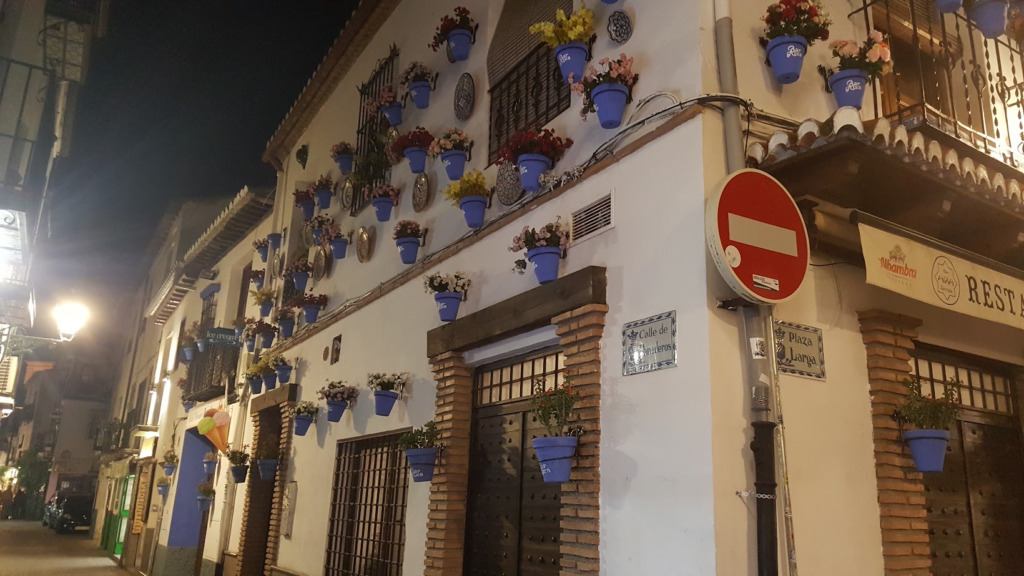
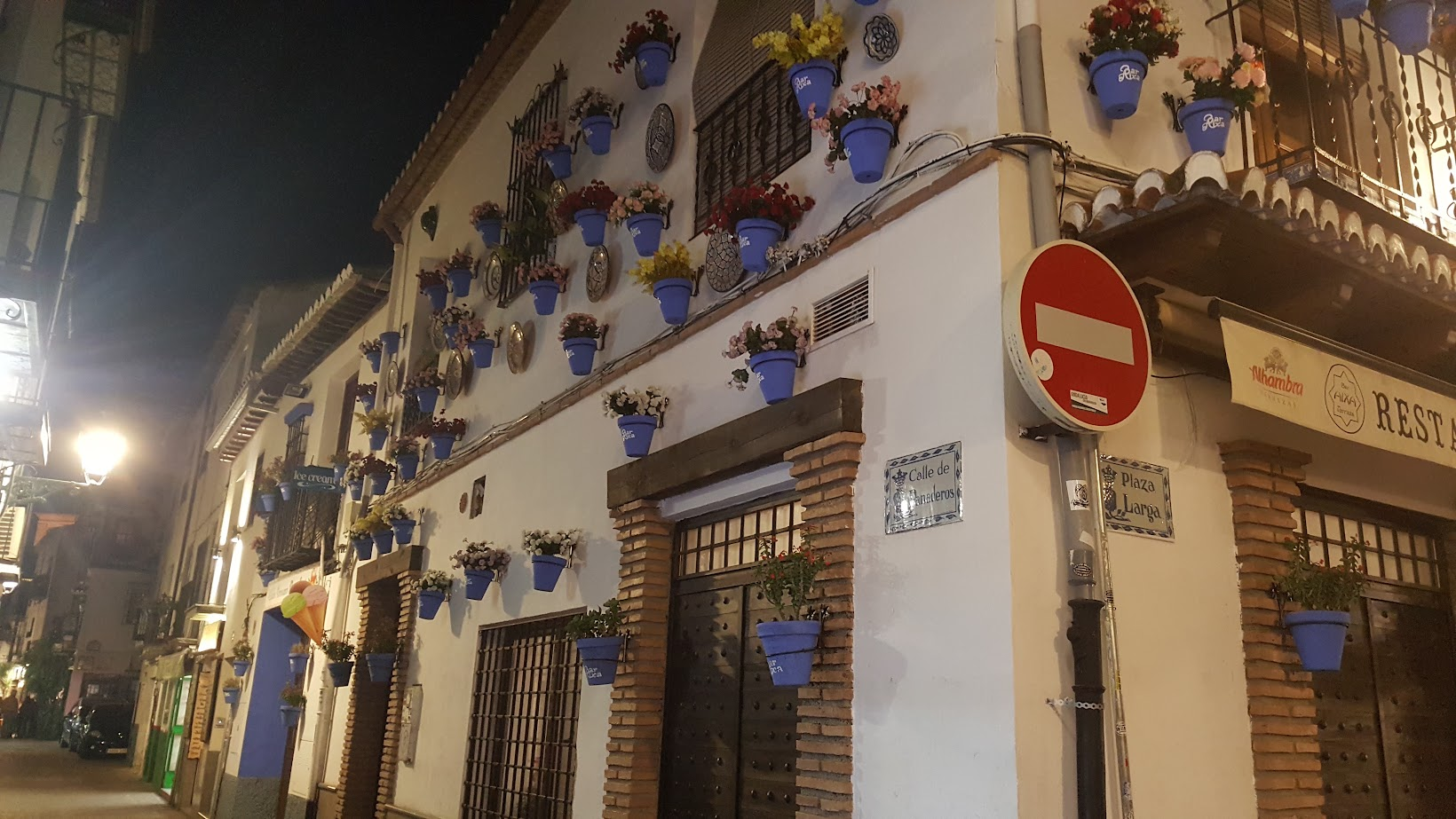
It’s the old Muslim quarter, climbing the hill directly opposite the palace, and it’s all narrow cobbled lanes, whitewashed houses and gardens hidden behind walls. The street plan is still essentially medieval, which is why nothing runs in a straight line and why you’ll lose your bearings within about ten minutes. That’s fine. The streets are short enough that you can’t really get lost, and wandering is the whole point.
Walk up from Plaza Nueva along Calle Calderería Nueva and you’ll pass the tea houses and craft shops on the way. Keep climbing and you’ll eventually pop out at the viewpoints. Plaza Larga and Placeta del Peso de la Harina are where it stops feeling like somewhere people visit and starts feeling like somewhere people live.
Be realistic about the climbing, though. These are steep cobbled lanes rather than gentle slopes, and if anyone in your group struggles with hills they need to know that before you set off. Minibuses run up into the quarter, and taking one isn’t giving up, it’s just sensible.
Mirador de San Nicolás
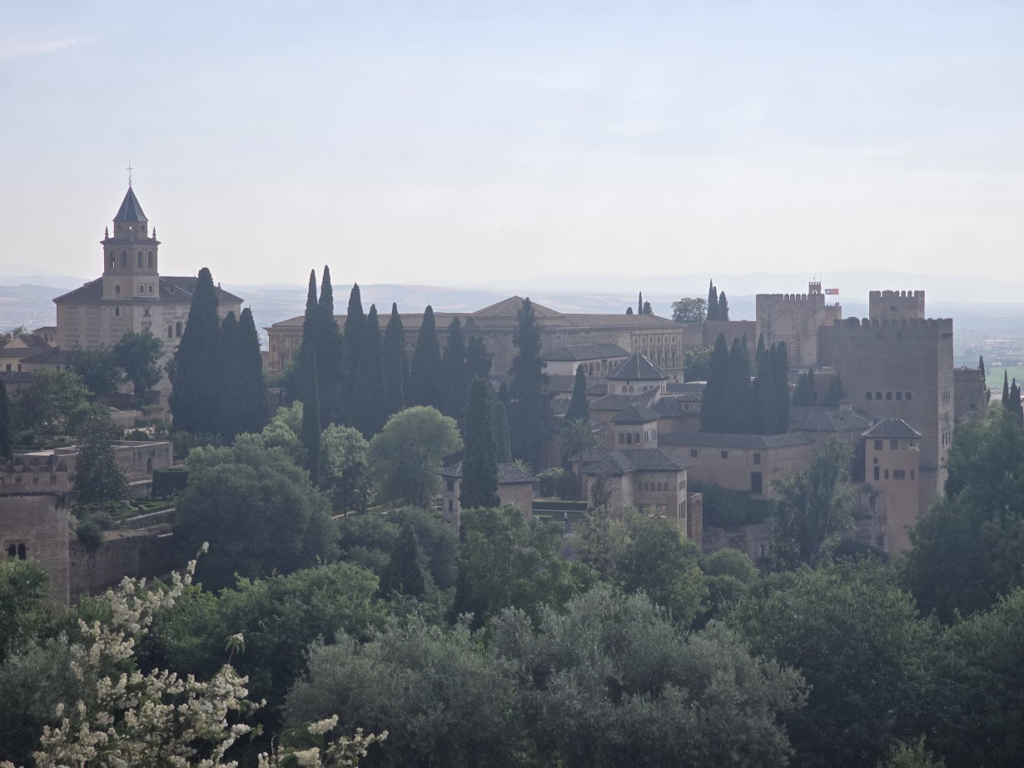
This is the viewpoint you’ve seen in photographs, looking straight across at the Alhambra with the Sierra Nevada behind it. It’s free and it’s open all day.
Honestly, I would say it’s worth a visit for that view of the Alhambra alone. The view was absolutely breathtaking and hyped me up for my visit to the Alhambra later that evening. One thing to keep in mind is that you should probably think twice about going at sunset. The terrace starts filling an hour or more before the light turns, and by the time it does you’re standing four rows back watching everyone else’s phones. If sunset is genuinely what you want, get there early and accept you’ve committed an hour of your evening to guarding a spot on a wall.
There are better options nearby. Mirador de San Cristóbal is a little further up and gives you a different angle with a fraction of the people. Mirador de San Miguel Alto is higher still and takes another half hour of climbing, which does a good job of thinning the crowd out. The garden at the Great Mosque of Granada sits right beside San Nicolás and offers much the same view somewhere considerably calmer.
Honestly, mid-morning at San Nicolás is underrated. The light hits the Alhambra differently and you can actually get to the wall.
Carrera del Darro and Paseo de los Tristes
The riverside walk beneath the Alhambra is the nicest twenty minutes in Granada, and it doesn’t cost anything.
Carrera del Darro follows the water past medieval bridges and old facades, with the Alhambra walls above you on one side and the Albaicín climbing away on the other. It finishes at Paseo de los Tristes, a wide open square with the fortress hanging directly overhead.
Whenever you’re moving between the old town and the Albaicín, take this route rather than the direct one. It’s flatter, it’s much prettier, and it drops several of the Nasrid buildings right onto your path.
The Nasrid buildings everyone walks past
If there’s one thing I’d push you towards that most guides barely mention, it’s this. The Alhambra wasn’t the only thing the Nasrids built. A handful of their buildings are still standing in the streets below, and almost everyone walks straight past them on the way up the hill.
The Corral del Carbón is a fourteenth century caravanserai, which is to say a merchants’ inn built around a courtyard, and it’s the only one left intact anywhere in Europe. It’s two minutes from the cathedral, it’s free, and you could easily walk past the doorway without any idea what’s behind it.
El Bañuelo is an eleventh century bathhouse on Carrera del Darro. The vaulted ceilings have star-shaped openings cut into them that throw light down onto the stone, and it’s one of the oldest surviving buildings of its type in Spain.
Dar al-Horra, up in the Albaicín, belonged to the mother of Boabdil, the last Nasrid ruler of the city. Casa de Zafra and Casa del Chapiz are both domestic Nasrid houses, and both are quiet enough that you can sit in the courtyard for a while without anyone hurrying you along.
There’s a combined ticket called the Dobla de Oro that bundles these with the Alhambra, and several of them open free on Sundays. Each one only takes about twenty minutes. Put them together, though, and Granada stops being a city with one famous monument on a hill and starts being what it actually was, which is a place that was thoroughly Islamic for nearly eight hundred years.
Sacromonte
Sacromonte sits beyond the Albaicín, historically the Roma quarter, and it’s built into caves cut straight into the hillside.
The walk out along the Camino del Sacromonte gives you a view back at the Alhambra from an angle hardly anyone bothers with, and the abbey sits at the far end of it. The cave museum is better than it sounds, because it shows you how people actually lived in these dwellings rather than just letting you look at them from outside.
The neighbourhood is closely tied to flamenco, and the cave venues are what you’ll get pointed towards. I’d research anywhere properly before booking rather than taking an offer from someone on the street, because the standard varies wildly and the shows aimed squarely at tourists aren’t what gave Sacromonte its reputation.
The Cathedral and the Royal Chapel
Granada’s cathedral went up on the site of the city’s main mosque after 1492, and knowing that makes the visit more interesting rather than less.
Next door, the Royal Chapel holds the tombs of Ferdinand and Isabella, who finished the conquest of Granada and funded Columbus in the same year. Whatever you make of all that, standing in that room is one of the more historically loaded ten minutes you’ll spend in Spain.
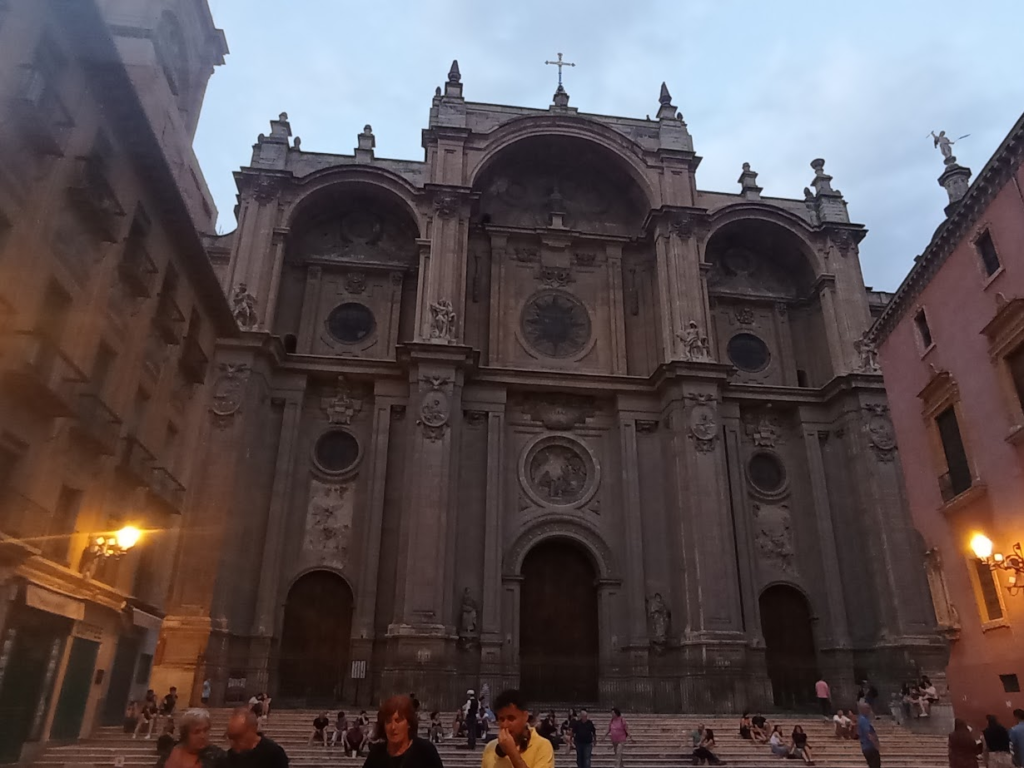
Both charge to get in, though both are free during worship hours, and an hour will cover the pair of them comfortably.
The Alcaicería beside the cathedral used to be the silk market. What’s there now is a nineteenth century rebuild full of souvenir stalls, so walk through it by all means, but don’t plan your afternoon around it.
The tea houses on Calderería Nueva
The street climbing from Plaza Nueva up into the Albaicín is lined with teterías, serving mint tea and Moroccan pastries in rooms full of low tables and lanterns.
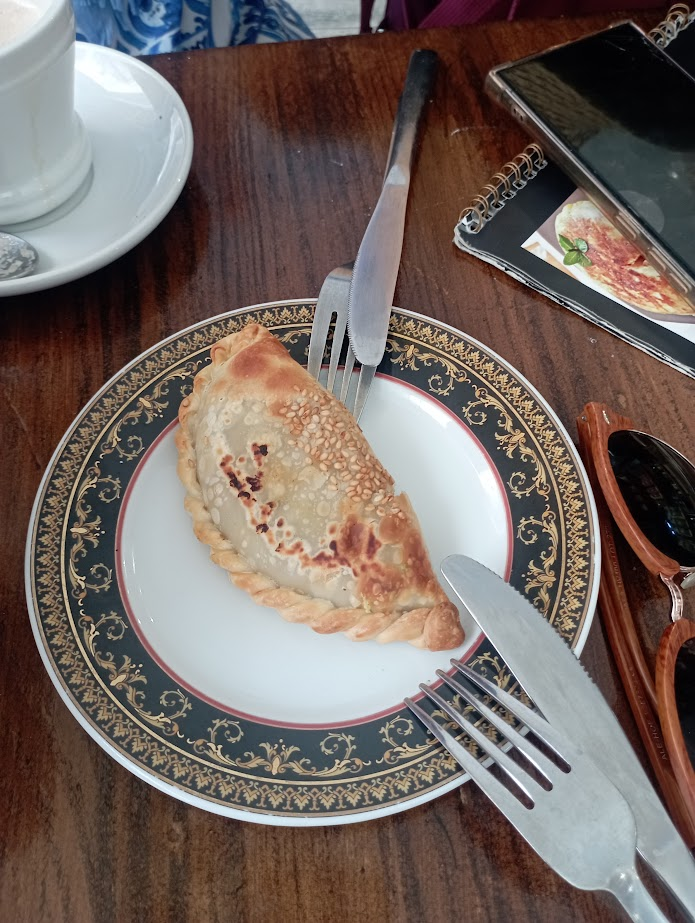
The same street has spice shops, lamp sellers and small craft places along it. Yes, it’s touristy, and I’d still walk it, especially late in the afternoon when the light comes down the hill.
Three gardens worth an hour
Carmen de los Mártires is up on the Alhambra hill and it’s free. You get formal gardens, fountains, a small lake, peacocks wandering about and views out over the city. If you couldn’t get Generalife tickets, this is the nearest thing to it, and it’s practically empty by comparison.
Carmen de la Victoria over in the Albaicín is a university garden looking across at the Alhambra. Also free, though you do have to reserve ahead.
Garcia Lorca Park is also a nice, green space that tons of locals love to go to. We spent a reasonable amount of time in this park with snacks from the nearby Mercadona. There were children playing, people walking their dogs, and multiple seniors taking a nice leisurely stroll with their friends.
What I’d skip
- Sunset at San Nicolás, unless you’re willing to turn up an hour early. Go in the morning and enjoy it properly.
- The Alcaicería as anything more than a two minute walk-through.
- Any flamenco show sold to you on the street. Book something you’ve looked into, or leave it. I managed to catch one for free near the river and it was a good time, though I still have doubts about how authentic the experience was.
- Squeezing Sierra Nevada into a two day trip. It’s close enough to tempt you and it’ll still eat a day you can’t spare.
- The Alhambra museum, if you’re short on time. The palaces are what you came for and the museum will keep.
When you go changes everything
Summer here is properly hot, and the Albaicín gives you almost no shade to hide in. If you’re coming in July or August, do your climbing early, save the indoor places for the afternoon, and grab the earliest Alhambra slot you can get.
Spring and autumn are the sweet spot for weather and crowds together, and the Alhambra gardens are at their best in spring.
Winter catches people out, because they hear Andalusia and picture warmth. The Sierra Nevada is a ski resort and Granada sits high enough to feel it. What you get in return is a much quieter Alhambra and tickets you can actually get hold of.
Granada really does split into one thing you have to plan and everything else, which you can work out as you go.
Book the Alhambra the moment your dates are fixed. After that, walk the Albaicín until you’re lost, take the river route instead of the direct one, find a viewpoint that isn’t the famous one, and stick your head through the doorways of those Nasrid buildings everyone else hurries past.
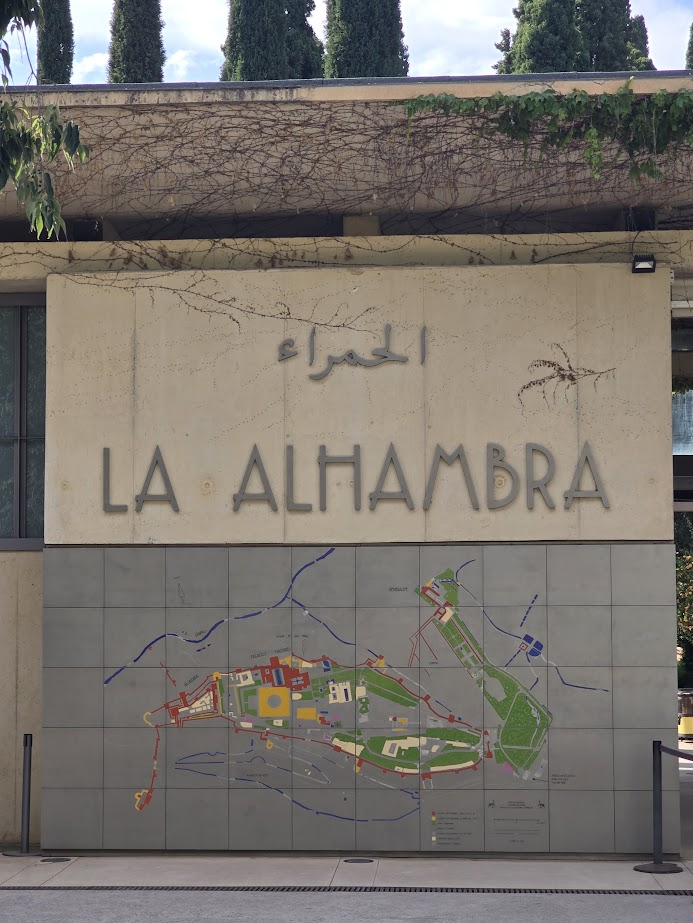
The city rewards slowing down more than most places its size, though to be fair, the hills don’t leave you much choice about it.
Planning to visit Granada soon? Check out our other guides:
FAQs
How many days do you need in Granada?
Two full days at minimum, three if you want the Nasrid buildings and a slower pace. One day gets you the Alhambra and a walk through the Albaicín, but you’ll feel rushed the whole way through.
Do you have to book the Alhambra in advance?
Realistically, yes. Tickets appear around three months ahead and the Nasrid Palaces slots go weeks in advance for most of the year. There is a small walk-up quota, but it’s not something to build a trip around.
What is there to do in Granada besides the Alhambra?
Plenty, and most of it free. The Albaicín, the viewpoints, the river walk, the Corral del Carbón, the cathedral and Royal Chapel, Sacromonte and a couple of gardens will fill two days between them without any trouble.
Is the Mirador de San Nicolás worth it?
For the view, yes. At sunset, only if you’re prepared to arrive an hour early. San Cristóbal and San Miguel Alto give you much the same thing with far fewer people in the way.
Is Granada walkable?
The centre is, easily. The Albaicín and Sacromonte are a different matter, with steep cobbles that catch people out. The minibuses running up into both are worth using rather than resisting on principle.
What can you see in Granada for free?
The Albaicín and its viewpoints, Carrera del Darro, the Corral del Carbón and Carmen de los Mártires all cost nothing, and several Nasrid monuments open free on Sundays. The cathedral and Royal Chapel are free during worship hour