Things to Do in Munich: What’s Actually Worth Your Time
Munich is one of the most beautiful cities in Bavaria with plenty of activities to do and things to see while you are visiting the city for a few days or treating it as a base for a longer Bavarian trip. You can see the important attractions in three days without sprinting, which leaves room to do them properly rather than photographing them and moving on.
We based ourselves in Munich for a week, though most of that week went on day trips out into Bavaria and across the border. That shaped how I’d answer this question. Munich is a city you can cover well in two or three focused days, and the honest advice is to do exactly that and spend the rest of your time using it as a base.
Worth flagging before you read on. This list doesn’t cover the beer halls and beer gardens that dominate most Munich guides. If that’s the trip you’re planning, you’ll want a different article.
The short version
- One day gets you the old town on foot, Viktualienmarkt and the Englischer Garten
- Two days lets you add the Residenz or one major museum
- Three days is enough for Nymphenburg or the Dachau Memorial as well
- On a rainy day, head for the Deutsches Museum, the Kunstareal galleries or the Residenz
- Free options include Marienplatz, the Englischer Garten, Viktualienmarkt, most churches and the Dachau Memorial
- Sundays are when the Bavarian state museums drop to one euro
Start with a walking tour of the old town
This is what we did on our first full day, and I’d definitely do it again if I had the chance. Munich’s centre is compact and dense with history that isn’t self-explanatory, and walking it with someone who can join the dots up front means everything you go back to afterwards makes more sense.
We booked a walking tour of Munich’s old town to explore the city with a guide. It was two and a half hours long across eleven stops, starting at the Fischbrunnen fountain on Marienplatz. The route takes in Marienplatz and the New Town Hall, the Frauenkirche, the Fünf Höfe passage, Odeonsplatz and the Theatinerkirche, the Feldherrnhalle and Viscardigasse, the Residenz, the opera house and Maximilianstraße.
We love booking walking tours because they give us a sense of the city from a local’s perspective and we are able to understand the layout of the city much better when we are actually walking the streets.
Marienplatz and the old town
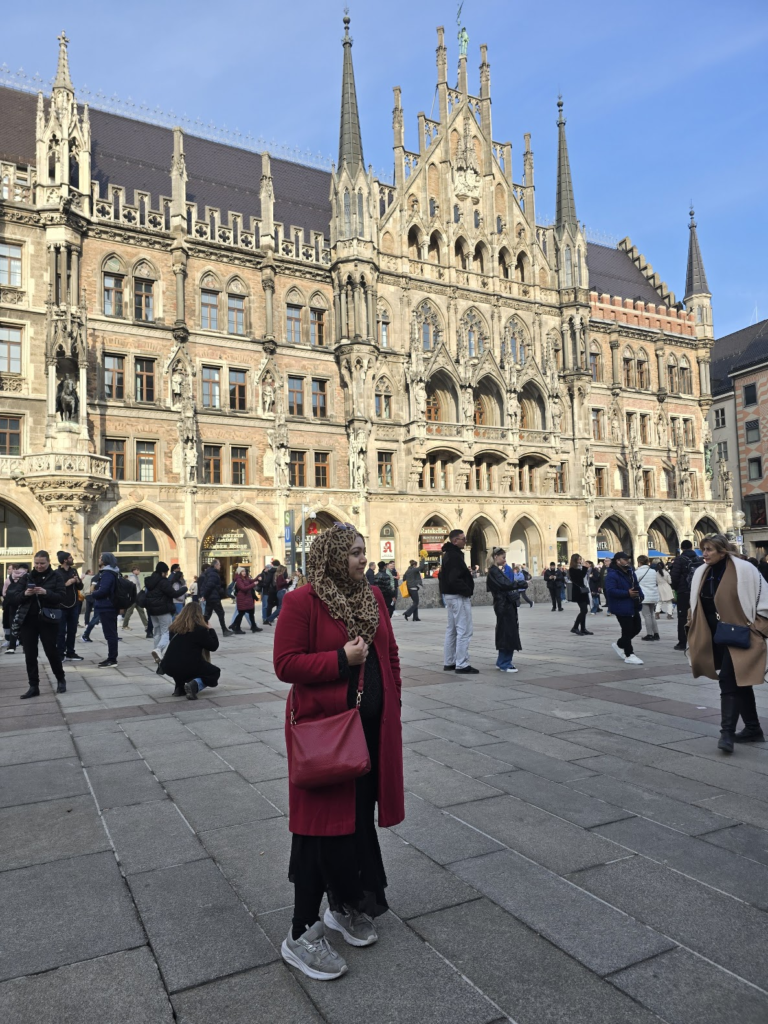
Everything routes through here, whether you plan it or not. The square holds the New Town Hall with its Gothic frontage, the Old Town Hall at the far end, and streets fanning out towards the shopping district and the market. Half a day covers the old town properly on foot, and if you’ve done a walking tour first, that half day becomes about going back into the two or three places that caught your interest.
The Glockenspiel, and whether it’s worth waiting for
The clock in the New Town Hall plays at 11am and noon daily, with an extra performance at 5pm from March to October. Figures act out a royal wedding and a barrel-makers’ dance for a few minutes.
Honestly, the crowd it draws is out of proportion to what happens. Watch it if you’re in the square anyway. I wouldn’t plan a morning around it and I wouldn’t turn up early to hold a spot. The 5pm summer show is noticeably calmer.
The best view in Munich, and which tower to climb
There are two options, and they’re genuinely different rather than interchangeable.
Alter Peter, the tower of St Peter’s Church behind Marienplatz, is 306 steps with no lift to a platform at 56 metres. The staircase is narrow, the platform is narrow, and on a busy afternoon it moves slowly. What you get is the view everyone recognises, with Marienplatz and the town halls directly below and the Alps on a clear day. Tickets are sold at the base and it’s usually walk-up only.
The Frauenkirche south tower removes the effort. You climb a spiral staircase and then take a lift, and visitor numbers on the platform are capped, so it’s a calmer visit with a full 360 degree view.
If you’re reasonably fit and can only do one, Alter Peter gives the better photograph, for the simple reason that the town hall is in it. If stairs are an issue, take the Frauenkirche and don’t think twice about it.
Churches worth stepping into
The Asamkirche on Sendlinger Straße is the one to make a point of. It’s small, wedged between shopfronts and easy to walk straight past, and the interior is late Baroque pushed as far as it will go. Five minutes inside is enough, and it costs nothing.
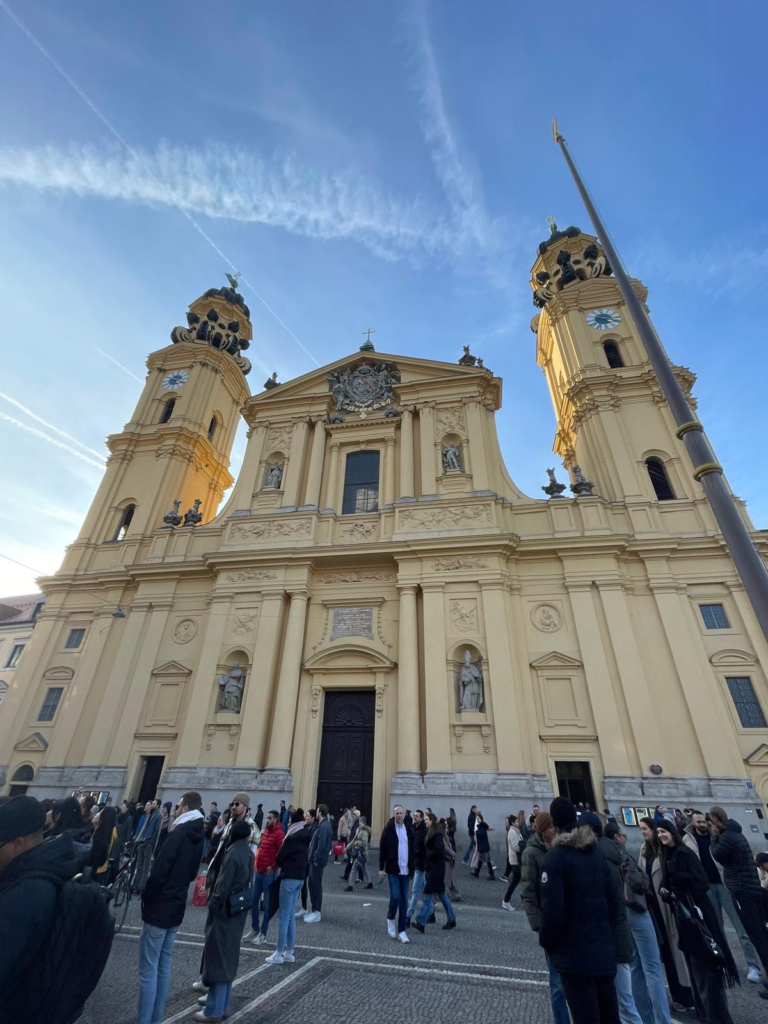
The Theatinerkirche on Odeonsplatz is the yellow one you’ll photograph without knowing what it is. The Frauenkirche is worth entering even if you skip the tower, and St Peter’s interior holds a Baroque high altar and the jewelled remains of a catacomb saint in a glass case.
Viktualienmarkt
A few minutes’ walk from Marienplatz, this is the central food market and has been running in some form for over two hundred years. Stalls sell produce, bread, cheese, spices, honey, flowers and pastries, six days a week, closed Sunday like everything else in the city.
Think of it as somewhere to assemble a meal rather than eat one. Bread, fruit and something sweet costs little and beats most of the sit-down options in the immediate tourist zone. Market prices run above supermarket prices, which surprises people, but for a one-off the quality justifies it.
Half an hour is plenty unless you’re shopping properly. The mistake we did here is that we arrived too late in the evening and by that time everyone was packing up their stalls.
The Munich Residenz
The former palace of the Bavarian rulers, and the thing most first-time visitors skip because the exterior gives nothing away. It’s the largest city palace in Germany, and the interior delivers. The Antiquarium is an enormous barrel-vaulted Renaissance hall, and the Treasury holds crowns, insignia and a thousand years of accumulated Wittelsbach wealth.
Keep in mind that the opening hours shift in mid-October and last admission is an hour before closing, so check before you go. The Residenz Museum and Treasury also involve a lot of stairs and aren’t step-free, though the Cuvilliés Theatre is.
Allow two hours minimum, more with the Treasury. It’s also the strongest rainy-day option inside the centre.
The Englischer Garten and the Eisbach wave
Bigger than Central Park and running north from the edge of the old town, this is where Munich goes to do nothing in particular. Walk in from Odeonsplatz, climb up to the Monopteros for a view back across the city, and continue as far as you feel like. The southern section holds the Japanese Teahouse and the streams, and it’s where most visitors stay.
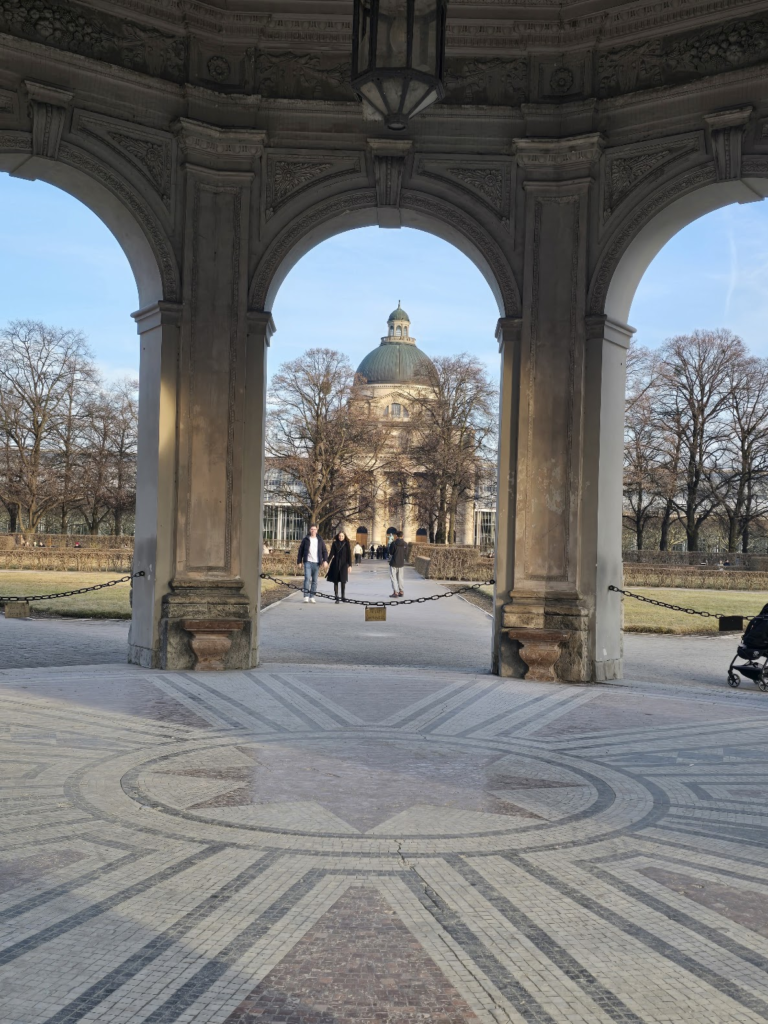
The Eisbach wave at the southern entrance is the draw. It’s a standing wave on a branch of the Isar where surfers queue to ride, in the middle of a European city, year round.
Its status has been unstable, so check before making a detour. The wave closed after a fatal accident in April 2025, reopened under new safety rules, closed again after river works, and the city announced a further reopening in May 2026. Watching costs nothing and takes ten minutes, but whether there are surfers to watch has changed more than once in two years.
Museums worth your time
Munich has far more museums than any visitor can sensibly get through. These are the three I’d choose between depending on what you’re into and how much time the rest of your trip leaves you.
Deutsches Museum
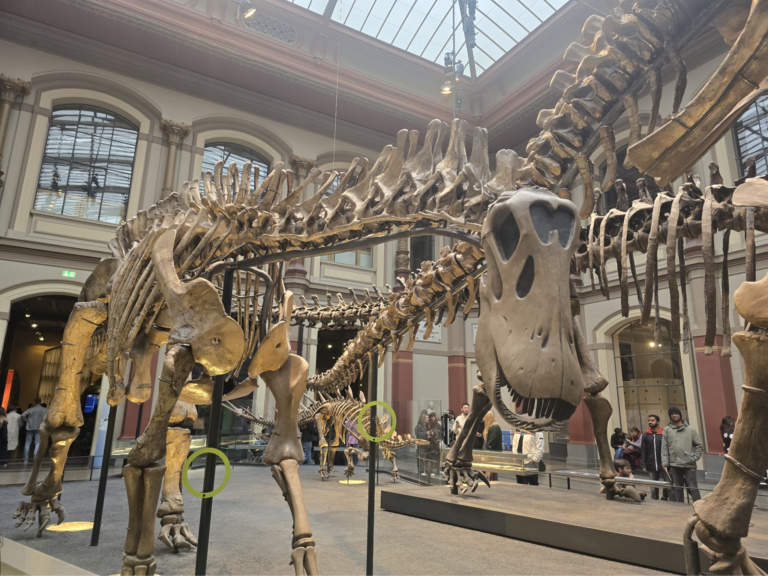
The science and technology museum on its own island in the Isar, and one of the largest anywhere. Twenty permanent exhibitions across four levels, from aeronautics to robotics, with hands-on stations throughout. We absolutely loved our visit to the Deutsches Museum.
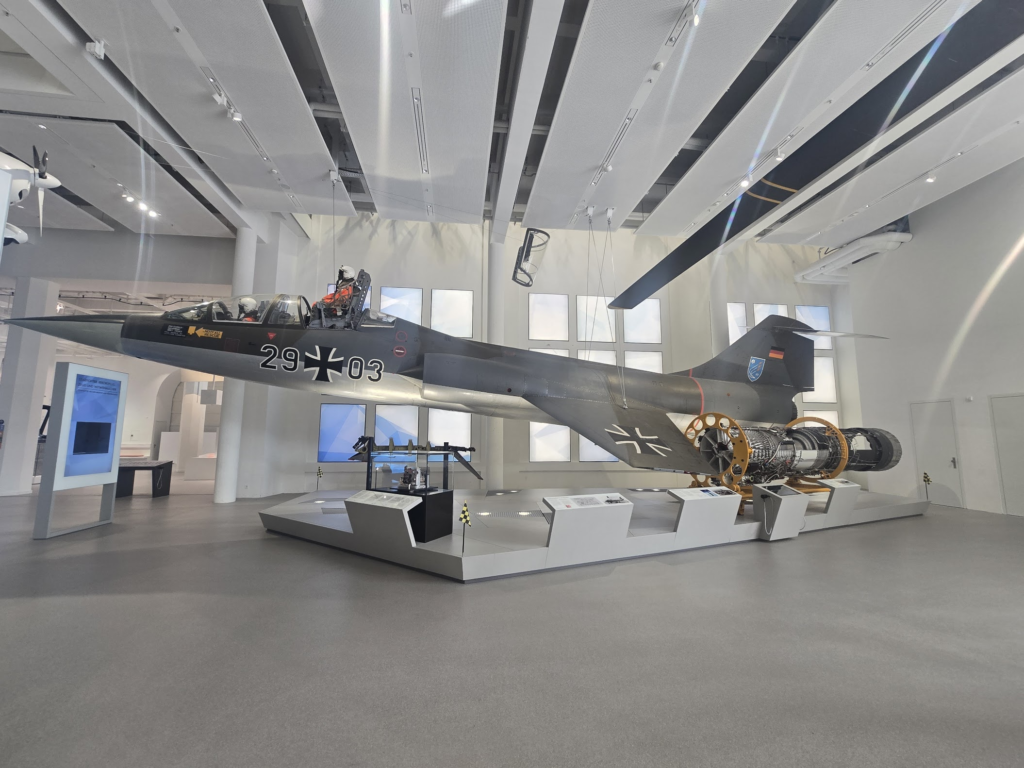
The mistake is underestimating it. People allow two hours and end up rushing. Give it half a day at minimum, and a full one if you’re travelling with children who want to press everything. We were running around like little kids in the museum because there was so much to see. The museum is very interactive so you have alot of fun while you are inside and dont realize how the day passed. Isartor on the S-Bahn and Fraunhoferstraße on the U-Bahn are both around five minutes away, and the museum publishes full visitor information and closure dates.
The Kunstareal galleries
Munich’s art district sits in Maxvorstadt and packs several major galleries into a few walkable blocks. The Alte Pinakothek covers the Old Masters, the Pinakothek der Moderne handles modern art, design and architecture, and the Brandhorst is contemporary.
One thing to know before you plan around it. The Neue Pinakothek has been closed since 2019 for renovation, with reopening currently planned for 2029. A selection of its nineteenth-century works is showing in the east wing of the Alte Pinakothek and at the Sammlung Schack, so the collection isn’t lost, but the building itself isn’t open. The Pinakothek’s visitor page covers the current arrangement and the combined ticket.
If your trip crosses a Sunday, this is where the one euro admission applies, and two or three galleries in a day becomes reasonable.
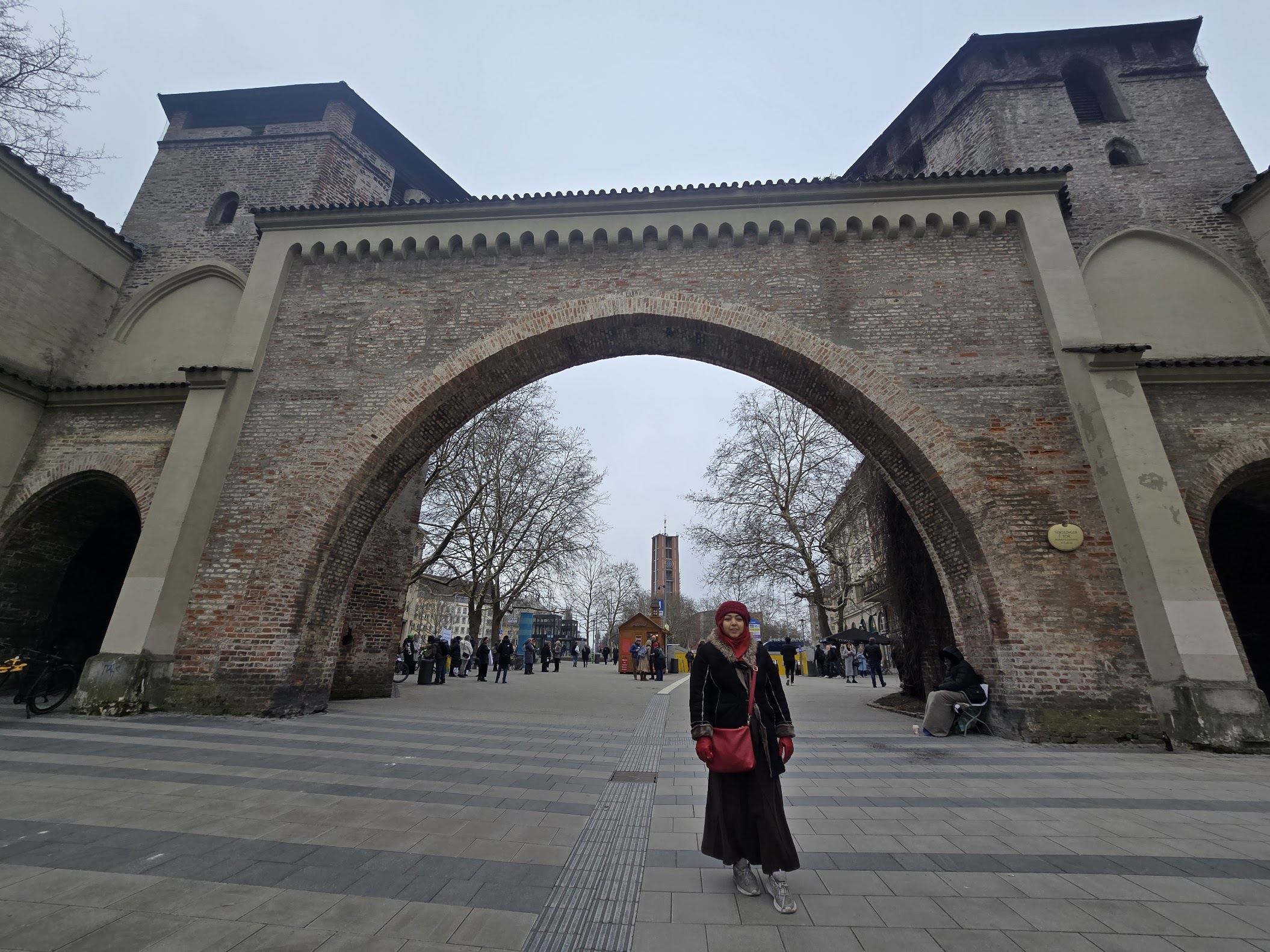
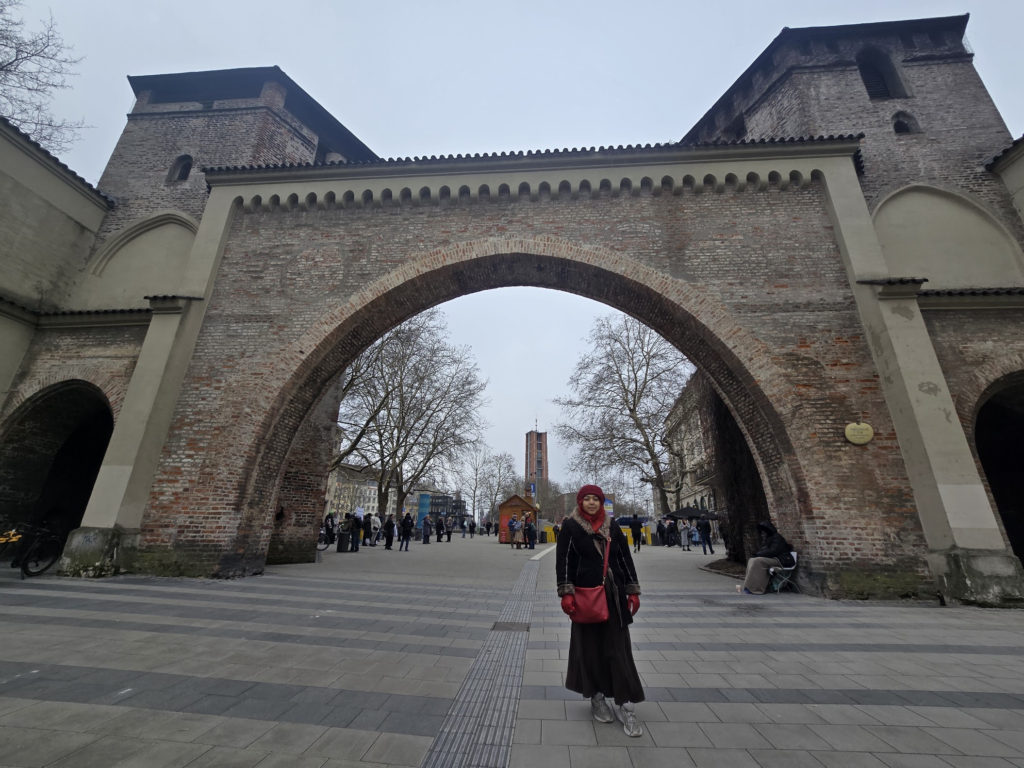
The 3 Surviving Medieval Gates
Because we are such history geeks, we also went and saw the historical surviving gates of Munich. This is something many tourists miss on their tour of Munich but we absolutely love discovering and visiting such historical gems.
Nymphenburg Palace
The Wittelsbachs’ summer palace, west of the centre and reachable by tram. It’s a long Baroque frontage with a canal running up to it, and an interior that includes Ludwig I’s Gallery of Beauties and the room where Ludwig II was born. The Marstallmuseum in the outbuildings holds the royal carriages and sleighs, which is more interesting than it sounds on paper.
The park is free to walk and is arguably the better half. What matters most is the season. The small park palaces including the Amalienburg close entirely from mid-October to March, and the main palace hours shorten too, so a winter visit means seeing roughly half of what’s there.
Budget three hours including travel each way.
The Dachau Concentration Camp Memorial Site
This isn’t a sightseeing stop and it’s worth approaching on those terms. The memorial occupies the site of the first Nazi concentration camp, opened in 1933, and includes the preserved grounds, reconstructed barracks, the main exhibition and several memorials.
Entry is free and it opens daily from 9am to 5pm, with no booking required. Getting there means an S-Bahn to Dachau followed by a bus, roughly forty-five minutes each way from the centre.
Give it a full half day and leave the rest of that day light. The site is large, much of it outdoors, and the exhibition takes real time to read. If you’re travelling with younger children, read the memorial’s own guidance first, as it isn’t recommended for under-twelves.
Visiting during Ramadan
Our last day in Munich fell with Ramadan starting the following morning, and we prayed the night prayers at the mosque in the city. If your trip overlaps, it’s worth knowing that Munich has an established Muslim community and finding a congregation isn’t difficult. The first day of Ramadan was also our last day in Munich, but we were luckily enough to find a mosque near the center and prayed in congregation. It was honestly a very beautiful way to end our wonderful trip to Bavaria and Munich.
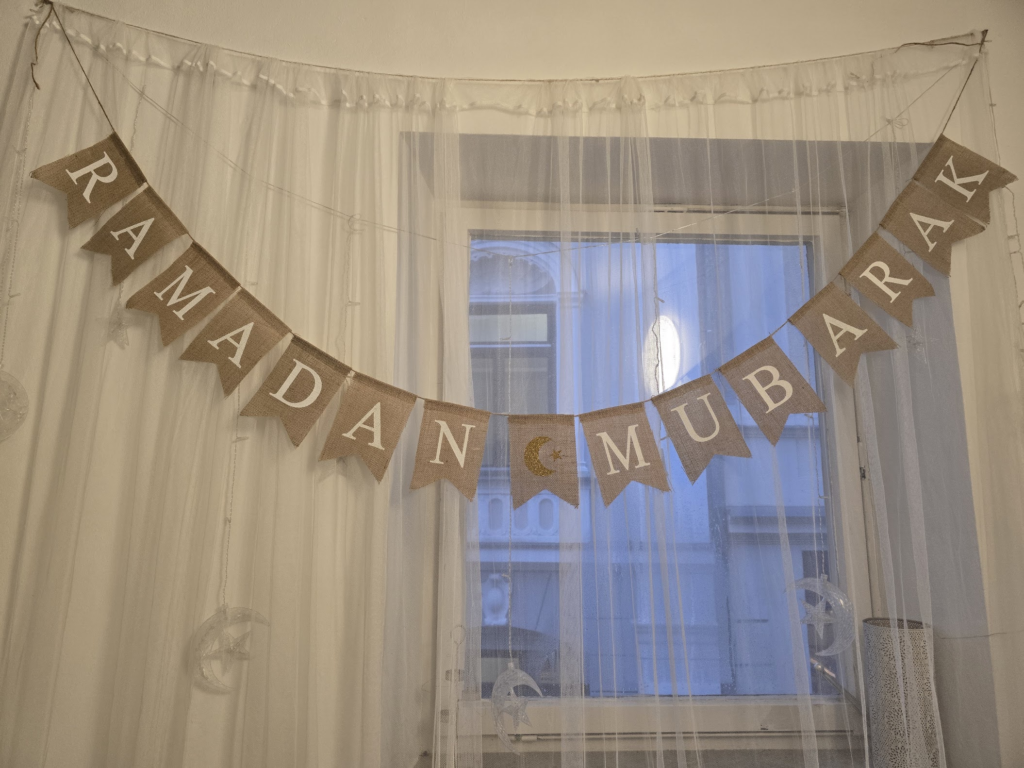
A couple of practical things follow from that. Germany’s long summer days mean fasting hours run considerably longer than most visitors from South Asia or the Gulf will be used to, so a Ramadan trip in June or July is a different proposition to one in March. Shops closing on Sundays and public holidays also matters more when you’re planning suhoor, so stock up on Saturday.
Using Munich as a base
This is worth saying plainly, because it changes how you’d plan the trip. Munich’s strongest feature is arguably its position rather than its own attraction list. Fast, frequent regional trains reach the Alps, the castles, Nuremberg and across the border into Salzburg, and a single monthly transport ticket can cover all of it.
We spent four of our days out of the city on that basis. If you’re staying longer than three days, I’d plan the extra time as day trips rather than trying to find a fourth and fifth day’s worth of things to do inside Munich.
Read more about our Day Trips from Munich
What I’d deprioritise
- The New Town Hall tower. It has a lift, which is appealing, but the view is weaker than Alter Peter’s for the obvious reason that you’re standing inside the building everyone wants in the photograph.
- Waiting around for the Glockenspiel. Watch it in passing instead.
- The Olympic Tower, unless you’re already at BMW Welt next door. It gives you height, but you’re looking at the city from outside it rather than standing in the middle of it.
- Stacking museums. Two proper museums in a day is the limit. Three means you stopped absorbing anything around lunchtime.
- Allianz Arena tours, unless you follow the football, in which case ignore me entirely.
When you go changes the list
Munich is very different in winter. The park palaces at Nymphenburg shut, the Englischer Garten is bare, and the light goes by mid-afternoon. In exchange you get the Christmas market season and museums that feel like the right decision because it’s cold outside. It’s the complete opposite of summer. The Englischer Garten and the Isar banks become the best part of the city, and every indoor attraction fills with people escaping the heat.
Final thoughts
The most useful thing I can tell you about things to do in Munich is that the city rewards depth over coverage. Three days, four or five things done properly and a tower climb for the view beats a checklist of ten attractions glanced at from the doorway.
If you’re short on time, my order would be a walking tour of the old town, a tower, Viktualienmarkt, the Englischer Garten, and then either the Residenz or the Deutsches Museum depending on the weather. Anything beyond that, I’d spend on getting out of the city rather than deeper into it.
You can check out my blog on Munich Travel Tips to help you plan your trip.
FAQs
Is a walking tour in Munich worth doing?
For a first morning, yes. The old town is compact but the history isn’t obvious without someone explaining it.
Is the Glockenspiel worth seeing?
If you’re passing through Marienplatz at 11am or noon, watch it. It runs a few minutes and pulls a large crowd, so it isn’t worth building a morning around. The 5pm summer performance is quieter.
What is there to do in Munich when it rains?
The Deutsches Museum is the strongest option because you could fill a day inside it. The Residenz and the Kunstareal galleries are the other two, and all three involve very little time outdoors.
Are there free things to do in Munich?
Plenty. Marienplatz, the Englischer Garten, Viktualienmarkt, the churches including the Asamkirche, and BMW Welt all cost nothing, and the Dachau Memorial is free to enter. On Sundays the Bavarian state museums drop to one euro.
Can you visit the Dachau Memorial from Munich easily?
Yes. It’s an S-Bahn and bus journey of around forty-five minutes each way, entry is free and no booking is needed. Allow a half day and treat it as its own thing rather than slotting it between other stops.