Best Things to Do in Berlin: What We’d Do Again (and What to Know Before You Go)
We spent over a week in Berlin across two separate visits and still felt we’d only scratched the surface. The city is enormous, and there is no end to historical sights. But Berlin can also be quite quirky and definitely has an artsy side. This is our honest guide for the best things to do in Berlin and what we’d do again without burning out.
Start With the History (All the history nerds, this is your place)
The Reichstag: Book It, Don’t Miss It
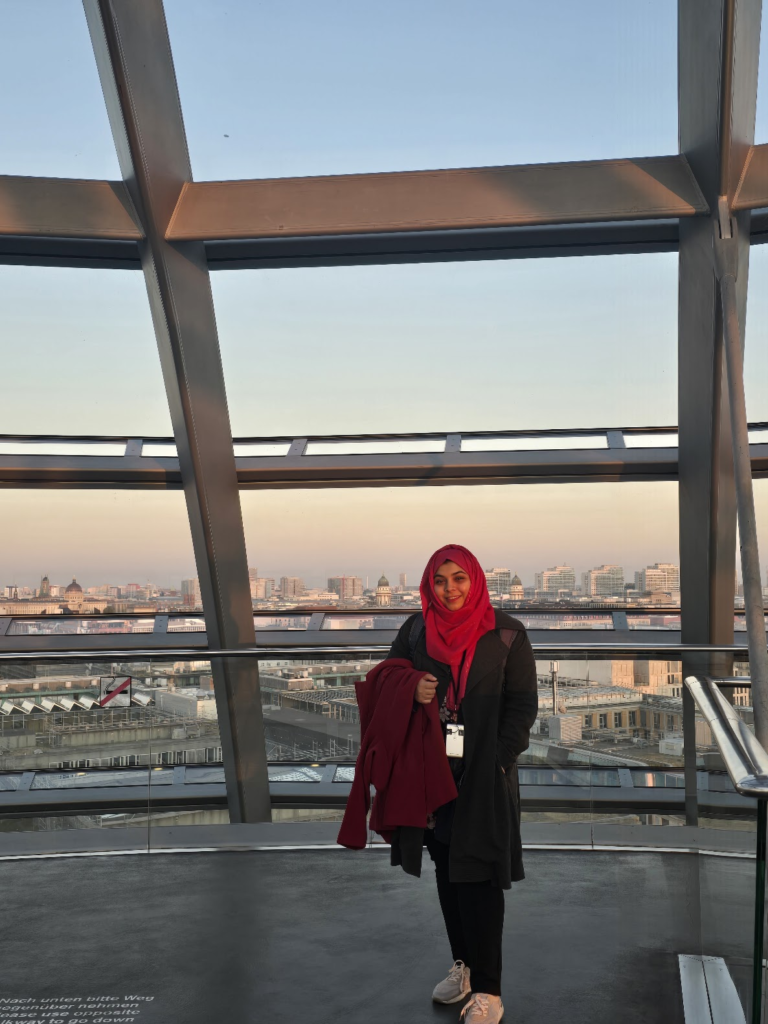
This was one of the highlights of our Berlin trip for sure. The Reichstag building, home to the German Bundestag, is one of the most visited sites in Berlin. The glass dome designed by Norman Foster is architecturally extraordinary, and the free-to-visit rooftop terrace offers some of the best views in the city. We visited at sunset, spending time in both the dome and the parliament chamber, and watched the city change colour from golden yellow to being lit up with lights after sunset. It’s one of those experiences that’s difficult to describe without sounding like a brochure, but the combination of the building’s history and the view makes it genuinely a must see place if you are in Berlin.
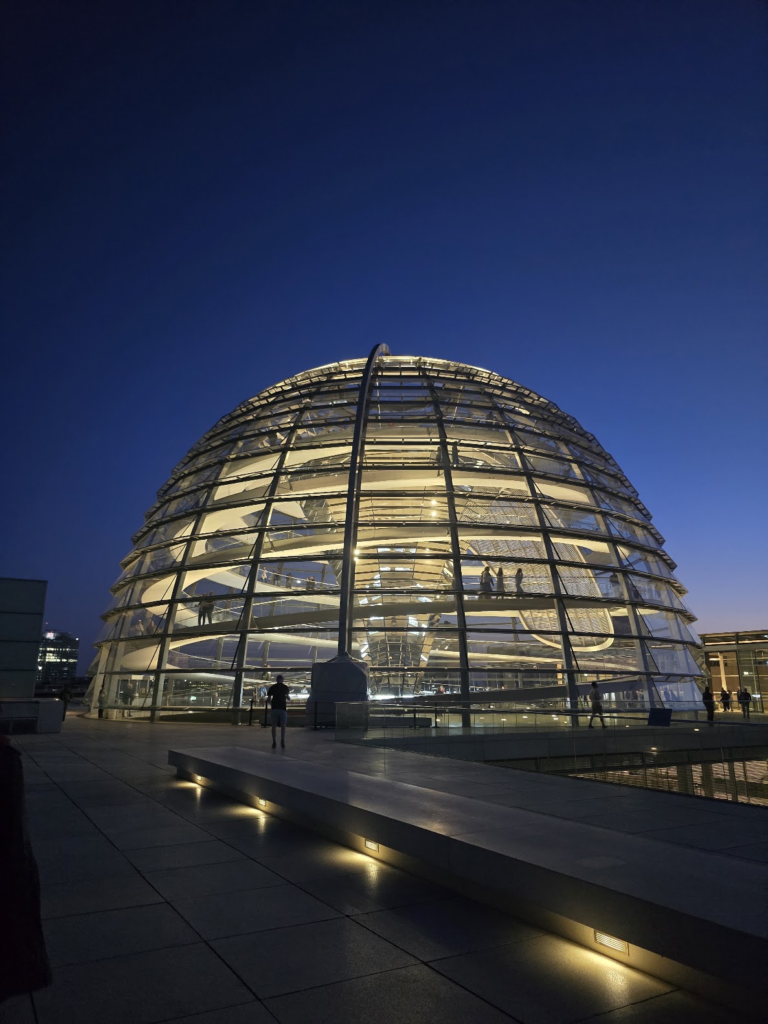
The critical thing: you must register online in advance at bundestag.de. It’s free, but slots fill up days or weeks ahead, especially in summer. Don’t arrive hoping to walk in, it rarely works. Book as soon as your travel dates are confirmed. https://www.bundestag.de/en/visittheBundestag/dome/registration-245686
Brandenburg Gate and the Memorial to the Murdered Jews of Europe
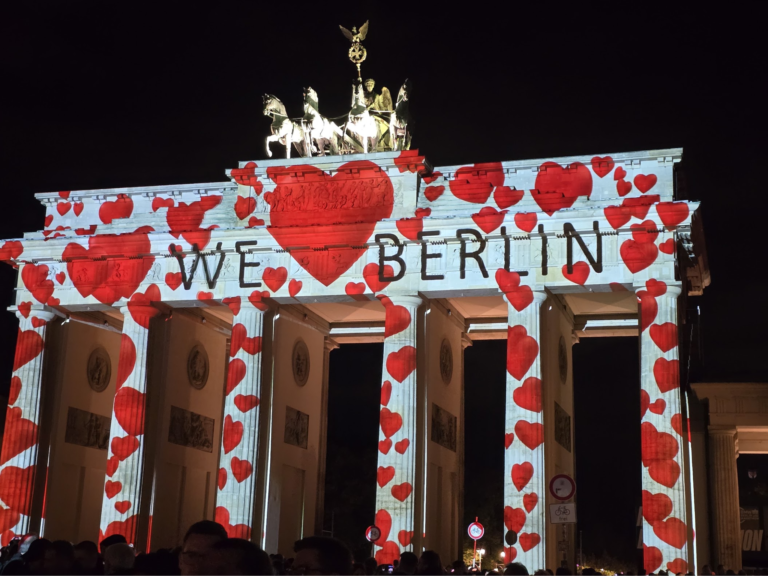
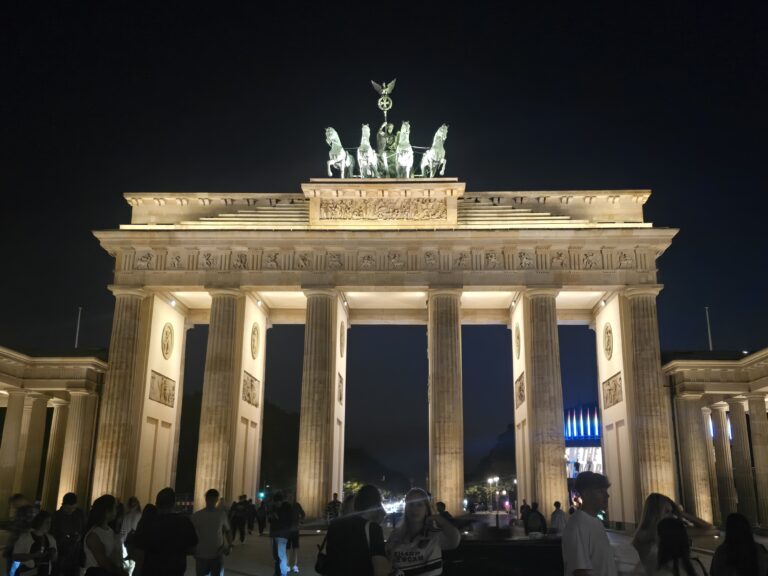
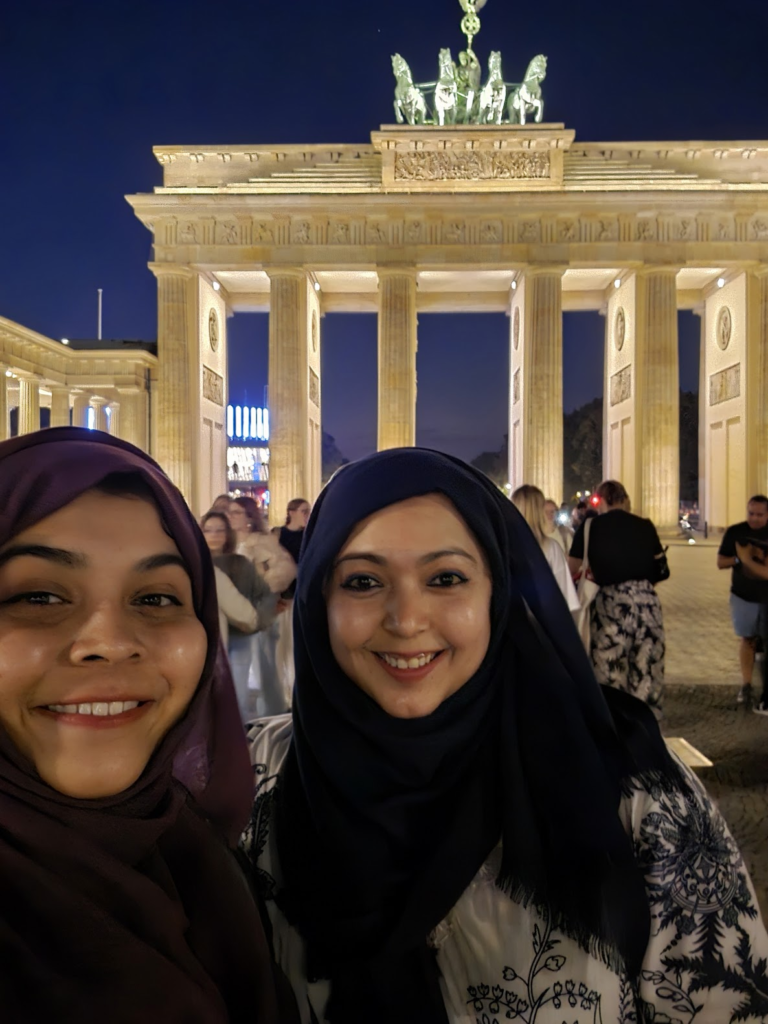
Brandenburg Gate is the symbolic heart of the city, the arch that stood in the no-man’s-land between East and West Berlin for 28 years, and the image most associated with the Wall’s fall in 1989. It’s best seen early in the morning or at night when the crowds thin and the lighting gives it a different weight. The surrounding area along Unter den Linden, Berlin’s grand boulevard, is worth a long walk in either direction. We visited the Brandenburg Gate both in the morning and evening as it is the central meeting point for many of the tours in the city. We did several walking tours in the city, including WWII historic tours. https://www.guruwalk.com/walks/47126-berlin-and-nazism-rise-and-fall-of-the-empire
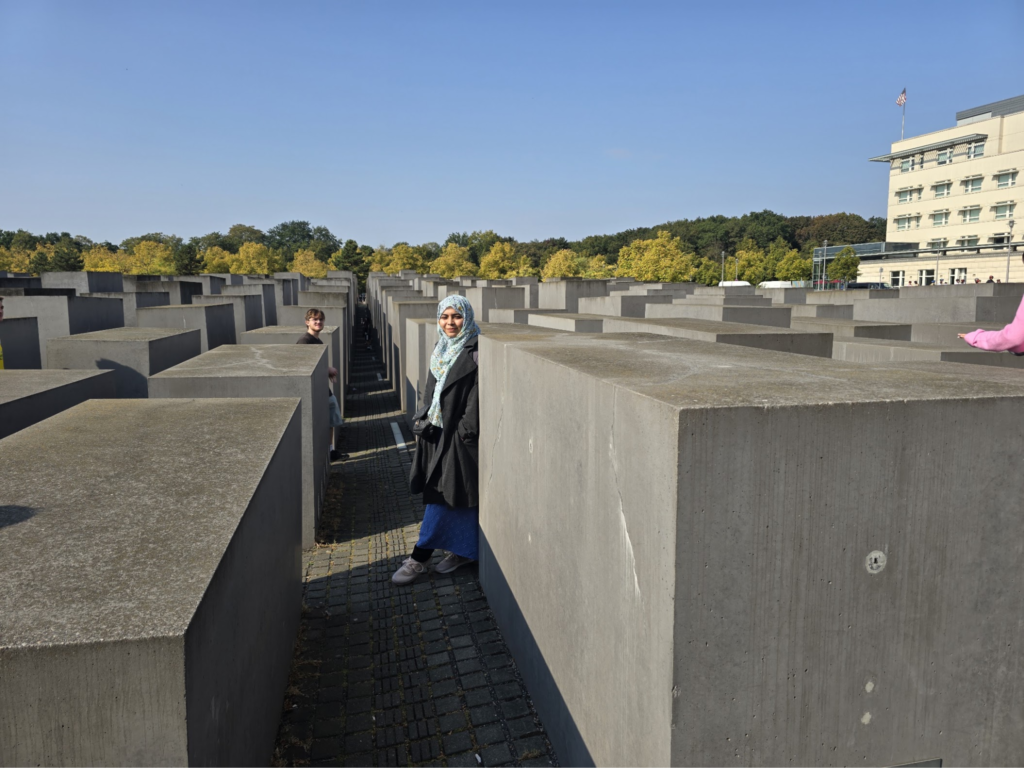
Just minutes from the Gate, the Memorial to the Murdered Jews of Europe was our next stop on the historic WWII tour we booked. Peter Eisenman’s field of 2,711 concrete slabs of varying heights creates a disorienting space that changes as you move through it. It ranges from the edges where it’s relatively open, to the centre where the slabs tower over you and the street noise disappears. There’s an underground information centre beneath the memorial (entry included) with individual stories from families killed in the Holocaust. Set aside at least an hour if you like to have a deeper visit. We couldn’t go into the underground information centre due to lack of time on our last visit.
Checkpoint Charlie and the Topography of Terror
The third stop on our tour was Checkpoint Charlie, the former Allied crossing point on Friedrichstraße; nowadays, it is surrounded by tourist infrastructure, souvenir stalls, replica signs, and paid photo opportunities with people dressed as soldiers. It can feel underwhelming if you arrive expecting a truly historic sight (especially with American fast-food restaurants right opposite). What makes the visit worthwhile is the Checkpoint Charlie Museum alongside it, which tells the extraordinary stories of people who risked and sometimes lost their lives trying to cross from East to West. Approach it for the history rather than the photo op. We did both, of course!
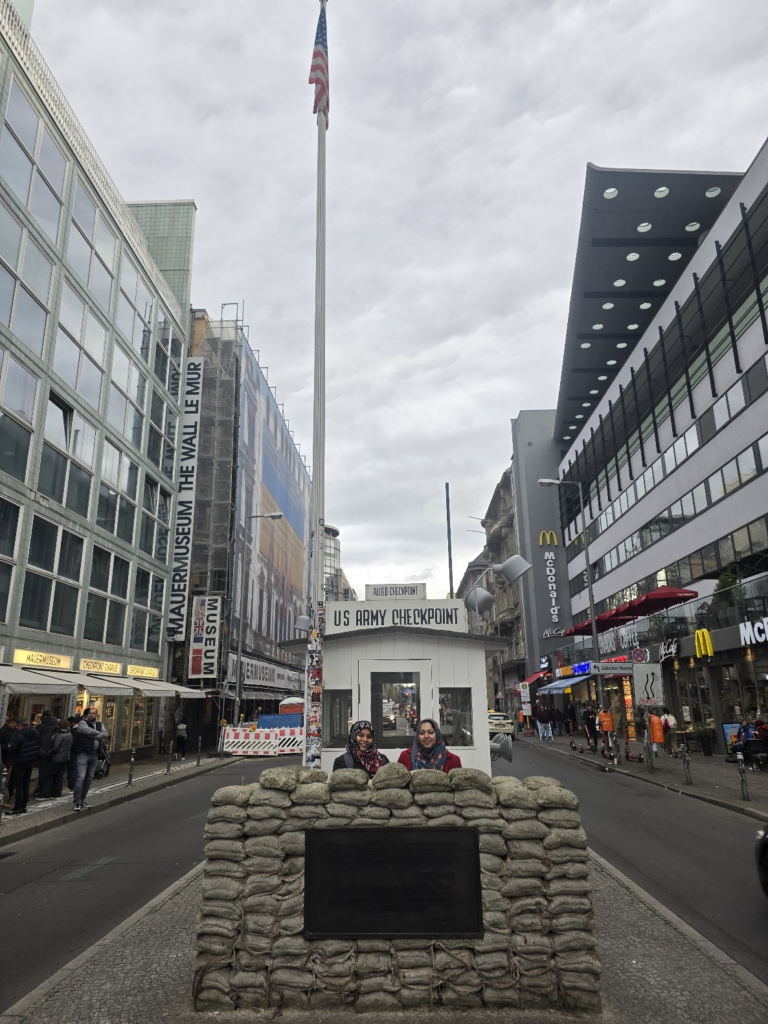
The next stop on our tour was the Topography of Terror, nearby, is built on the excavated remains of the SS and Gestapo headquarters. It’s a free, open-air and indoor exhibition that documents the rise of the Nazi regime and the crimes it committed. To be honest, even for history nerds like us, it got heavy and exhaustive very fast. If you’re doing a dedicated WWII day, it can get pretty exhausting at the end so we recommend keeping the Topography of Terror on a separate day.
The Berlin Wall: East Side Gallery and the Memorial
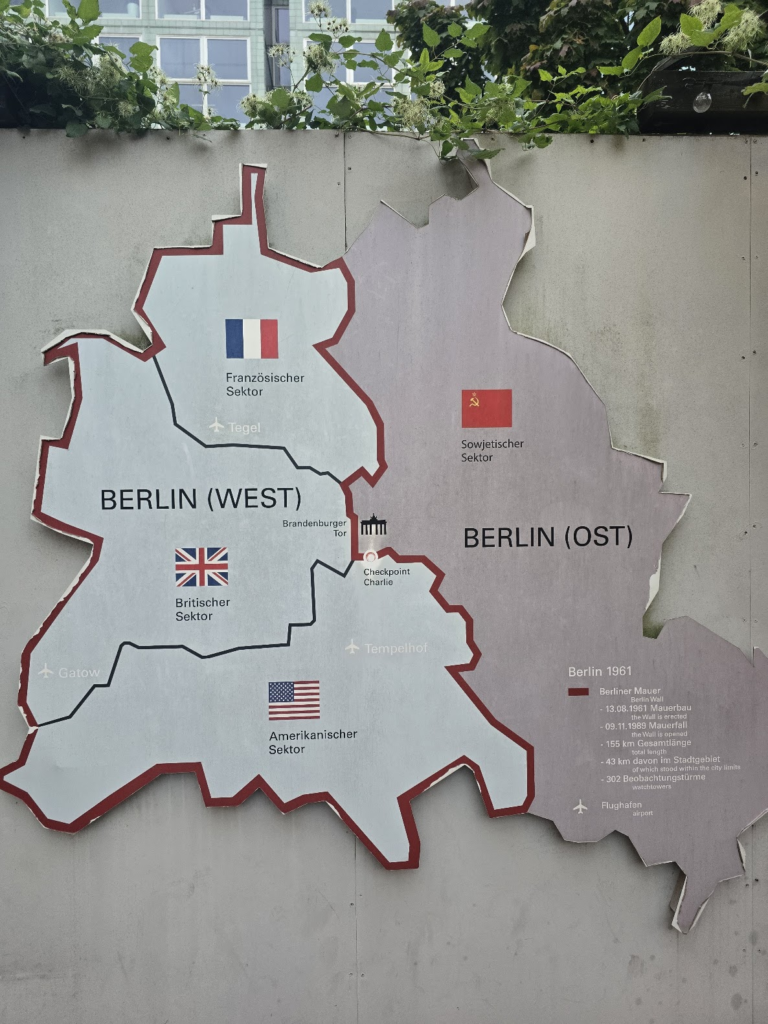
The East Side Gallery on Mühlenstraße is the longest remaining stretch of the Berlin Wall. About 1.3km of concrete covered in murals painted by artists from around the world shortly after reunification. It’s an open-air gallery that’s always accessible and free. The murals range from iconic (Dmitri Vrubel’s painting of Brezhnev and Honecker kissing) to those painted by artists from around the world. Some sections of the wall are more interesting than others. Either way, it’s one of Berlin’s most photographed sites and worth at least one visit. We reached the wall on a rainy afternoon so we could only cover a small part. But it was easy to reach since its walking distance from Berlin Ostbahnhof.
Hitler’s Bunker (Führerbunker)
This is one of Berlin’s most unimpressive historical sites on our tour, according to us. The location where Hitler spent the final weeks of his life is now a car park in the Mitte district, marked only by an information board with a diagram of the bunker’s layout. There’s nothing dramatic to see and we thought it was a waster of time. The bunker was sealed after the war and is underground. But for many visitors, standing at the unremarkable spot where some of the most consequential and terrible decisions in modern history were made carries its own strange weight. It’s a ten-minute detour from Brandenburg Gate.
The Museums: Where to Focus Your Time
Museum Island (Museumsinsel)
Museum Island is a UNESCO World Heritage Site and home to five major institutions: the Pergamon Museum (famous for its ancient architectural reconstructions), although when we visited the pergamon was closed for renovation for four years, the Neues Museum (Egyptian and prehistoric collections), the Alte Nationalgalerie (19th-century European art), the Bode Museum (Byzantine art and sculpture), and the Altes Museum (classical antiquities). You cannot do all five in a day even if you tried. We prioritised the Neues Museum, since it was a sunday and museums had free entrance (though now the free museum sunday campaign is on pause). The bust of Nefertiti alone is worth it even with the entry fee. Combined day tickets are available and significantly better value than individual entry but you would have to skip portions in museums since its not possible to cover an entire museum in on day.
Natural History Museum (Museum für Naturkunde)
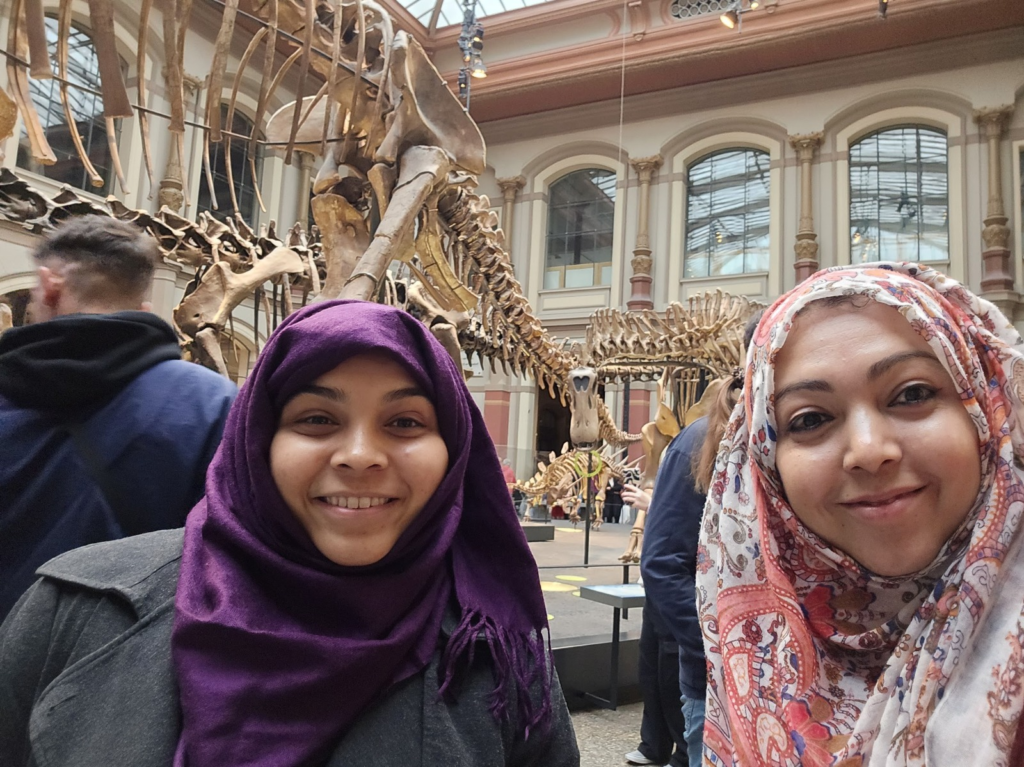
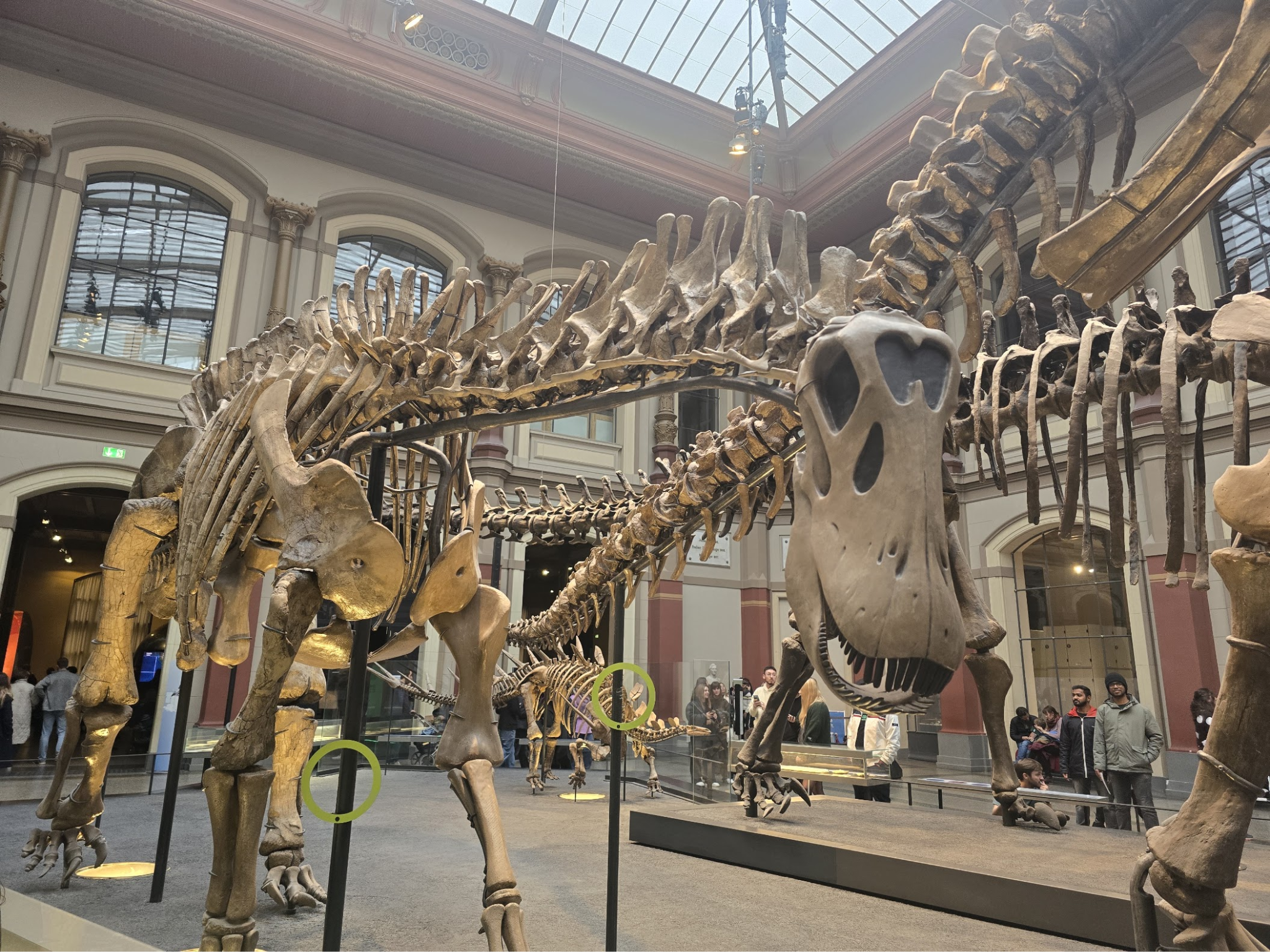
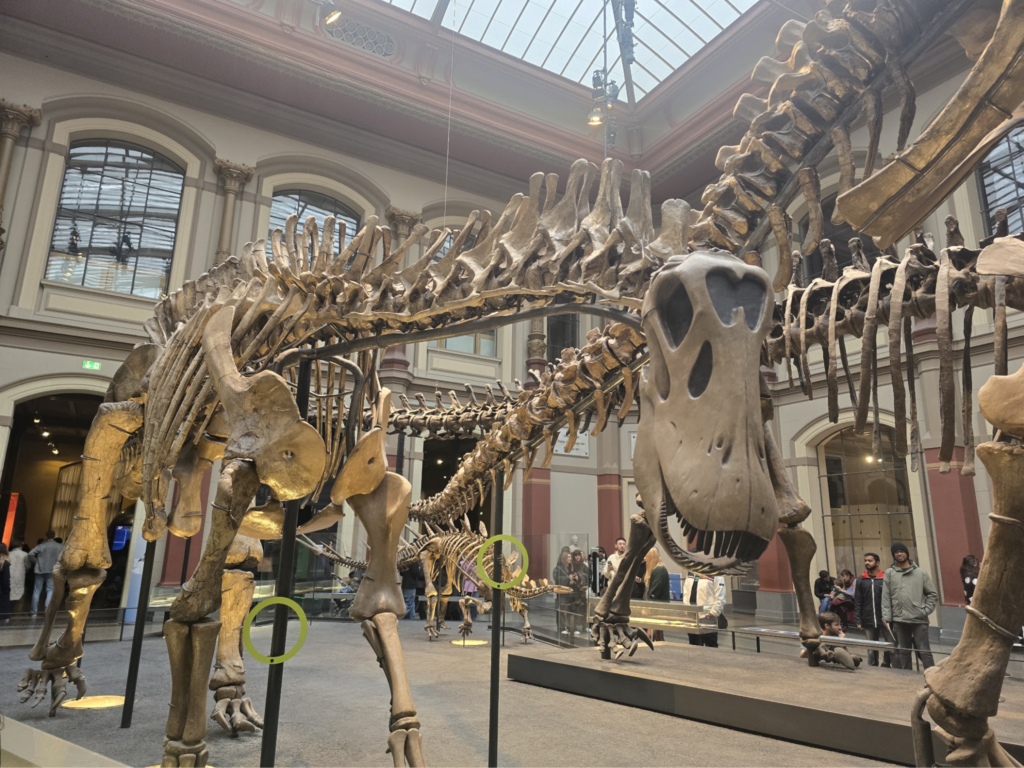
This was our favourite museum. The Natural History Museum houses one of the most complete dinosaur skeletons in the world, a Giraffatitan at 13 metres tall, alongside extraordinary collections of fossils, minerals, and an entire preserved ecosystem. It’s popular with families and children, but equally attractive for adults. It made a welcome break from the weight of the city’s war history on our second day, and we stayed much longer than planned and took pictures with all the dinosaur skeletons.
The Neues Museum
We’re giving this its own mention because it surprised us with its scale and depth. Beyond the Egyptian collection, the prehistoric section is genuinely fascinating and largely uncrowded compared to the Egyptian rooms. The building itself, partially ruined in WWII and deliberately left partially unrestored by architect David Chipperfield, is a piece of architecture worth studying. Neues Museum is a short walk from Berlin U-Bahn station Museumsinsel; we took the U5 line.
Neighbourhoods and Outdoor Experiences
Tiergarten: Berlin’s Central Park
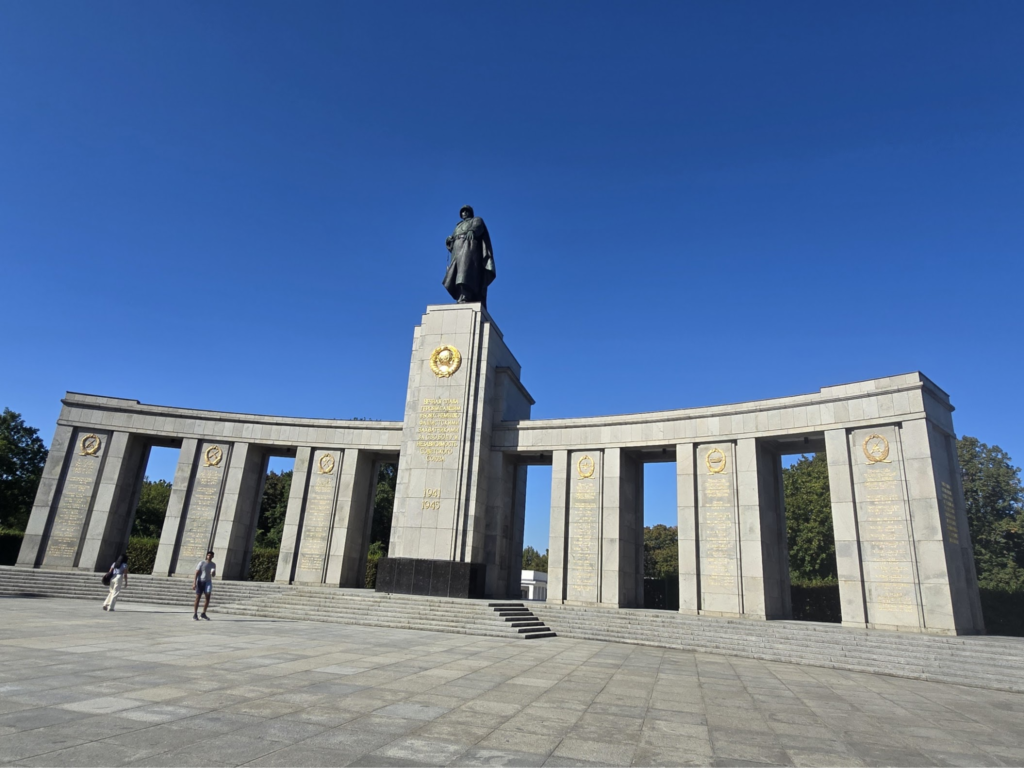
We visited Tiergarten as part of one of our Berlin tours. It is a vast park located at the centre of the city, 210 hectares of woodland and open space. It’s very popular with the locals, where Berliners jog, cycle, picnic, and decompress. The park connects many of the city’s western landmarks (Brandenburg Gate, the Reichstag, the Victory Column) and is best explored on foot or by bike. In summer it’s full of life; in September it was golden and a great green stop on our walking tour. We also visited the Soviet section of the park, which was very interesting to see.
Kreuzberg: Art Tour and Arabic Food
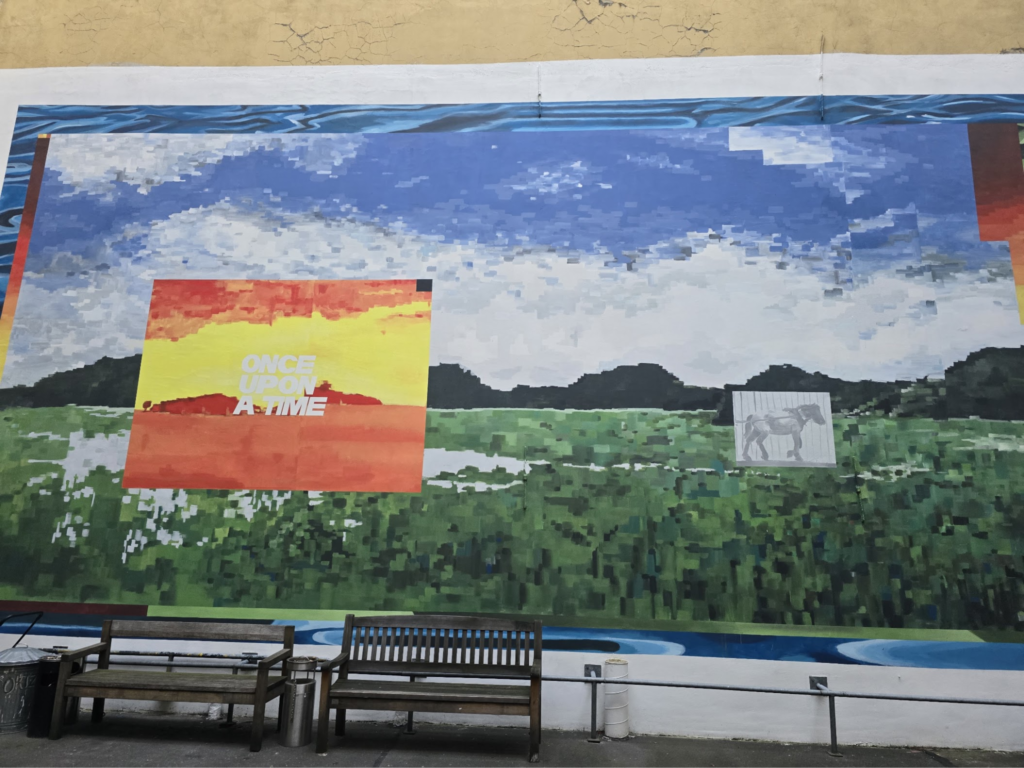
Kreuzberg is Berlin’s most culturally mixed neighbourhood, shaped by decades of Turkish and Arab immigration with a strong political identity. Recently its becoming popular for its creative side and good restaurants. A Kreuzberg street art tour (several operators run guided walks) is the best way to read the neighbourhood’s murals, which are not just decoration but commentary on the city’s politics and history. We did a street art tour in Kreuzberg and got to see an alternate side of the history in contract to its serious historical side. After the tour, we visited the food hall in Kreuzberg which was filled to the max with locals enjoying bites from all our the world.
Tempelhofer Feld and the Kite Festival
Tempelhofer Feld is a former airport which was closed in 2008 and turned over to the public in 2010. it’s one of the most unusual urban spaces in Europe. The runways are still intact, now used by cyclists, rollerbladers, and kite flyers against a backdrop of the old terminal building. In summer, the kite festival here fills the sky with hundreds of kites and draws a crowd that feels more like a local festival than a tourist event. It’s completely free.
Alexanderplatz and the TV Tower
Alexanderplatz was walking distance from our hotel and its a famous landmark of Berlin. The TV Tower (Fernsehturm) dominates the skyline at 368 metres and offers the best bird’s-eye view of the city. The observation deck requires a ticket and advance booking in peak season. We didnt go to the top but the area is filled with coffee shops, and malls so we would always go there to grab a bite to eat for lunch or breakfast. Alexanderplatz is also on of the biggest stations in Berlin connection U-Bhan, S-Bhan, Tram and Buses and hence we could travel to any part of Berlin using one of the transport modes at Alexanderplatz.
The Berlin Light Festival
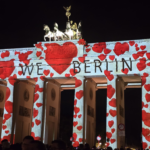
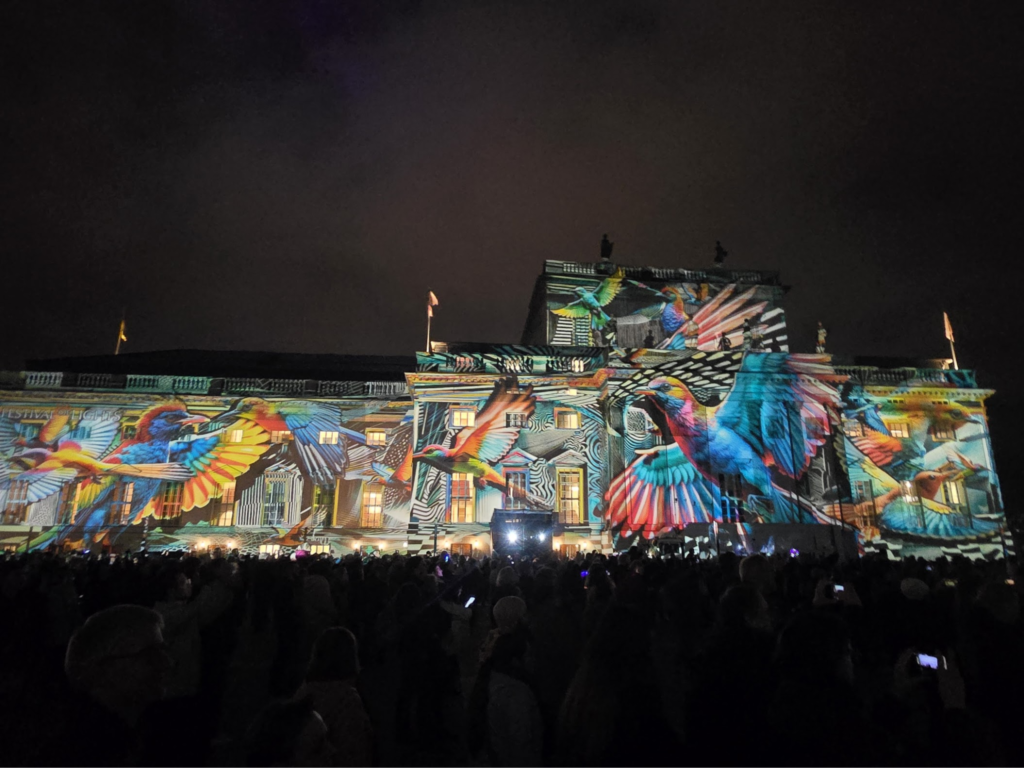
This was the highlight of our second trip to Berlin. If your visit coincides with October’s Berlin Festival of Lights, structure at least one evening around walking the main route. We walked from the Berliner Dom to Brandenburg Gate and on through the government district, and the projections transformed familiar landmarks into art pieces. It’s free and it’s one of those events that justifies a trip in its own right. We are planning on visiting again soon.
A Note on Pacing
Berlin’s history is extraordinary, but it accumulates. We found that two or three heavy history days needed to be followed by something lighter like a museum with no war connection, or a long park walk, or just a morning of good coffee and walking around Berlin. The city has enough variety that you never feel stuck, but don’t plan a six-day itinerary of pure WWII and Holocaust sites without building in breathing space. You’ll absorb more, and enjoy it more, if you give yourself room to process and visit non-WWII sights as well.
Practical Transport Note
Berlin is large. The Deutschland-Ticket was our best friend in Berlin. It’s a monthly subscription for unlimited travel on all buses, trams, U-Bahn, and S-Bahn across Germany and at the time, cost €63 per month as of 2026 and is the most cost-effective option for multi-day visitors. You can buy it through Deutsche Bahn, BVG, or many regional transit apps. Note it’s a monthly subscription, not a day ticket. You need to cancel it; otherwise, it will be automatically renewed the next month. If you’re visiting for less than a month, factor this against single-journey or day-pass costs and decide accordingly. For most visits of four or more days, it works out cheaper.