Ferry from Turkey to Greece: Which Port Goes to Which Island?
A lot of people assume that adding a Greek island to a Turkey trip means flying through Athens. It doesn’t, not if you’re anywhere along Turkey’s western or southwestern coast. Several Greek islands sit remarkably close to the Turkish shore, close enough that a proper ferry crossing takes less time than your morning coffee.
Kuşadası gets you to Samos. Çeşme gets you to Chios. Bodrum gets you to Kos. Marmaris and Fethiye both get you to Rhodes. Ayvalık gets you to Lesvos. Kaş gets you to Kastellorizo, in about the time it takes to read this paragraph twice.
Let me be clear: these are still international crossings, even when the boat ride itself is short. Passport control and immigration apply the same way they would at an airport, and schedules shift a lot by season, some routes run daily year-round, others only really exist between spring and autumn. Always check the specific date you’re travelling rather than assuming last year’s timetable still holds. Ferryhopper’s Turkey-Greece route guide is a solid place to compare current operators and departure times across all of these routes in one spot.
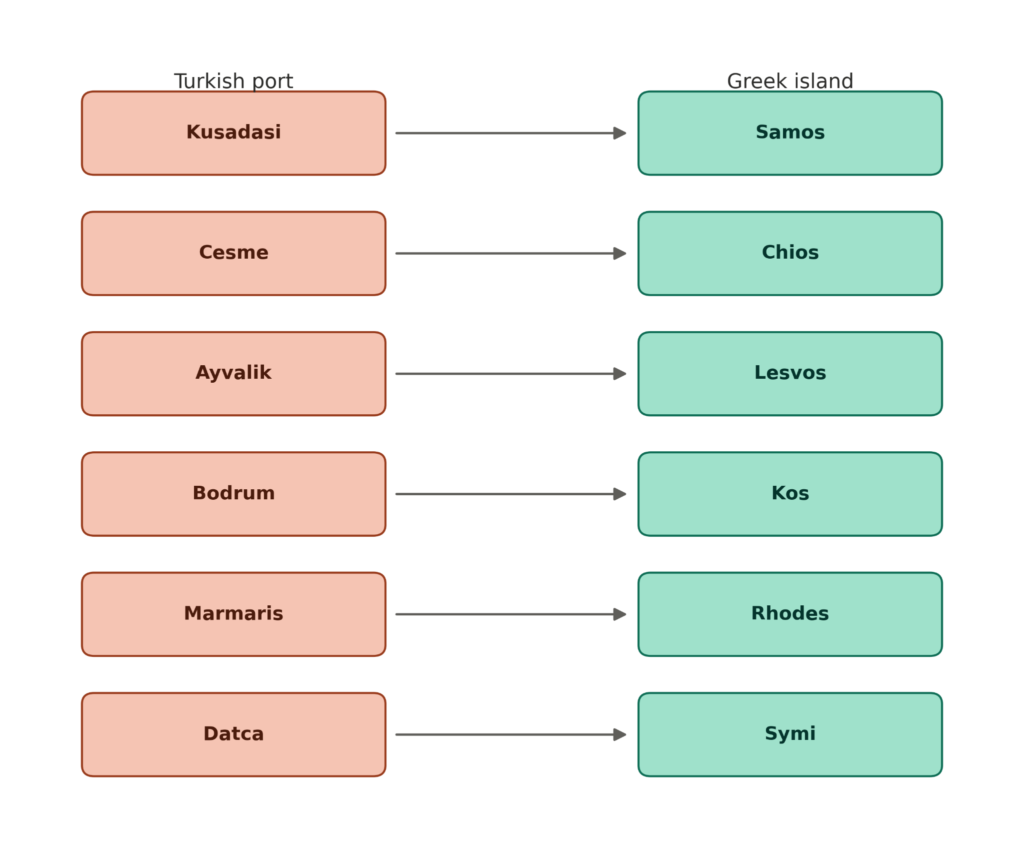
Turkey to Greek Islands Ferry Routes at a Glance
| Turkish port | Greek island | Typical crossing | General availability |
| Kuşadası | Samos (Vathy) | From ~30 min | Spring–autumn, daily in peak season |
| Kuşadası | Samos (Pythagoreion) | ~1 hour | Mainly May–October |
| Çeşme | Chios | ~20–40 min | Year-round, most frequent in summer |
| Bodrum | Kos | ~20–30 min | Frequent, year-round |
| Turgutreis | Kos | ~30 min | Mainly April–October |
| Turgutreis | Leros | ~45 min | Seasonal |
| Turgutreis | Kalymnos | ~1 hr 15 min | Limited, a couple of sailings a week |
| Marmaris | Rhodes | ~1 hour | Frequent, more limited in winter |
| Fethiye | Rhodes | ~1.5–2 hours | Year-round, busier in summer |
| Ayvalık | Lesvos (Mytilene) | ~50 min–1.5 hours | Year-round |
| Kaş | Kastellorizo (Meis) | ~7–20 min | April–November, frequent in summer |
| Seferihisar | Samos (Vathy) | ~1 hour | Mainly spring–autumn |
I’ve deliberately left fares off this table. Prices shift with the season, the operator, and how far ahead you book, and a number here would be stale within weeks.
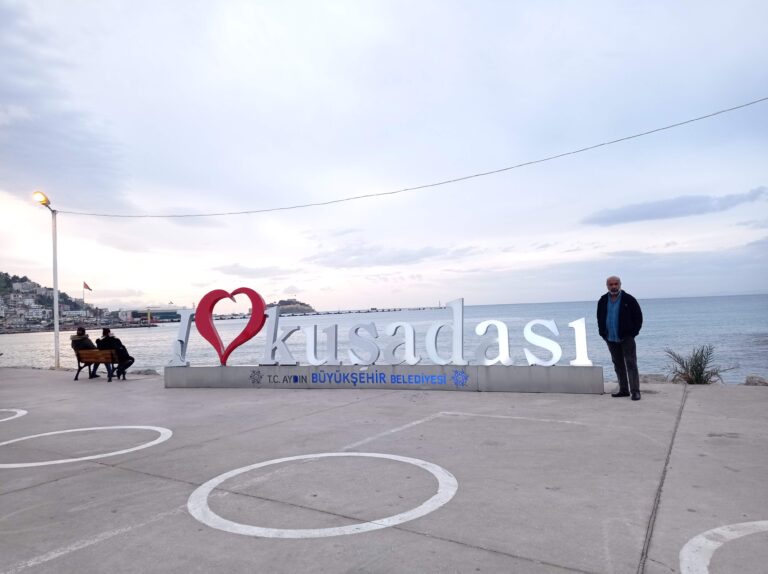
Kuşadası to Samos
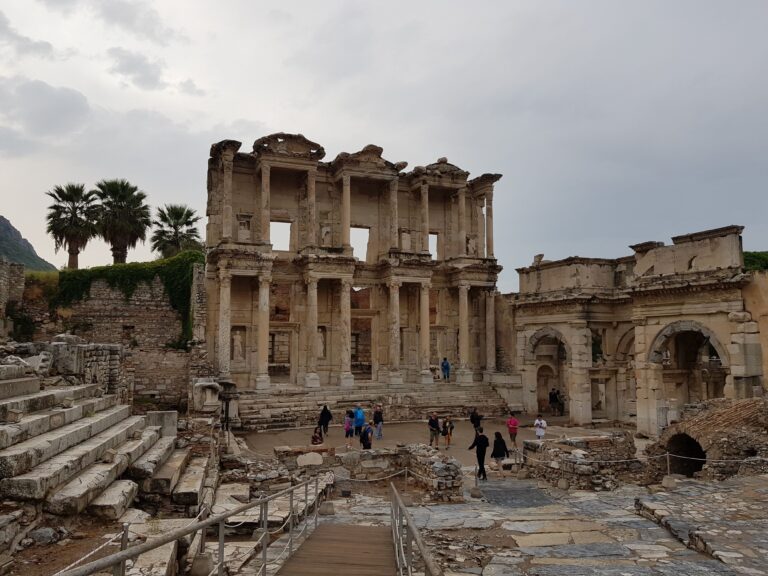
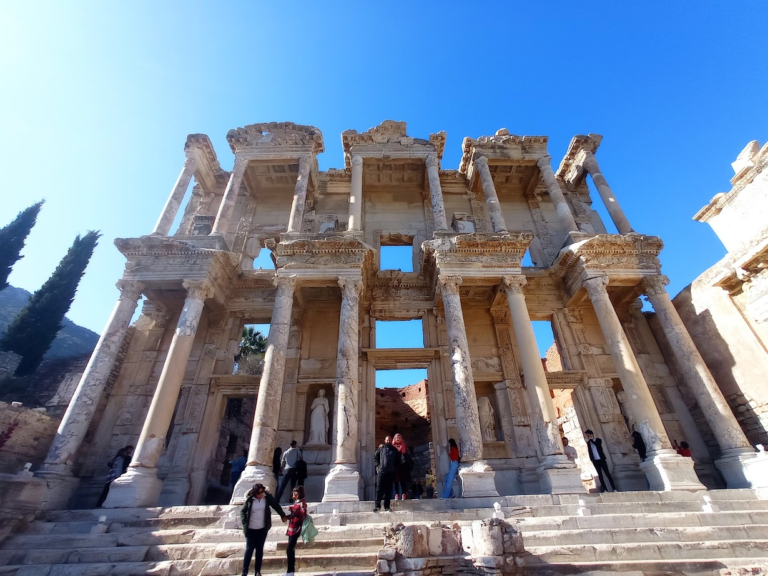
If you’re visiting Ephesus, this is probably the most useful crossing on this whole list. Ferries leave from Kuşadası’s main port, a five-minute walk from the town centre, and land on Samos, which actually has more than one port worth knowing about. Samos isn’t a single destination the way “Chios” or “Kos” is, current routes connect Kuşadası with both Vathy (the island’s capital, in the northeast) and Pythagoreion (on the southeast coast), and which one you want depends entirely on where you’re staying.
The fastest crossings to Vathy run around 30 minutes, while Pythagoreion services generally take closer to an hour. Summer gives you far more choice on both, daily departures with multiple operators, while the shoulder season thins out considerably.
This route works especially well if you’re already following the İzmir to Ephesus/Selçuk to Kuşadası line, Samos becomes a natural add-on rather than a detour. One tip that actually matters: confirm which Samos port is printed on your ticket before you book accommodation or onward transport on the island, Vathy and Pythagoreion aren’t within easy walking distance of each other.
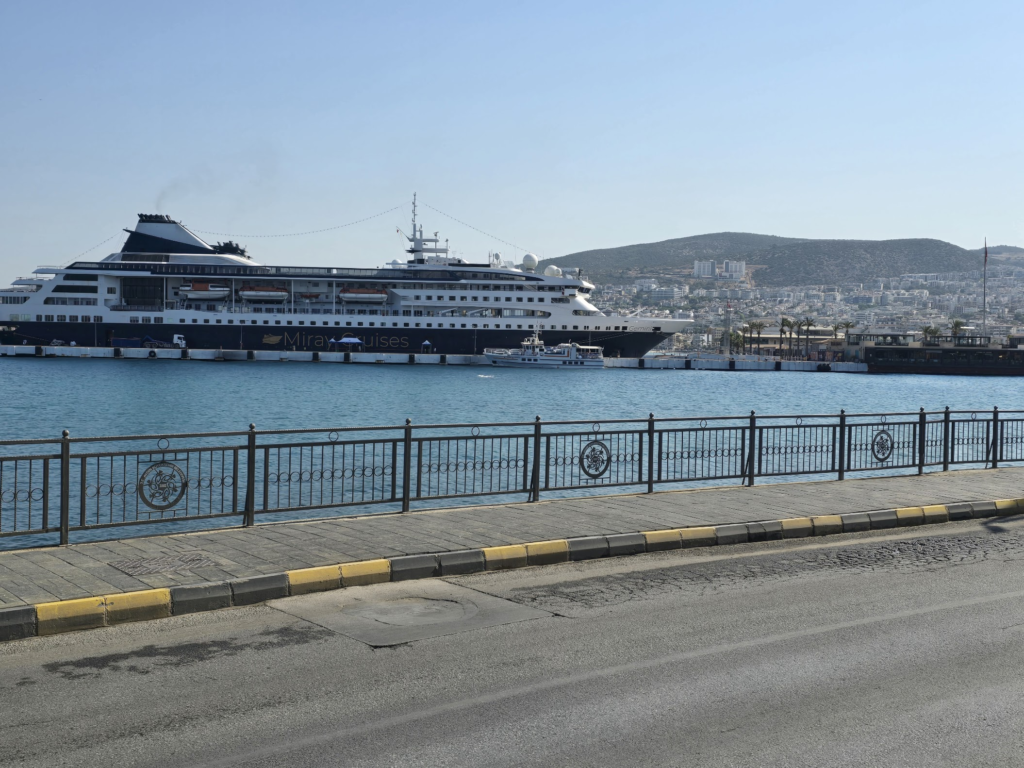
Check current departures directly on Ferryhopper’s Kuşadası–Samos route page before booking.
If you’re building this into an Ephesus trip, see our guide, Day Trips from Kuşadası.
Çeşme to Chios
This is one of the easiest Greek-island add-ons going, especially if you’re already based in İzmir or Çeşme. Çeşme sits just west of İzmir, and ferries land at Chios’s main port near Chora, the island’s capital.
Crossings here are genuinely short, generally 20 to 40 minutes depending on the operator, and it’s one of the few routes on this list that runs year-round rather than shutting down over winter. Multiple operators serve it, frequency picks up noticeably in summer, and some sailings can carry vehicles if you’re planning to bring a car across, though not every departure does, so check before you assume.
Good for İzmir-based travellers, a Çeşme beach holiday with a day added on, or anyone who wants a Greek island without committing to a long ferry ride to get there.
Current timetables and operators are listed on Ferryhopper’s Çeşme–Chios route page.
Bodrum to Kos
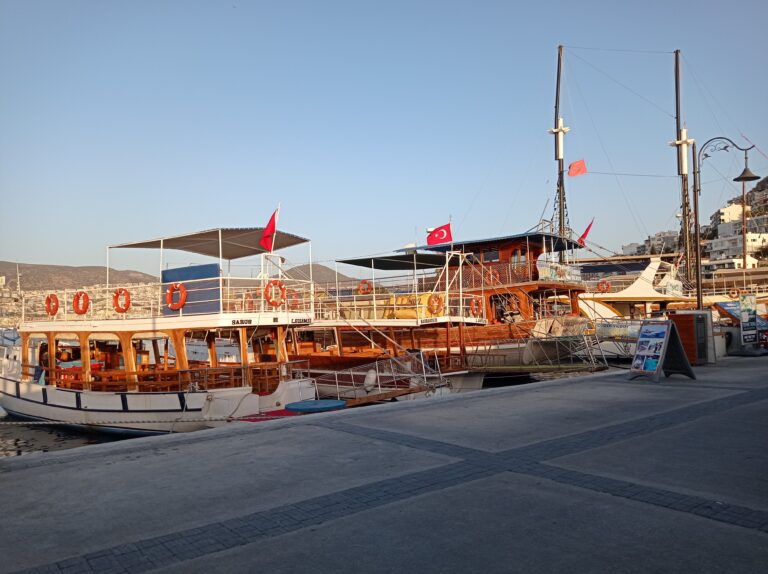
This is one of the more obvious pairings on Turkey’s southwestern coast, and for good reason. Direct crossings from Bodrum to Kos Town take roughly 20 to 30 minutes, run frequently, and are served by several operators. Kos Town itself is convenient the moment you step off the boat, the port sits right by the town centre, not somewhere you need a taxi to reach.
If you’re staying further out on the western Bodrum Peninsula, though, you don’t necessarily need to travel into Bodrum town first to catch this ferry, which brings us to the next option.
For current sailings, Ferryhopper’s Bodrum ferry page lists all the active routes and operators out of the port.
Turgutreis to Kos, Leros, and Kalymnos
Bodrum to Kos isn’t the only option in this part of the coast, and treating it that way means missing a more convenient departure point if you’re staying west of Bodrum itself.
Turgutreis to Kos runs around 30 minutes, seasonal, with regular sailings through the warmer months. Turgutreis to Leros is also seasonal, and different Leros ports get used depending on the time of year. Turgutreis to Kalymnos runs less often than the Kos service, sometimes down to just a couple of sailings a week.
The practical takeaway: don’t automatically head into Bodrum to catch a ferry. If you’re staying anywhere around Turgutreis, check what departs from there first, it can save you a genuinely unnecessary trip into town.
Marmaris to Rhodes
For anyone exploring the Turquoise Coast, this is one of the strongest options on the list. Direct high-speed ferries make the crossing in around an hour, landing close to Rhodes Old Town, and it works equally well as a single day trip or the start of a longer Greece extension. Summer frequency is genuinely good here.
One important point if you’re driving: the high-speed services on this route don’t carry vehicles. If you’ve got a Turkish rental car, don’t assume you can bring it across on this crossing, because you can’t.
Check current departures on Ferryhopper’s Marmaris–Rhodes route page.
Fethiye to Rhodes
Rhodes is also reachable directly from Fethiye. The crossing takes longer than the Marmaris route, generally 1.5 to 2 hours, but it runs throughout the year with more frequency added in summer. Worth saying plainly: don’t pick your departure port purely based on which crossing is shorter. The better port is usually whichever one actually fits into the rest of your Turkey itinerary without a detour.

Current sailings are listed on Ferryhopper’s Fethiye ferry page.
Ayvalık to Lesvos
This gives the route network good coverage further north. Ferries run between Ayvalık and Mytilene, Lesvos’s main port town, and it’s a natural fit if you’re exploring Ayvalık itself, nearby Cunda, Bergama (ancient Pergamon), or the northern Aegean coast generally.
Crossings run year-round, generally 50 minutes to an hour and a half depending on the vessel, and some ferries here do carry vehicles.
One note worth clearing up: you’ll see this island referred to as Lesvos, Lesbos, and Mytilene, and it’s easy to assume those are three different places. They’re not. Lesvos is the island. Mytilene is its main city and the port you’ll actually arrive at.
Current schedules are on Ferryhopper’s Ayvalık–Lesvos route page.
Kaş to Kastellorizo (Meis)
The geography on this one is genuinely striking. The Greek island officially called Kastellorizo, also known as Megisti, and commonly called Meis in Turkey, sits so close to Kaş that the crossing itself takes roughly 7 to 20 minutes depending on the vessel, some of the shortest international ferry rides you’ll find anywhere.
You arrive directly in the island’s main harbour, and Kastellorizo is small enough that most visitors never need a vehicle once they’re there. It’s popular as a day trip, but it’s genuinely worth considering an overnight stay too, the island has a different, quieter feel once the day-trip crowd heads back to Kaş in the afternoon.
Current timetables are on Ferryhopper’s Kaş–Kastellorizo route page.
Seferihisar to Samos
Kuşadası isn’t the only Turkish gateway to Samos. Seferihisar, further north along the coast near İzmir’s southern edge, also runs seasonal services to Vathy, and some sailings extend to Karlovasi, Samos’s third port, during parts of summer.
If you’re already based around Kuşadası or Ephesus, Kuşadası’s route is the more convenient one. If you’re coming from İzmir or the Seferihisar and Sığacık area instead, this route can save you the trip down the coast to Kuşadası first.
What About İzmir or Dikili to Lesvos?
Worth knowing as an additional option rather than treating it as a core route. Current listings include seasonal Lesvos connections involving Dikili or İzmir’s Alsancak port, though these run far less consistently than the established Ayvalık to Lesvos service.
If getting to Lesvos is your only priority, Ayvalık is the route I’d check first. If you’re already staying in İzmir or Dikili specifically, it’s worth comparing current schedules before travelling north purely to catch a different ferry.
Which Turkey-to-Greece Ferry Should You Actually Choose?
Rather than declaring one route universally “best,” here’s how I’d think about it based on where you already are:
- Staying in Kuşadası or around Ephesus: Samos.
- Based in İzmir or Çeşme: Chios.
- Around Seferihisar: Samos, via the more local route.
- Exploring Ayvalık or Cunda: Lesvos.
- Staying in Bodrum: Kos.
- Based around Turgutreis: Kos, Leros, or Kalymnos.
- On the Turquoise Coast near Marmaris: Rhodes.
- Coming from Fethiye: Rhodes, without the detour to Marmaris.
- In Kaş: Kastellorizo.
Beyond location, weigh up ferry frequency on your actual travel dates, which specific port on the Greek side the ferry reaches, whether you’re planning a day trip or an overnight stay, your passport and visa situation, and whether you actually need to bring a vehicle across.
Day Trip or Overnight Stay?
A 30-minute ferry crossing doesn’t mean your whole day only takes 30 minutes. International ferry trips involve port check-in, passport control, immigration processing, waiting to board, arrival formalities on the other side, and then the same process again on your way back.
Some crossings genuinely work well as day trips: Kuşadası–Samos, Çeşme–Chios, Bodrum–Kos, Kaş–Kastellorizo, and Marmaris–Rhodes have all been done as Turgutreisa single day by plenty of travellers. But I wouldn’t promise you a same-day trip is always realistic, it depends entirely on that specific day’s outbound and return schedule, which is exactly the kind of detail that needs checking rather than assuming.
For the bigger islands, Rhodes, Samos, Chios, and Lesvos, an overnight stay lets you actually see something beyond the port town itself, rather than spending most of your limited hours just getting there and back.
Do You Need a Passport or Visa?
Turkey and Greece are separate countries, and Greece is part of the Schengen Area. A short ferry crossing doesn’t remove normal border-entry requirements just because the boat ride itself is quick.
Visa requirements depend entirely on your nationality, so check whether you need a Schengen visa before booking anything. Passport validity rules matter too, most Schengen countries expect a passport valid for a set period beyond your travel dates. If you’re in Turkey on a residence permit rather than a standard visa, don’t assume that permit gets you into Greece, it generally doesn’t work that way. And make sure whatever you’re travelling on lets you legally re-enter Turkey afterward, that part’s easy to overlook when you’re focused on getting to the island.
I’m not going to tell you “you don’t need a visa,” because that depends entirely on where you’re from. Check the official Greek/EU and Turkish immigration sources directly for your specific nationality before you book.
For the wider picture on travelling in this region right now, see our guide on whether Turkey is safe to visit.
How Early Should You Arrive for the Ferry?
This isn’t a domestic commuter ferry where you can stroll up five minutes before departure. You’ll need time for ticket collection if you booked online but haven’t picked up a physical ticket, passport checks, customs and immigration processing, handling luggage, and getting through the queues that build up during summertime.
As a rough guide, current advice for routes like Kuşadası–Samos and Çeşme–Chios recommends arriving at least an hour ahead during busy periods. Check the specific check-in requirement for your ferry company directly, since it varies by operator and by route.
Can You Take a Car from Turkey to a Greek Island?
Sometimes, but don’t assume it by default. Some ferries have vehicle decks, plenty of the faster international crossings simply don’t.
Some Çeşme–Chios services allow vehicles. Some Ayvalık–Lesvos ferries do too. Marmaris–Rhodes and Turgutreis–Kos currently don’t accommodate cars at all on their main services.
And if you’re working with a rental car, check with the rental company before you plan around bringing it across, even on a route where the ferry itself accepts vehicles, your Turkish rental agreement may simply prohibit taking the car abroad.
Ferry Schedules Are Seasonal, So Don’t Plan Around an Old Timetable
This is worth being blunt about. Summer can mean several sailings a day on a route that drops to a couple of departures a week by October. Some routes disappear almost entirely over winter. Departure times shift from one year to the next, and weather can disrupt sailings with little warning, particularly on the shorter, faster crossings.
The 2026 network itself ranges from genuinely year-round connections, Çeşme–Chios and Ayvalık–Lesvos among them, to routes that only really operate from spring into autumn. Check the schedule when you’re first planning the trip, check it again before booking accommodation around it, and check it once more shortly before you actually travel.
Common Mistakes When Taking a Ferry from Turkey to Greece
- Assuming a route runs every day of the year when it’s actually a seasonal service.
- Searching for the island by name without checking which specific port the ferry actually arrives at.
- Forgetting this is an international border crossing, not a local hop.
- Arriving at the port too close to departure and missing the boat.
- Booking accommodation on the Greek side before confirming the ferry actually runs on that day.
- Assuming your car can travel on a ferry that doesn’t have a vehicle deck.
- Planning a day trip without first checking whether the return sailing actually exists that day.
- Confusing Lesvos with Mytilene, or Kastellorizo with Meis, and second-guessing a booking that was actually correct.
- Choosing a more distant Turkish port purely because its crossing time looks shorter on paper.
- Relying on a timetable from a travel blog published years ago rather than checking the current season.
The shortest ferry crossing isn’t always the easiest ferry to actually catch.
The Greek Islands Are Closer to Turkey Than You Might Think
If you’re already travelling Turkey’s western or southwestern coast, you genuinely don’t need to fly to Athens or another Greek mainland airport to add an island to your trip. Kuşadası pairs naturally with Samos. Çeşme pairs with Chios. Bodrum pairs with Kos. Marmaris and Fethiye both reach Rhodes. Ayvalık reaches Lesvos. Kaş reaches Kastellorizo, in less time than most people spend deciding what to have for lunch.
Where you’re already staying in Turkey should drive which ferry you choose, not the other way around.
Frequently Asked Questions
Which Greek island is closest to Turkey by ferry? Several islands sit extremely close to the Turkish coast. Kaş to Kastellorizo is particularly short, sometimes under 10 minutes, and Bodrum to Kos and Çeşme to Chios both run very short crossings too.
Can you take a ferry from Istanbul to the Greek islands? Not directly. The routes covered here depart from Turkey’s Aegean and Mediterranean coast, so travellers starting in Istanbul need to reach one of those departure ports first, whether that’s Çeşme, Kuşadası, Bodrum, or elsewhere along the coast.
Can you take a ferry from Kuşadası to Greece? Yes. Current services connect Kuşadası with Samos, arriving at either Vathy or Pythagoreion depending on the operator and sailing.
Can I visit a Greek island from Turkey for one day? Yes, on some routes, but only when the outbound and return timetables actually line up for that day. Immigration procedures on both ends also eat into your usable sightseeing time, so build in a buffer.
Do I need a visa to take a ferry from Turkey to Greece? It depends on your nationality. Greece is in the Schengen Area, so you’ll need to satisfy whatever entry requirements apply to your passport, check official Greek or Schengen sources directly rather than assuming.
Can I take a rental car from Turkey to Greece by ferry? Possibly, on certain routes with vehicle decks, but your rental company’s cross-border policy and insurance coverage need to allow it too, check with them before you plan around it.
Do Turkey-to-Greece ferries run in winter? Some do. Çeşme–Chios and Ayvalık–Lesvos currently run year-round. Several Samos and Dodecanese routes, on the other hand, become much more limited or stop entirely outside the warmer months.