Getting Around Istanbul: Ferries, Metro, Trams, and Istanbulkart
Istanbul is a city split across two continents by open water, and the first time you look at a transit map here, it looks like it should be a nightmare to get around. It isn’t. Once you understand the shape of the system, one card, a handful of lines, and a ferry network that turns your commute into a Bosphorus cruise, it’s genuinely one of the easier big cities to navigate. Here’s how I’d actually walk you through it, the way I do for anyone who comes to visit.
Routes and fares update fairly often, so treat this as a starting point and check metro.istanbul or the Şehir Hatları app for anything time-sensitive.
How the Istanbulkart Works
Buy your IstanbulKart before you even leave the airport. The Istanbulkart is Istanbul’s rechargeable transport card, and it works across the metro, trams, ferries, buses, Marmaray, and the funicular. You can buy one from the yellow Biletmatik machines at the airport, metro stations, and most tram and ferry stops, pay a small one-time card fee, then load it with credit at the same machine.
One card covers three to five people tapping in together, so if you’re travelling as a couple or a family, you genuinely don’t need one each. I still buy a card the moment I get a visitor and hand it over to them so the transport is sorted for the whole trip.
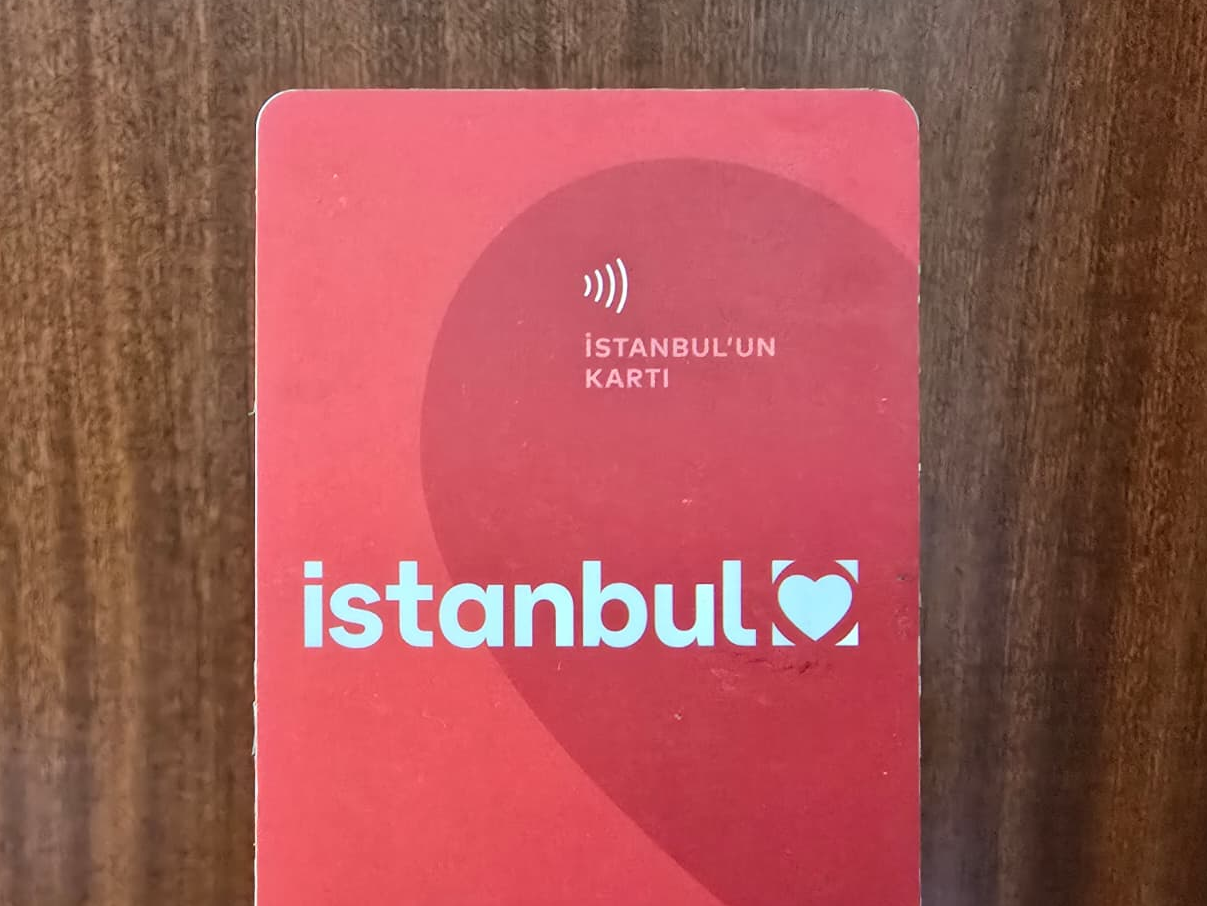
A few things I wish someone had told me the first time I bought the Istanbulkart: the machines mostly take cash, though more of them accept bank cards now. You can operate the machine in a few languages including English, French, and Russian. If a machine only offers a top-up option with no “buy new card” button, don’t waste time on it, just move to the next machine over. There’s also an official Istanbulkart app that lets you top up by card and use a QR code instead of the physical card, but I’ve had enough friends run into glitches with it that I still wouldn’t rely on it as your only option. If your trip is genuinely limited to the main tourist routes, there’s also a digital ride-pass now, delivered as a QR code by email, worth a look if you’d rather skip the physical card entirely, though it doesn’t cover ferries or Marmaray.
You can also just tap a contactless bank card directly at most turnstiles instead of bothering with an Istanbulkart at all, which is worth knowing if you’d rather travel light, though it won’t get you every transfer discount the physical card does. The fare with an international bank card is also much higher than what you’d be paying with an Istanbulkart, so it’s still worth buying one in our opinion.
Getting from Istanbul’s Airports Into the City
Istanbul has two airports, and which one you land at changes everything about how you’ll get to your accommodation in Istanbul.
Here’s a map directly from the metro.istanbul site to help you understand these routes a bit better (feel free to zoom in or download your own copy directly from the website):
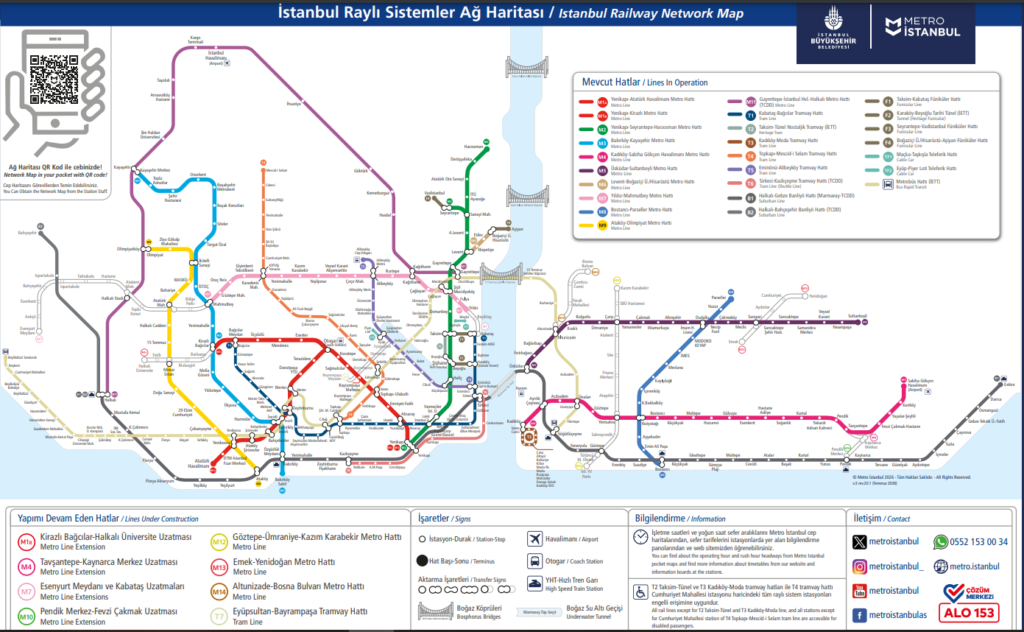
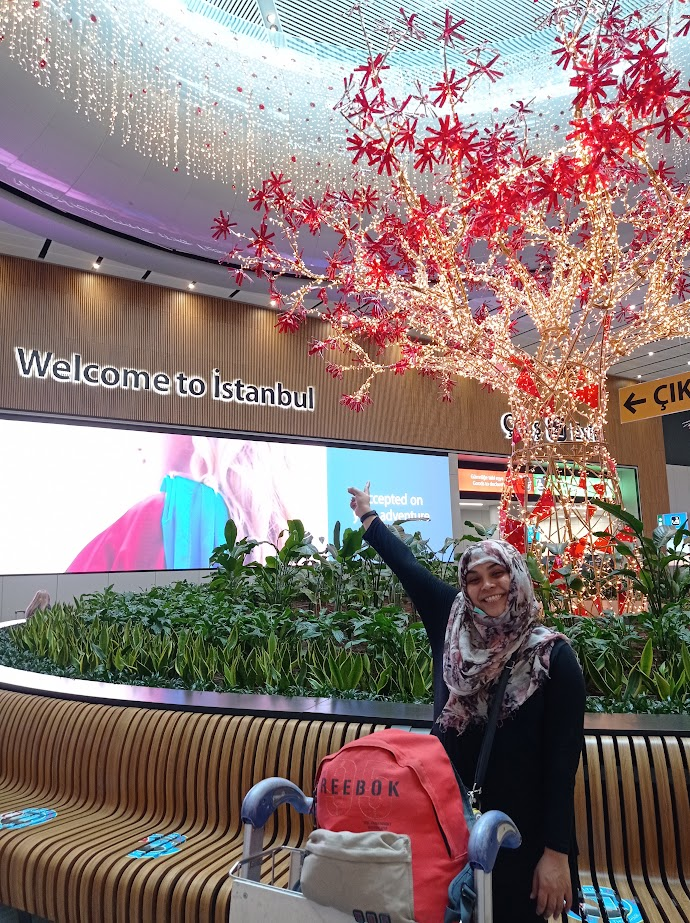
Coming into Istanbul Airport (IST) on the European side (left side of the water on the map above), I take the M11 metro line straight from the airport terminal to Gayrettepe, then transfer onto the M2 metro for Taksim and the wider network.
The same M2 metro also goes to Vezneciler which is quite close to the Sultanahmet area.
Once you reach Vezneciler, all you need to do is hop on the T1 tram headed toward Sultanahmet. It’s the cheapest way in and honestly not complicated once you’ve done it once. The catch is that it doesn’t run overnight, service stops around midnight and picks back up early in the morning around 6 a.m. So, if you’re landing on a red-eye, your better bet is looking at the 24-hour Havaist shuttle buses or a taxi from the official rank outside arrivals instead.
On the other hand, Sabiha Gökçen (SAW) is on the Asian side, and the M4 metro line does the equivalent job, with HAVABÜS shuttles running the same way Havaist does on the European side.
The European and Asian side are completely different, and if you want a little guide on where you should go when you’re in Istanbul, you can read all about it here.
Pro Tip: Whichever airport you land at, ignore anyone who approaches you inside the terminal offering a taxi.
Official taxis queue at a marked rank outside, and that’s the only place to actually get one.
The T1 Tram: The Line You’ll Use Constantly
Once you’re in the city, this is the line you’ll ride more than any other. The T1 runs between Kabataş and Bağcılar, cutting straight through the historic peninsula, Kabataş, Karaköy, Eminönü, Sultanahmet, Beyazıt for the Grand Bazaar, before continuing west. It happens to hit almost everything a first-time visitor wants to see, which is the reason it’s so popular. Once at Kabataş, you can also take the F1 funicular down to Taksim. It’s a straight, 3-5 minute route with just these two stops so you can’t get lost.
Trams run every few minutes for most of the day, but the stretch between Eminönü and Sultanahmet gets properly packed during the morning and early evening rush. I’d suggest you avoid starting your Sultanahmet sightseeing during those times unless you don’t mind standing shoulder to shoulder instead of enjoying the ride.
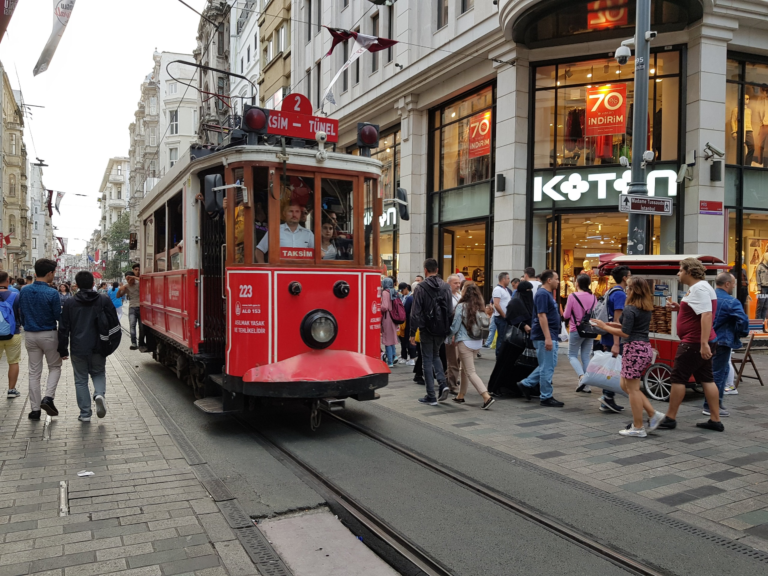
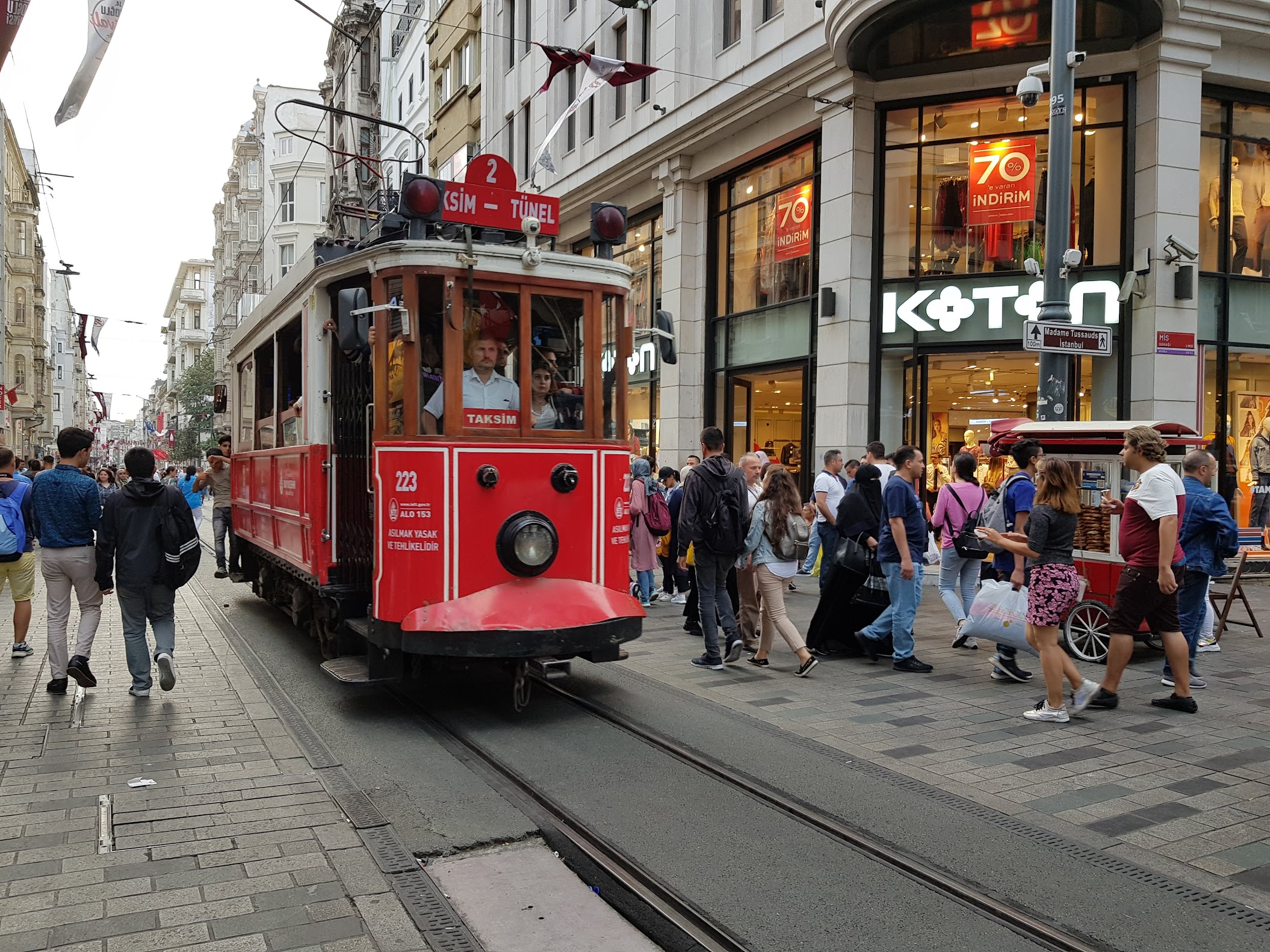
There’s also the T2, a restored vintage red tram running the short single-track route along Istiklal Street between Taksim and Tünel Square. I’ll be honest, it’s more of a photo opportunity than an actual way to get somewhere. Istiklal is meant to be walked anyway.
The Ferries: My Favorite Part of Getting Around
If there’s one part of this whole system worth going out of your way for, it’s the ferries. Şehir Hatları, the main public operator, runs several routes across the Bosphorus, and your Istanbulkart works on all of them exactly the way it does on the tram or metro.
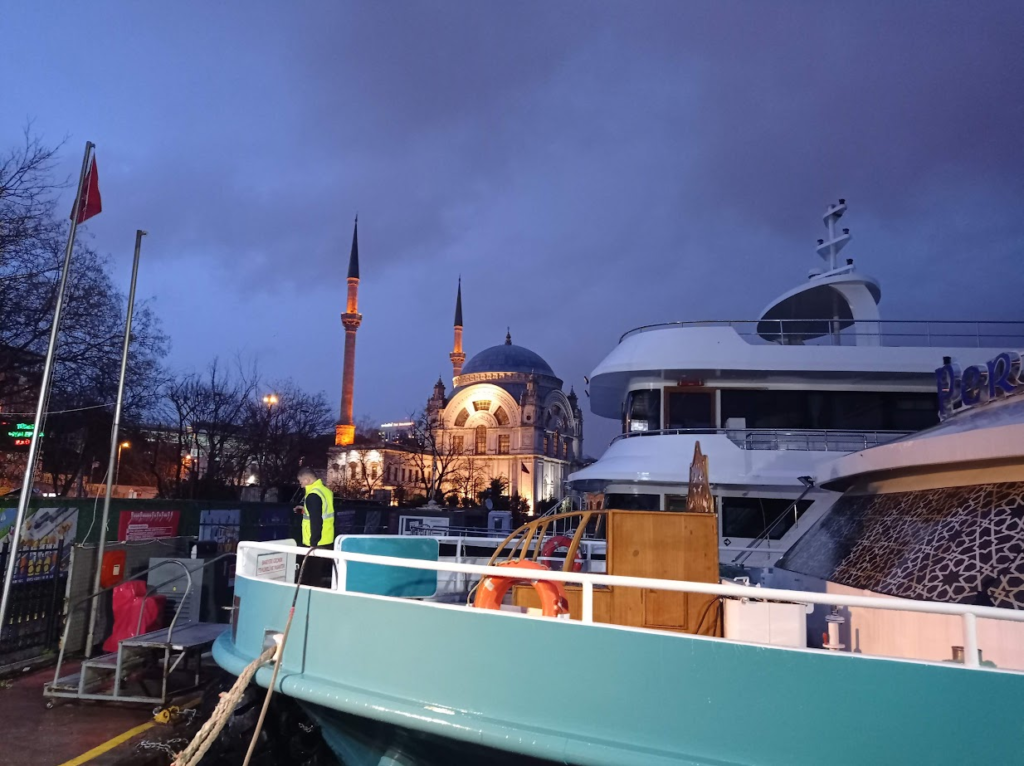
The short hops are the ones I would take constantly: Eminönü or Karaköy across to Üsküdar or Kadıköy takes well under half an hour and hands you a proper skyline view of the whole city for the price of a regular fare. Another family favorite is hopping on the ferry to Ortakoy. There’s not much to do there besides enjoy some Turkish street food like Kumpir and visit the mosque which is absolutely stunning.
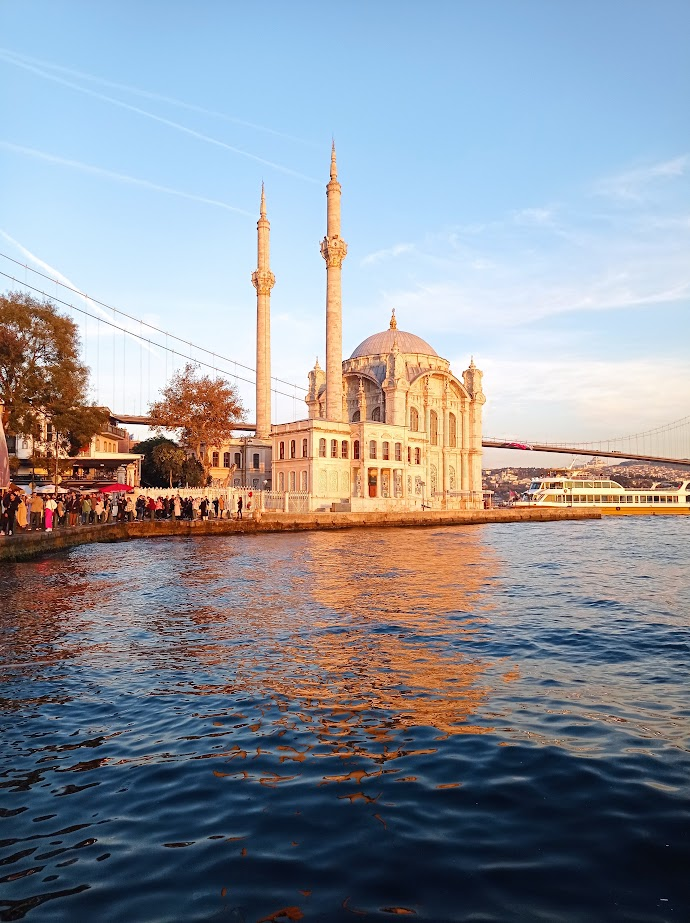
Even after living in Istanbul for over three years and having been on the ferry more times than I can count, I still don’t think of it as a chore the way I do a metro transfer. It was genuinely one of my favorite parts of being in Istanbul. Longer routes head further up the Bosphorus toward Anadolu Kavağı, and there are dedicated ferries out to the Princes’ Islands if you want a half-day trip without touching a car.
A few private operators, TurYol and Dentur Avrasya among them, run additional routes and dedicated Bosphorus cruises from the same docks. This is worth knowing so you don’t accidentally pay tourist-cruise prices when a regular commuter ferry would do the exact same job.
Crossing by ferry beats crossing by road during the day, in my opinion, every time. Traffic across the Bosphorus bridges backs up badly at peak hours, and the ferry sidesteps all of it while doubling as sightseeing you didn’t have to plan for.
Istanbul Metro Will Be Less Central to Your Trip Than You’d Think
Istanbul’s metro network has grown a lot, especially for long distances and anything crossing the Bosphorus via Marmaray. Even if you want to reach neighbourhoods further out, it’s usually your fastest option. Trains are frequent and air-conditioned, running from early morning until midnight.
What usually surprises people when they come to Istanbul is that they assume half the day is spent on the Metro. However, if you’re mostly sticking to Sultanahmet, Beyoğlu, and the waterfront, you’ll use it less than expected. Most of what draws people to this city sits along the tram and ferry routes instead. Where the metro actually earns its place is connecting those tourist areas to Kadıköyon the Asian side, Şişli, or the airport, and for cutting straight across town when a tram or ferry route doesn’t go where you’re headed.
Funiculars: How I Skip the Hills
Istanbul has some genuinely steep hills, and two short funiculars exist purely to save you from climbing them. Like we said earlier, the F1 connects Taksim Square down to Kabataş in under three minutes, the easiest way to link the T1 tram to Taksim without a long uphill slog.
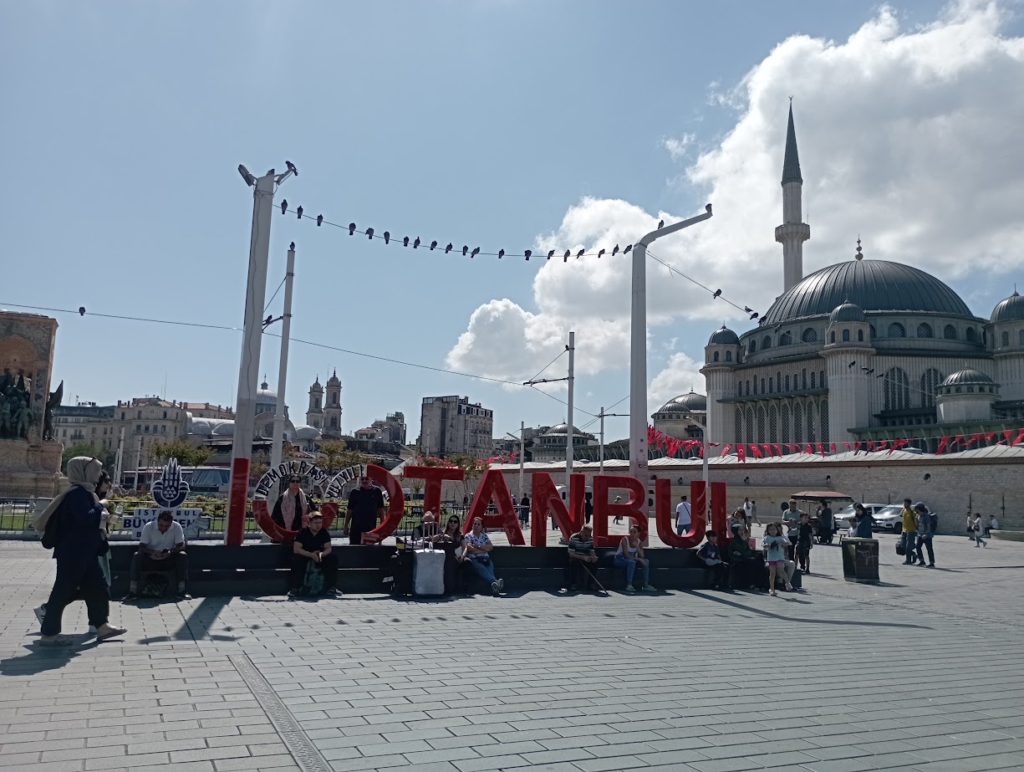
The F2, known as the Tünel, is a short, historic funicular running from Karaköy up to the start of Istiklal Street, and it’s one of the oldest underground railways still operating anywhere in the world. Worth riding once just for that, even though the walk itself isn’t long.
Taxis and Ride-Hailing Apps
Yellow taxis are everywhere, regulated with a standard metered fare. That said, some of the most frequent Istanbul scams and complaints are closely tied to these taxis with meters mysteriously not being switched on or the driver taking unnecessarily long routes. Often, it’s much easier to book through an app rather than flagging one down on the street. While it takes negotiating out of the equation entirely, you can expect to wait up to 10-15 minutes for a taxi.
BiTaksi is the app I used most, and is commonly used around Istanbul as well. It mainly dispatches the same licensed yellow taxis you’d find on the street, just with an upfront estimate and a digital record of the trip.
You’ll also find Uber in Istanbul, but it mostly dispatches regular yellow taxis rather than private cars, and it isn’t available for airport pickups at Istanbul Airport specifically.
The main point is, one way or another, you end up in a taxi. Make sure you confirm the meter’s actually running before you set off, and don’t agree to a flat fare in advance. That’s where overcharging happens almost every time, not the meter itself.
When I’d Actually Just Walk
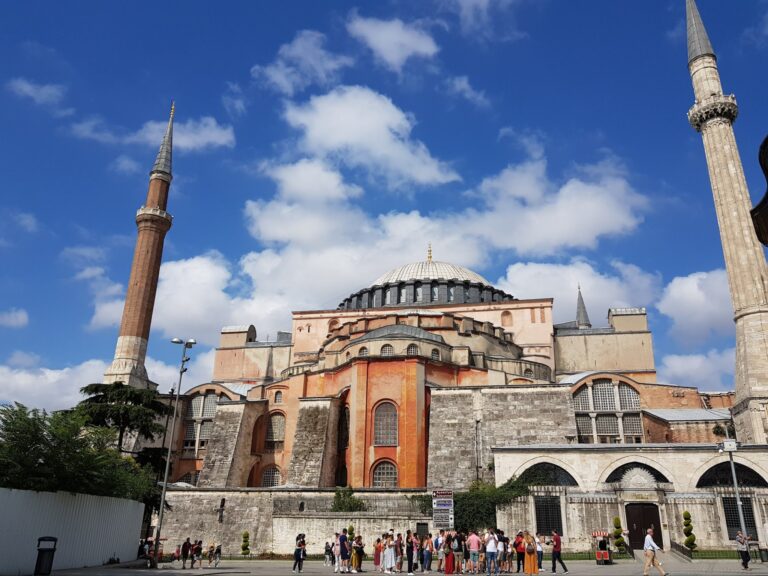
A good chunk of the city is genuinely walkable and it’s probably the best way of getting around Istanbul. Sultanahmet itself is compact enough that, once you’re there, walking between Hagia Sophia, the Blue Mosque, and Topkapı Palace is faster than waiting for a tram to cover three stops. Istiklal Street is mainly a walking street; the roads are narrow, and it’s difficult for vehicles to move past.
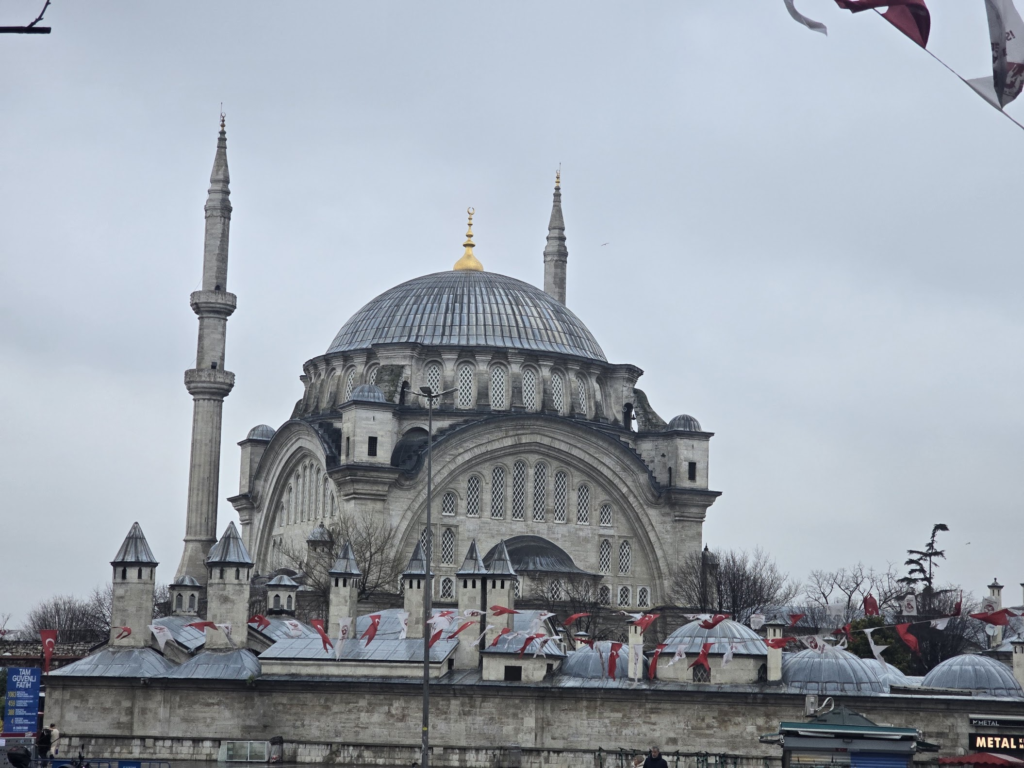
Where it gets harder than it looks on a map is the hills and the cobblestones.
Beyoğlu and Galata in particular have steep inclines and uneven historic paving that isn’t especially kind to a rolling suitcase or anyone with mobility concerns, and summer heat makes those climbs feel longer than the distance suggests.
My rough rule: if a route looks like a 15 to 20 minute walk within the historic peninsula or along the waterfront, it’s usually a genuinely pleasant one. Anything longer, or anything crossing between neighbourhoods split by a steep hill, and I’ll default to the tram, a funicular, or a short ferry hop instead.
Putting It Together
Once you’ve got transport sorted, you can see our guide on the best areas to stay in Istanbul.
Remember, it all starts with the Istanbulkart at the airport. Take the metro or Havaist depending on your flight time, then let the T1 tram and the ferries carry most of your trip once you’re actually in the city. The metro, funiculars, and the occasional taxi fill in the gaps, and your own feet handle the rest. That’s genuinely the whole system.
Frequently Asked Questions
Can one Istanbulkart be shared between multiple people?
Yes. A single card covers up to five people travelling together, so a group or family doesn’t need to buy one each, just make sure whoever’s holding it taps in for everyone as you board.
Is there a transfer discount if I switch between the metro, tram, and ferry?
Some combinations qualify for a reduced fare within a set time window after your first tap, though not every combination does, and ferries in particular are sometimes charged as a full separate fare rather than a discounted transfer. Check the current transfer rules on the official Istanbulkart app or website, since the details shift periodically.
Do I need a different card for Sabiha Gökçen Airport than Istanbul Airport?
No. The Istanbulkart works across both airports and the entire city, regardless of which one you land at.
Is it safe to use a taxi at night in Istanbul?
Yes, generally, especially if you book through BiTaksi, Uber, or iTaksi rather than flagging one down, since the trip is logged digitally and the driver is verified. Stick to official ranks at airports and major transport hubs rather than unmarked cars offering rides.
What happens if I lose my Istanbulkart?
You lose whatever balance was on it. There’s no way to recover funds from a lost anonymous card, so keep it somewhere secure rather than loose in a pocket, and only top up what you’re actually likely to use during your trip